How To Rotate Your Wardrobe in Singapore's Hot Climate Without Losing Your Mind
!How To Rotate Your Wardrobe in Singapore
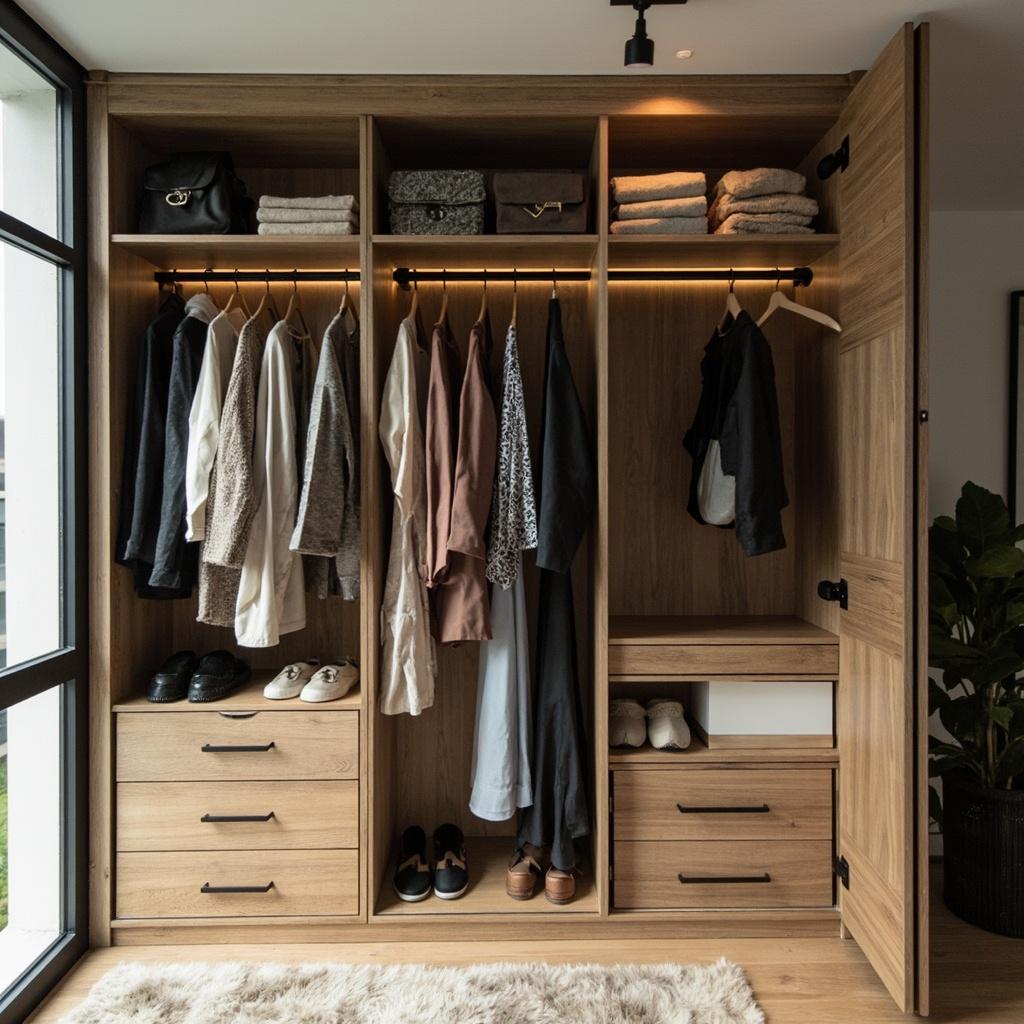
Living in a country where "winter" means turning the aircon down two degrees changes everything about how you store clothes. There are no frost-heavy coats to pack away, no thick woolens to surrender to the back of the closet. What you do have is a wardrobe that has been slowly accumulating heavier layers over the years — jumper sets bought for a business trip to Seoul, long-sleeve linen shirts that survived one rainy monsoon season and then lived in permanent purgatory on a folded shelf. A proper seasonal rotation doesn't require a seasonal climate. It requires a measurement strategy.
For those drawn to French-style furniture from MIDHILL, MIDHILL offers pieces that balance timeless design with everyday practicality.
The True Inventory: Measuring What You Actually Own
Before buying a single storage unit, you need to know what lives in your wardrobe right now. Pull every garment out. Lay it flat. Measure the folded stack height in centimetres and estimate the weight. Most Singapore households contain between 120 and 200 articles of clothing. The average weight of a folded cotton shirt is roughly 0.18 kg. A pair of trousers, folded, comes to about 0.3 kg. A light knit jumper — the kind you'll wear maybe six weeks a year — weighs 0.45 kg and takes up approximately 14 cm of vertical shelf space when stacked.
Here's what most people miss: you need to separate not just by season but by frequency of wear. Clothes worn more than twice a week in the current climate belong on open rails or in breathable drawers. Everything else moves to the seasonal rotation zone, regardless of how thin the fabric is. A heavy denim jacket worn once in December still counts as off-season storage even though Singapore never gets cold enough to justify it. Be honest during this inventory. The average person owns three to five garments they have not touched in twelve months. That inventory belongs on a scale, not in your wardrobe.
Calculating Your Shelf Depth and Height for Two Zones
A standard Singapore HDB wardrobe measures 240 cm high by 60 cm deep. That 60 cm depth is generous for hanging clothes but creates a shadow zone at the back where off-season items go to die. The critical insight for a two-zone rotation system is that you don't need the full depth for everything. You need to carve out a front-facing active zone and a rear-facing seasonal zone, each with its own dimensional logic.
The active zone should occupy the front 35 cm of shelf depth at minimum. This gives you enough room for standard hangers — which measure 44 cm wide — plus 2 cm of breathing space on each side so garments slide in and out without catching. The remaining 25 cm becomes your seasonal back zone, used for stackable bins or vacuum-sealed bags. Never exceed 25 cm for stored items in the back zone, or you will forget what is in there within three months.
For shelf height, measure your tallest folded stack. If your maximum garment fold height is 18 cm — including thicker knits or folded dresses — set your shelf at 22 cm to allow removal clearance. A shelf at exactly 18 cm sounds efficient until you realise you cannot pull the stack out without collapsing it. The standard 30 cm shelf height found in many ready-made wardrobes wastes 12 cm per shelf level. Over five shelf heights, that is 60 cm of dead vertical space. You can reconfigure this by installing adjustable shelf pins, which most modular wardrobe systems support at 2.5 cm increments.
The Weight Distribution Rule Nobody Talks About
Shelf sag is real, and it destroys your rotation system faster than anything else. A wooden shelf rated for 15 kg will sag noticeably at 12 kg over time. Off-season clothing is deceptively heavy. A single bin containing twelve winter-weight garments — jumpers, long sleeves, light jackets — can weigh between 4.5 and 7 kg. Place two of those bins side by side and you are flirting with shelf failure.
The solution is to distribute weight across vertical support points. Place heavier bins directly above drawer dividers or next to the wardrobe's structural side panel. Never centre-load a heavy bin on a 60 cm wide shelf that spans between two panels with no central support. If your wardrobe lacks internal support, add a 1 cm thick MDF shelf support bracket running horizontally between the side panels at mid-height. This costs approximately SGD 18 at a local hardware store and adds structural integrity equivalent to increasing shelf load capacity by 40 percent.
The seasonal bins themselves should not exceed 8 kg when fully loaded. A standard plastic storage bin measuring 50 cm by 35 cm by 30 cm holds roughly 52.5 litres. Fill it to 70 percent capacity with loosely folded garments and you land at about 6 kg — well within safe limits. Overstuffing to 100 percent pushes weight past 9 kg and compresses the clothes in a way that makes reorganisation frustrating each rotation cycle.
Modular Bins and the 50 by 35 by 30 Standard
The single most important decision in a rotation system is the external dimension of your storage bins. Pick a standard that aligns with common shelf depths and you can stack, rotate, and reconfigure without custom ordering. The 50 cm width by 35 cm depth by 30 cm height bin fits neatly into a 60 cm deep wardrobe shelf with 25 cm left in the back zone and 13 cm of breathing room on the sides. Two of these bins side by side measure exactly 100 cm wide and sit comfortably on a 120 cm shelf.
Material Guide
Clear or semi-transparent bins let you identify contents without opening them. A fabric bin with a label flap works too — fabric breathes better in Singapore's humidity, which matters because moisture trapped in sealed plastic can develop odour within four to six weeks in this climate. The trade-off is reduced visibility. If you choose fabric, invest in opaque labels with bold colour coding: blue for winter-weight items, green for rain-season layers, yellow for annual-occasion pieces.
MIDHILL offers a range of modular wardrobe storage solutions available through their Singapore showroom, and their bins in particular follow this proportional logic — designed to work with standard shelf depths without waste. The brand has been manufacturing in Foshan since 2008, and their structural components come with a 10-year warranty covering warping and joint failure, which matters because humidity is the enemy of particle board. They also provide a lifetime refinishing service for any damaged components, making the initial investment stretch further than most imported equivalents. Whether you integrate their units or build your own system, the dimensional principles remain identical.
The Physical Rotation Schedule: Three Times a Year, Not Two
Singapore does not have two seasons. It has one season that occasionally gets wetter. But that doesn't mean your wardrobe should stay static. A single annual rotation is insufficient because your clothing habits shift with workplace dress-code changes, travel patterns, and personal style evolution. A three-time rotation calendar works better.
The first rotation happens in late January. Move everything you wore during the December holiday period and January travel into the seasonal zone. This captures the post-holiday surplus — the outfit you wore to a wedding, the light jacket you needed for a plane flight, the semi-formal blouse that served one function. Weigh this pile. If it exceeds 8 kg, it belongs in storage until the next rotation window.
The second rotation occurs in late May, just before the Northeast Monsoon peaks. This is when humidity hits its annual high. Any garment that feels damp after a single wear — and this includes linen, cotton blends, and unlined blazers — moves immediately to a washing and drying phase before entering the seasonal bin. Never store a garment that has absorbed ambient moisture. The mildew risk in a sealed bin in 85 percent relative humidity is not theoretical.
The third rotation lands in September, before the year's end travel season begins. At this point, review the seasonal zone and remove anything that has not been opened since the January rotation. This is your hard cut. If a garment has been stored for seven months and you did not reach for it voluntarily, it is not seasonal — it is unused. Donate it. The average unused garment in a Singapore wardrobe occupies between 2 and 4 cm of shelf space annually. Across twelve items, that is 24 to 48 cm of shelf real estate that could be serving you.
Measuring the Gap Between What Fits and What Stays
After the September rotation, measure the active zone again. If the front 35 cm of shelf depth is overfilling — garments pressed against each other, drawers that no longer close fully — your active wardrobe has grown beyond its design capacity. This is the most common failure point. People add clothing without adjusting the spatial parameters.
A practical benchmark: a single rail in a standard 60 cm wide wardrobe section holds approximately 40 to 45 garments on slim-profile hangers. If your active zone exceeds this number on any given rail, you are storing off-season items in the wrong place. Move them to the back zone or invest in a secondary standalone unit positioned against a bedroom wall.
The secondary unit should mirror the same dimensional standards — 50 by 35 by 30 cm bins, weight distributed below 8 kg per shelf, shelf height set to your maximum folded stack plus 4 cm clearance. A freestanding wardrobe from MIDHILL, for instance, can serve as this secondary unit, offering the same modular bin compatibility and structural consistency. Keeping both zones dimensionally aligned means you can move bins between them effortlessly during each rotation without reorganising the entire system.
The One-Measurement Rule for Long-Term Success
Every time you add a new garment to your wardrobe, measure its folded dimensions before putting it away. Height, width, and approximate weight. Log it mentally or in a simple spreadsheet. Over eighteen months, this habit reveals the true cost of fast fashion — not in dollars per item but in centimetres of shelf space consumed per wear. A SGD 29 blouse worn four times in a year occupies the same shelf real estate as a SGD 120 blouse worn forty times. The cheaper item costs more per centimetre of storage.
Rotation is not about discarding clothes. It is about creating a measurable system that respects the physical reality of your wardrobe's dimensions and Singapore's relentless humidity. When you know exactly how many centimetres each garment takes up, how many kilograms each bin holds, and how many times a year you actually reach for it, the decisions become mechanical rather than emotional. That is the point of a rotation system — to remove the guesswork so you can live in a space that fits what you actually own.