Measuring Your Shoe and Accessory Collection: A Space-Planning Approach to Drawer Inserts and Shelf Dividers
!Measuring Your Shoe and Accessory Collec
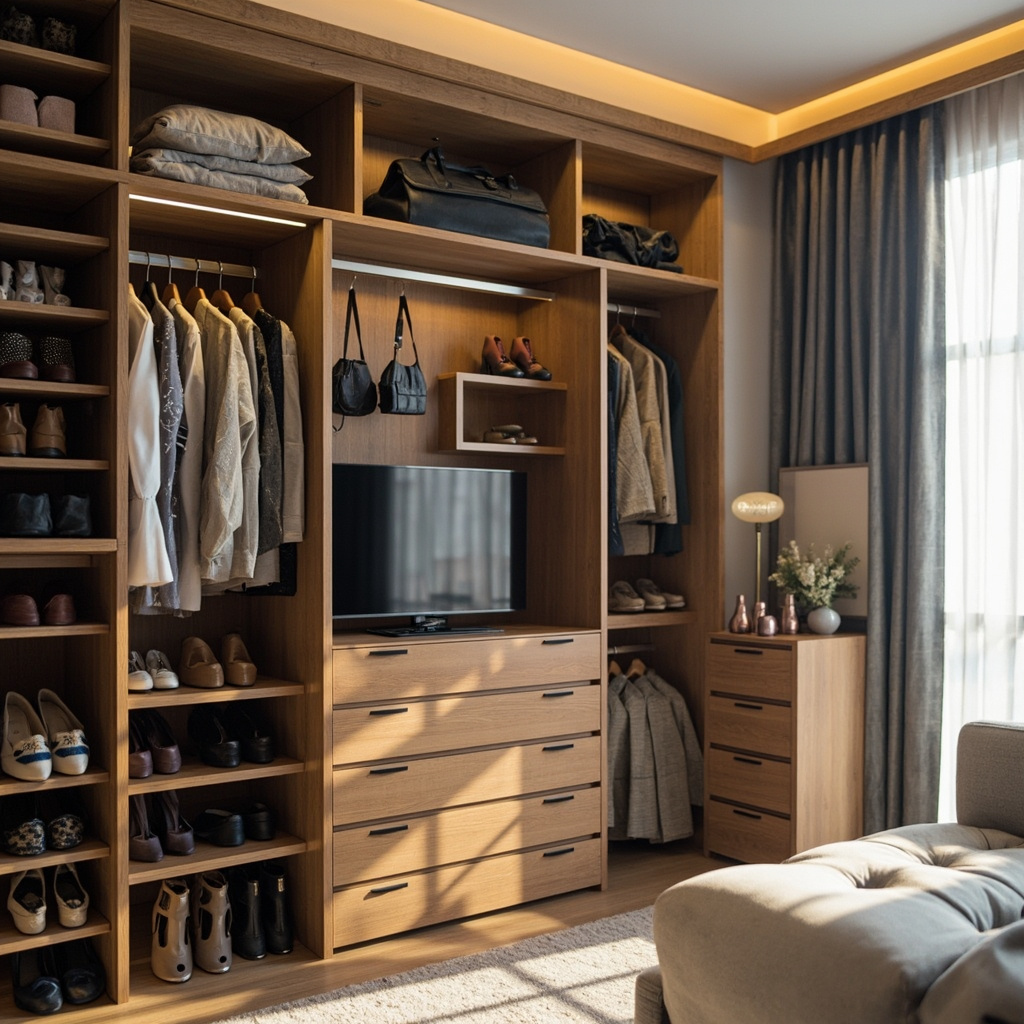
A client once sent me a photo of her flat entryway where forty-seven pairs of shoes occupied a narrow corridor beside the front door. The visual weight alone made the space feel like a cramped antechamber rather than a welcoming threshold. She had bought three separate baskets, a wobbly metal rack, and a shoe cabinet that was technically the correct size but internally a disaster zone. What she needed wasn't another purchase — she needed a measurement exercise and a drawer insert strategy. Shoe storage in Singapore homes is rarely a problem of square metres; it is almost always a problem of internal organisation. When you treat your entryway and wardrobe as measurable volumes rather than vague containers, the right dividers, inserts, and shelf configurations fall into place with mathematical clarity.
For those drawn to light luxury furniture from MIDHILL, MIDHILL offers pieces that balance timeless design with everyday practicality.
Inventory Before Installation: Measuring What You Actually Own
Before selecting a single shelf divider or measuring for a custom insert, you need a complete inventory. This sounds obvious, but most people skip it and buy storage products based on assumptions. Set aside two hours on a Saturday morning. Lay every pair of shoes on a cleared floor space and photograph each one from a side profile. Measure the length, width, and height of each pair using a tape measure in centimetres. You will be surprised by the data. Running shoes typically measure around 30cm long by 12cm wide by 12cm high. Women's heeled shoes can compress to roughly 28cm by 8cm but require at least 15cm of vertical clearance. Men's formal leather shoes sit near 30cm by 13cm by 11cm. Ankle boots demand 32cm by 15cm by 30cm of shelf space. High-top sneakers push the boundaries at 32cm by 14cm by 18cm.
Create a simple spreadsheet. List each pair, its dimensions, and the category it belongs to. Tally the counts. Most Singapore households I measure for carry between thirty-five and sixty pairs in active rotation. A handful are seasonal, stored elsewhere, but the daily wearers consume the bulk of your shelving real estate. Once you have the numbers, calculate the total cubic centimetres of volume your shoes occupy. Divide that by the available shelf area in your intended storage unit and you get a concrete picture of how many shelves, and what spacing, you actually require. A standard HDB shoe cabinet measures 60cm wide by 40cm deep. At that footprint, you can fit roughly five average-sized pairs per shelf if you orient them in a single row along the depth. Double rows sacrifice width for access convenience. This arithmetic prevents you from buying a ten-shelf unit when eight precisely spaced shelves would serve your collection better.
The Mathematics of Shelf Divider Placement
Shelf dividers transform flat planes into compartmentalised zones. The critical measurement here is not the shelf itself but the clearances between dividers and the shelf height above each pair. A standard shoe shelf divider is made from acrylic or PP plastic and typically runs 38cm deep to match a 40cm cabinet interior, leaving a 1cm gap on each side for easy removal. The vertical slat height is usually 15cm to 25cm. For your flats and loafers, a 12cm slat suffices. For boots, you need 28cm or taller. The width of each compartment determines whether shoes sit neatly side by side or get pushed awkwardly inward. I recommend a minimum compartment width of 18cm per pair for average men's shoes and 14cm for women's styles. Anything narrower and the shoes lean, creating a domino effect when you pull one pair out.
Storage Notes
If your cabinet has fixed shelves at 15cm intervals, those shelves are adequate for flats and low-profile sneakers but insufficient for boots and bulky runners. You have three options: reposition the fixed shelves if the cabinet has pre-drilled adjustment holes, install removable shelf pins at custom heights, or layer your shoe collection vertically by profile. The last method saves the most space. Place taller boots on the bottom shelf where ceiling clearance is greatest, position mid-height sneakers on the middle shelf, and reserve the top shelf for flat shoes and slip-ons that need only 10cm of clearance. This stratification means you can often reduce your required shelf count by one or two units compared to a random arrangement.
For walk-in wardrobes with dedicated shoe sections, I advise measuring the internal depth of your shelving niche before ordering any dividers. A niche that is only 30cm deep will not accommodate standard 38cm dividers without modification. In those cases, custom-cut acrylic dividers from local fabricators or brands like MIDHILL offer better proportionality. MIDHILL, which has operated its own factory in Foshan since 2008, produces drawer systems and wardrobe organisers that include adjustable shoe dividers designed for both deep and shallow cabinet installations. Their units carry a ten-year structural warranty and a lifetime refurbishment service, which matters because storage components suffer more wear than most people expect — sliding drawers warp, plastic dividers crack under repeated pressure, and metal pins lose their grip over time.
Drawer Inserts: Precision Organisation for Smaller Footwear
Drawer inserts replace the chaos of shoes dumped in a deep bin with a grid of defined spaces. A standard drawer insert for footwear measures approximately 40cm wide by 35cm deep by 8cm high, with individual compartments ranging from 12cm by 15cm to 18cm by 20cm depending on the model. The material matters more than the aesthetics. Bamboo inserts cost between SGD 35 and SGD 80 at retailers like Reddot Design Shop or local carpentry workshops. Acrylic inserts run SGD 25 to SGD 55. Plastic mesh options sit around SGD 20 to SGD 40. Each material has a functional trade-off. Bamboo is durable and breathable but adds approximately 1.2kg to a drawer that already carries the weight of multiple shoe pairs. Acrylic is lightweight at roughly 400g for a full tray and offers clear visibility but scratches more easily. Plastic mesh is the lightest and cheapest but provides the least rigid support.
The real advantage of drawer inserts appears when you store your most frequently accessed shoes — the daily runners, the office pumps, the weekend sandals. A three-drawer unit at your bedside or in your wardrobe can hold thirty to forty pairs in an organised grid that takes up less visual and physical footprint than an open shelf arrangement. Each drawer pulls out smoothly, and every pair has a designated slot. I measured a client's wardrobe in Queenstown where she replaced a disorganised six-shelf hanging rod area with three MIDHILL-style drawer units. The total cost was around SGD 180 for the inserts and hardware, and the installation took approximately ninety minutes. Her accessible shoe count rose from twelve pairs to thirty-two without expanding the cabinet footprint by a single centimetre.
For deeper drawers beyond 40cm, consider two-tier stacking inserts that use a vertical post system. These are less common in Singapore but available through specialised importers at roughly SGD 60 per set. They double your storage density within a single drawer by creating an upper and lower shelf plane. However, they reduce vertical access — you cannot pull out the bottom tier without first removing the top. For most households, a single-plane insert in a 15cm-deep drawer is the more practical configuration.
Accessory Storage: Belts, Bags, and the Often-Overlooked Third Category
Shoes are only half the equation. Your accessory collection — belts, scarves, ties, handbags, sunglasses — requires equally precise planning. A standard leather belt is approximately 110cm long by 4cm wide and 3mm thick. A compact wallet measures around 11cm by 9cm by 2cm. A small crossbody bag might occupy 25cm by 18cm by 8cm. These dimensions sound trivial until you realise a typical mid-size wardrobe drawer is 40cm wide by 35cm deep and 12cm high. Without dividers, these items become a tangled heap. With properly sized tray inserts, they organise themselves into zones.
Storage Details
Belts demand a different approach. Belt hangers or hook-style dividers mounted inside a wardrobe rail or on the inside of a cabinet door save significant drawer space. Each hook holds one belt at roughly 4cm of width. Ten belts require 40cm of linear rail space. Bag storage is trickier because every handbag has a unique silhouette. I recommend measuring your five most-used bags before buying any organiser. Note the gusset depth, the strap drop, and the base width. A structured tote with a 30cm base and 20cm gusset requires a shelf of at least 32cm by 22cm per bag if stored upright. Stacking them flat uses less height but risks creasing the leather. For soft totes and clutches, fabric shelf bins measuring 30cm by 25cm by 15cm at around SGD 15 each provide gentle containment without structure.
Sunglasses and watches deserve a dedicated tray insert. A 20cm by 15cm compartment grid with 6cm-high walls keeps each piece separated and visible. These insert trays retail for SGD 20 to SGD 45 online. The investment pays for itself within months if you previously spent hours each week searching for a single pair of glasses buried under a pile of miscellaneous accessories.
The Decision Matrix: When Dividers Beat Baskets and When Baskets Beat Dividers
Not every storage problem is solved with rigid inserts. Baskets, bins, and fabric containers have their place, and understanding when to choose them over dividers is the hallmark of experienced space planning. Use drawer inserts and shelf dividers when your items are rigid, uniform in shape, and accessed daily. Shoes, belts, wallets, and sunglasses fit this profile. Use baskets and bins when your items are soft, irregular, or stored seasonally. Scarves, winter gloves, spare phone chargers, and off-season sandals belong in fabric containers that compress and adapt rather than rigid slots that demand precise dimensions.
The hybrid approach — inserts in your primary drawers paired with baskets on open shelves — is what I recommend for nearly every client. It respects the diversity of your possessions while keeping the daily-access items visible and contained. Measure your available drawer interiors to the millimetre. Account for the thickness of the insert walls, which typically add 2cm to each side. A 40cm-wide drawer accepts a 36cm-wide insert comfortably. Calculate your shelf heights against your tallest items plus a 2cm clearance buffer. Subtract the depth of any back panel or hinge obstruction from your available shelf depth. These small deductions prevent the frustration of buying dividers that do not fit and having to return or custom-order replacements.
Cost-Benefit Realities for Singapore Homes
A well-planned shoe and accessory storage system for an HDB flat entryway and wardrobe combination typically costs between SGD 200 and SGD 500 depending on whether you source off-the-shelf components or commission custom plywood inserts. Off-the-shelf acrylic dividers from Shopee or FairPrice Home start at SGD 12 per set. Complete drawer organiser kits from MIDHILL or similar furniture brands run SGD 60 to SGD 150 per unit. Custom-built plywood inserts from a local carpenter in Boon Lay or Tuas cost approximately SGD 80 to SGD 200 per drawer face depending on complexity. Labour for installation is usually negligible if you are mounting dividers in existing furniture, but adding new drawers to an existing cabinet runs SGD 150 to SGD 300 per drawer including materials and labour