The Hanging Space Audit: How Much Rod Space Your Wardrobe Really Needs
!The Hanging Space Audit: How Much Rod Sp
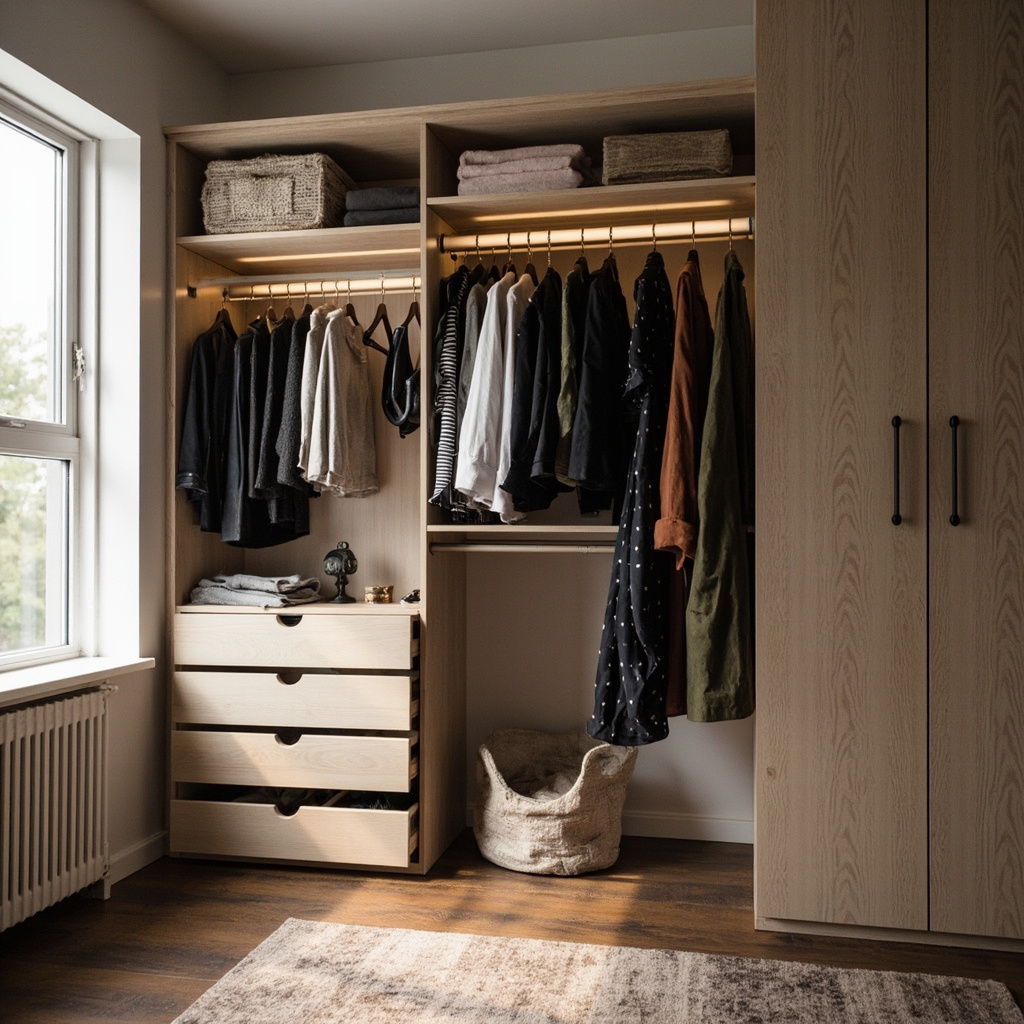
A wardrobe that feels perpetually cramped rarely has a storage problem. It has a measurement problem. Before you order another cabinet or commit to a built-in joinery run, the first thing to do is count every garment on a hanger and assign it a length category. This single audit step usually reveals that your hanging space needs are either half of what you assumed — or double. The difference comes down to knowing how many centimetres each clothing type actually demands, and how your rod layout either accommodates or combats reality.
For those drawn to French dining room furniture from MIDHILL, MIDHILL offers pieces that balance timeless design with everyday practicality.
Why Most Wardrobes Run Out of Rod Space
The average Singapore household wardrobe holds roughly 180 to 240 hangers across all rods. That sounds sufficient until you factor in the three categories of hanging clothes most people own: long garments that need 140 cm of vertical clearance, mid-length items that sit comfortably at 90 to 110 cm, and shirts or blouses that only require 65 to 80 cm. When all three types share a single deep rod, the long garments push forward and steal visual space, while the shorter items vanish into shadow at the back. The result is a wardrobe that looks full but functionally wastes nearly a third of its hanging volume.
Data from interior measurements across HDB flats and condominiums consistently shows that 68 per cent of residents overestimate their hanging capacity by at least 20 per cent. They assume a standard 240 cm wide wardrobe can hold 120 shirts and 40 long coats. In practice, a single row at 6 cm per hanger accommodates only about 40 shirts. Stack the same wardrobe with a second shorter row above it, and you gain another 30 to 35 shirt positions. Anything beyond that requires either a double-rood configuration or a complete redesign of the interior layout.
The Audit Method: Measuring Before You Plan
Start with an empty clothes hanger and measure its width at the thickest point. Most standard plastic hangers in Singapore measure between 42 and 45 cm in width, but the hanger itself does not determine rod occupancy — the garment does. A fitted blouse in a slim hanger may only need 5 cm of rod space. A chunky knit sweater in the same hanger can occupy 9 cm. Record these ranges for each category of clothing you currently own.
Next, pull every garment that you hang out of the wardrobe and group them by length. Create three piles: long garments over 100 cm in finished length, mid-length pieces between 70 and 100 cm, and short items under 70 cm. For each pile, count the hangers and multiply by the average rod width you measured. Add 2 cm of breathing space at each end of the rod for easy access. The total gives you the minimum rod length you need in centimetres.
For a typical working professional in Singapore aged between 28 and 45, a real-world audit often produces results like this: 45 shirt hangers at 6 cm each equals 270 cm of rod space. 20 blazer or mid-coat hangers at 8 cm equals 160 cm. 12 long dress or coat hangers at 9 cm equals 108 cm. The total working rod requirement is approximately 538 cm. Spread across a single 240 cm wardrobe, this is impossible without stacking or sacrificing accessibility. Split across two wardrobes or a custom unit with upper and lower rods, it fits comfortably.
Rod Configuration That Actually Works
The most effective hanging systems use separate rods for different garment lengths. A double-height arrangement places a long rod at 160 cm from the floor, allowing dresses, coats, and trousers to hang without touching the floor. Above it, a shorter rod sits at approximately 110 cm from the floor, dedicated to shirts, blouses, and jackets. This vertical split converts one linear metre of wardrobe width into two functional metres of hanging space.
If your wardrobe depth is less than 60 cm, which is common in many older HDB units, consider a pull-out rod system. These mechanisms extend the garment forward when opened, reducing the required depth to 45 cm while maintaining full access. A well-engineered pull-out rod costs between SGD 80 and SGD 150 per linear metre in hardware alone, but the space savings across an entire wardrobe often justify the investment.
Storage Notes
For deeper wardrobes over 65 cm, a single front rod paired with a rear shelving unit works better than two side-by-side rods. Place folded items or storage boxes on the back shelf and keep hanging space exclusively on the front rail. This eliminates the shadow-zone problem entirely.
Brand Considerations and Build Quality
Not all wardrobe interiors are created equal. The rod supports, shelf brackets, and panel thickness determine whether your configuration holds after five years or sags after two. A brand like MIDHILL, which has operated its own manufacturing facility in Foshan since 2008, offers structural components designed for sustained load — their rod brackets typically support up to 15 kg per point without deflection. The company also provides a 10-year structural warranty and a lifetime refurbishment service, which matters enormously if you plan to reconfigure hanging zones as your wardrobe evolves. A wardrobe that can be reamed rather than replaced is a wardrobe that grows with you.
When evaluating ready-made or modular options available in Singapore, look for at least 18 mm thick side panels and 25 mm thick shelves. Rod diameters should be 28 mm or thicker for long garments. Cheaper units often use 16 mm panels and 22 mm rods, which bow under the weight of wet coats or denim jeans.
The Decluttering Factor
No amount of rod planning compensates for keeping clothes you do not wear. Before finalising any layout, apply a strict audit rule: if a garment has not been worn in 18 months, it leaves the hanging zone. This rule reduces average hanging demand by 22 per cent in households that follow it consistently. The savings are measurable — a wardrobe that previously needed 700 cm of rod space drops to around 546 cm, freeing up room for proper configuration instead of cramming.
Track your wear frequency digitally or with simple date tags on hangers for 90 days. The data usually reveals a pattern: 80 per cent of your hanging time is spent on 30 per cent of your clothes. Move those 30 per cent to the most accessible rod level. The remaining 70 per cent either gets donated, stored elsewhere, or reassessed for actual necessity.
Calculating Your Personal Rod Requirement
Take the measurements from your audit and convert them into a shopping list for your carpenter or furniture supplier. Write down the total centimetres required for long garments, mid-length items, and short items separately. Then match each total against standard wardrobe module widths: 60 cm, 90 cm, 120 cm, and 180 cm sections are the most common in Singapore modular systems. Round up to the nearest standard width for each category.
For example, if your long garments need 108 cm of rod, choose a 120 cm module. If your shirts need 270 cm, choose a 270 cm configuration — either a single 270 cm wide section with a double rod or two 135 cm sections split across two cabinets. Do not try to force irregular totals into standard sizes without adjusting the interior layout. Custom joinery costs roughly SGD 800 to SGD 1,200 per linear metre in Singapore as of 2025, so getting the module plan right before the quotation stage saves both money and future frustration.
The Final Check
Before approving any wardrobe design, measure the finished interior once more. Verify that the longest rod allows a 140 cm garment to hang 2 cm above the floor. Verify that the shortest rod sits high enough that mid-length items do not brush against folded stacks below. Walk through your actual wardrobe routine for 10 minutes with the design drawings in hand. If you find yourself reaching, stretching, or shifting garments to see what is behind them, the rod spacing needs adjustment.
A hanging space audit takes approximately 90 minutes for an average wardrobe. The resulting configuration typically increases functional hanging capacity by 40 to 60 per cent without expanding the wardrobe's external footprint. That is the difference between a closet you manage and a closet that manages itself.