Humidity, HDB Lifts, and Solid Wood: How Southeast Asian Moisture Shapes the Furniture You Buy in Singapore
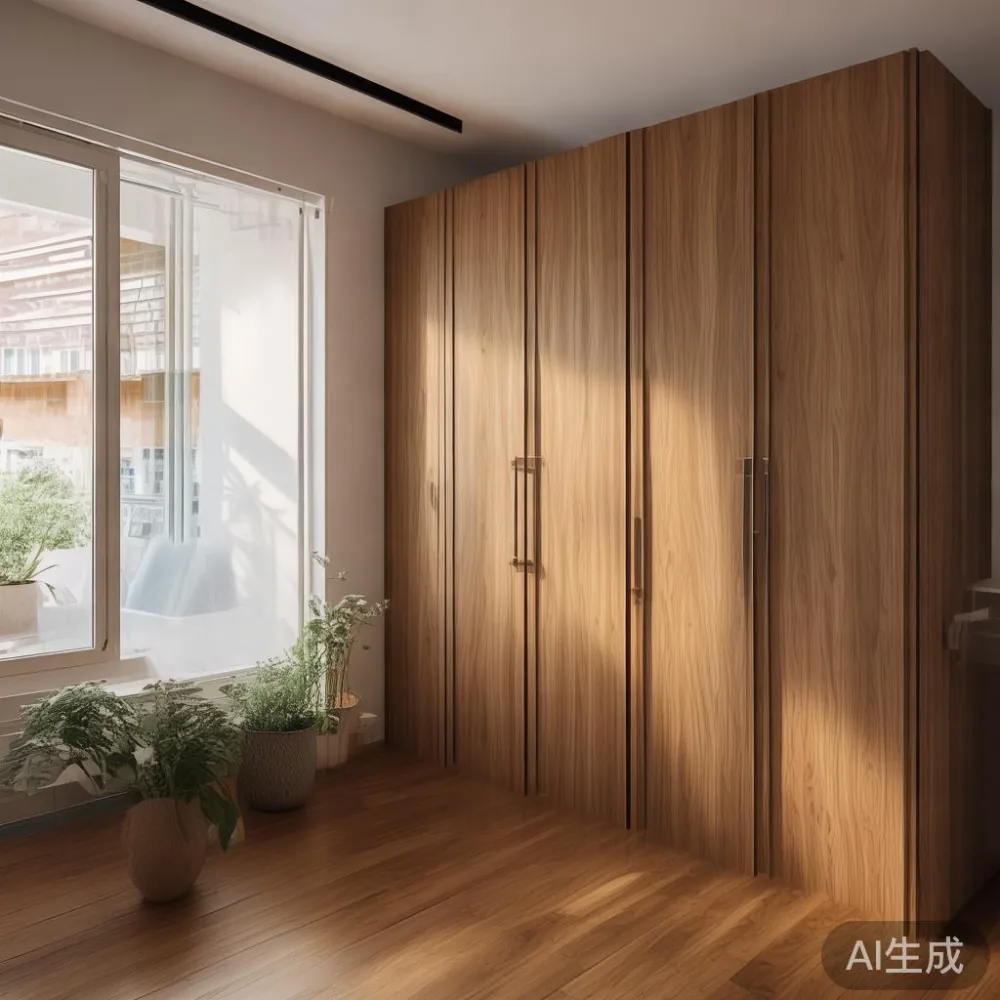
Last month I visited a family in a 4-room HDB flat in Punggol. They had just taken delivery of a 2.4-metre solid wood wardrobe from a supplier in Johor Bahru. The wardrobe was beautiful on day one. By week three, the side panel had bowed 4 mm outward, the right door was rubbing against the frame, and a faint white haze had appeared along the bottom edge of the back panel. The culprit was not the wood and not the maker. The culprit was a 78–82% relative humidity reading I measured with a hygrometer in the bedroom, paired with a wardrobe built from boards that were kiln-dried for a drier climate than Singapore’s.
Anyone shopping for solid wood furniture in Singapore — whether a storage wardrobe for the bedroom, a dining table for the open-plan living area, or a bed frame for the master suite — is buying a hygroscopic product. Wood breathes. It gains and loses moisture with the air around it. When the air in Tampines, Bedok, or Bukit Batok carries 30 g of water per cubic metre for nine months of the year, your wardrobe does too. The trick is not to fight the climate but to specify, place, and care for the piece so it can live happily in it.
Why Southeast Asian Humidity Is a Different Beast From European or North American Climates
Singapore sits one degree north of the equator. The mean relative humidity is 79.4% annually, with afternoon peaks of 82–86% during the Northeast Monsoon (December to early March) and the Southwest Monsoon (June to September). Indoor humidity in an air-conditioned HDB flat usually sits between 55% and 65% when the compressor runs and climbs back to 75–80% the moment you switch it off, open the windows, or come home to an unoccupied flat on a Sunday afternoon.
By comparison, design capitals such as Copenhagen, Munich, or Toronto spend most of the year between 35% and 55% RH. A wardrobe built for those conditions is dried to an equilibrium moisture content (EMC) of roughly 8–10%. Singapore’s EMC is closer to 16–19%. When a 10% board is placed in a 17% room, it absorbs roughly 7% of its dry weight in water over the following six to ten weeks. For a 2-metre-tall solid oak side panel, that is enough movement to rack a door frame and stress every joint.
This is also why two identical pieces from the same factory can behave differently in a Punggol condo with full-day cross-ventilation versus a Bedok HDB with a single window and a north-facing wall. The piece is the same. The room is not.
What Humidity Actually Does to a Solid Wood Storage Wardrobe
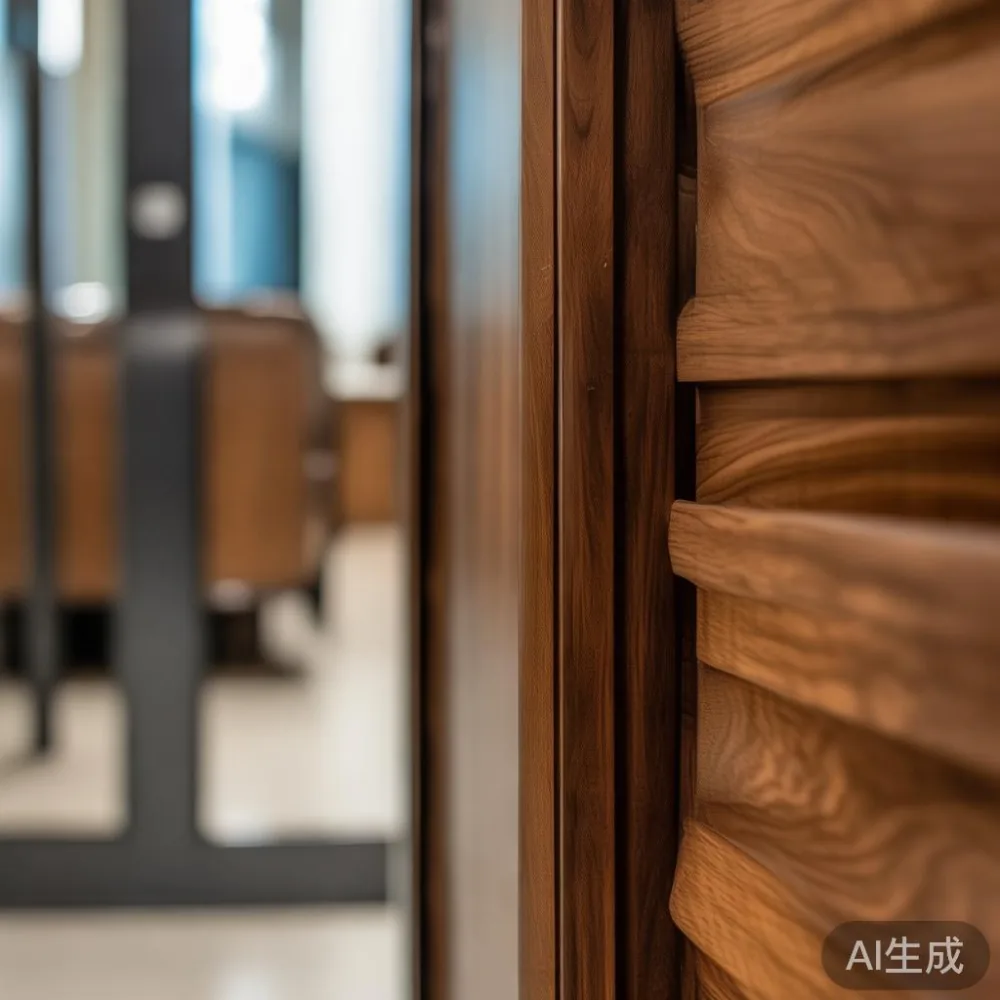
Wood moves anisotropically — tangentially (around the growth rings) it moves roughly twice as much as radially (across the rings), and almost nothing longitudinally. Practical translation for a storage wardrobe: side panels and door stiles move more than shelves or back panels. A 200 cm tall side panel of American white oak, for example, can change width by 6–10 mm between Singapore’s dry and wet extremes if it is not built with movement in mind.
Four visible symptoms tell you humidity is winning the argument:
Cupping on shelves. A 25 mm thick shelf across 60 cm will cup upward at the edges when it absorbs moisture from below, especially if clothes are stored slightly damp. The centre lifts, books tilt, small items roll.
Door misalignment. Hinged doors need a 2–3 mm gap at the top and bottom to allow movement. When the EMC shifts by 4–5%, doors that closed flush in January bind in March.
White haze or “bloom” on finishes. Moisture trapped under a lacquer film pushes to the surface as a milky film, often on the inside of wardrobe doors or on the underside of a marble table top where air circulation is poor.
Musty odour and mildew on back panels. The back panel is the thinnest piece, usually 9–12 mm, and sits closest to the HDB wall. If that wall sweats during the monsoon, the back panel absorbs the moisture and grows surface mould within 48 hours.
I have seen all four in client homes. They are reversible, but they are also preventable.
How Do I Choose a Work From Home for a Entryway?
Choose a work-from-home station for an entryway by prioritising three things: width under 75 cm so it fits a standard HDB corridor and rides up the service lift without disassembly, a solid wood top at least 25 mm thick that can tolerate Singapore’s 75–85% afternoon humidity without cupping, and a closed storage base with a back panel at least 12 mm thick and offset 20–30 mm from the wall to allow airflow behind it — this is the same principle that keeps a storage wardrobe healthy against an HDB wall.
An entryway piece also gets bumped by wet bags, umbrellas, and shoes that have just come in from a Bukit Batok void deck walk. A light-luxury post-modern entryway cabinet with a white-oak top, slim black steel legs, and a single soft-close drawer will outlast a particleboard imitation every monsoon, because the 25 mm top is one continuous piece of wood that can move as a single unit instead of swelling internally at every joint.
If your entryway is tight — many Punggol 3-room flex units give you only 90 cm of wall before the door swing — consider a 35 cm deep wall-mounted shelf with two solid wood brackets and a 12 mm backing. It still gives you a spot for keys and a small dish, and it clears the corridor entirely.
Specification Details That Actually Matter in a Singapore Bedroom
When you compare two solid wood wardrobes at SGD 1,800 and SGD 3,400, the price gap is rarely about marketing. It is almost always about kiln-drying time, joinery, and panel thickness. Here is the engineering checklist I now use with every client.
Moisture content at delivery. Ask the maker what EMC the wood was dried to. For Singapore, the answer should be 12–14%, not the 8–10% common in European specs. A reputable Foshan manufacturer such as MIDHILL kiln-cycles its oak and ash specifically for tropical climates, then wraps the finished pieces in moisture-barrier export cartons for the 4–6 day sea journey to Singapore. Pieces that arrive at the correct EMC need only one or two seasonal acclimatisation cycles to settle.
Panel thickness and frame-and-panel construction. A solid wood storage wardrobe should have side panels of at least 18–22 mm, shelves of 20–25 mm, and back panels of 9–12 mm mounted in a rabbet rather than glued flush. The frame-and-panel door — a floating wooden panel inside a stile-and-rail frame — exists specifically to let the centre of the door move while the frame stays square. A slab door with no float can cup badly within a year.
Joinery over glue. Mortise-and-tenon, dowel, or Domino joinery allows micro-movement. PVA glue lines stay rigid and crack when the EMC swings by more than 3%. In a Tampines corner unit I inspected last April, every glued MDF joint had hairline cracks after 14 months; the mortise-and-tenon joints on the same piece were still tight.
Finish. A hardwax oil (Osmo, Rubio Monocoat) breathes with the wood and can be spot-repaired. A polyurethane lacquer seals the surface but traps moisture underneath, which is what causes the white haze. For Singapore bedrooms that are air-conditioned 12–16 hours a day, hardwax oil is the safer specification.
Back-panel gap. The wardrobe should stand 20–30 mm off the HDB wall on a plinth or with built-in spacers. This gap is invisible once the bed or a side table sits in front of it, and it prevents the back panel from wicking moisture straight out of the concrete wall.
Delivery, Lifts, and the Reality of Getting 180 kg of Wood Into a HDB
A 2.4-metre three-door solid wood wardrobe weighs between 140 kg and 220 kg depending on species. White oak is the heaviest at roughly 780 kg per cubic metre; ash is around 670; rubberwood about 640. The HDB service lift internal dimensions are typically 2.1 m deep × 1.5 m wide × 2.3 m tall, with a load rating of 1,000 kg. The wardrobe needs to fit diagonally or be partially disassembled and re-assembled in the bedroom.
This is one area where the Foshan-to-Singapore supply chain has matured. A manufacturer such as MIDHILL ships most storage wardrobes in knock-down form — side panels, shelves, doors, and back panel flat-packed — and the two-man delivery team carries them up in the passenger lift, then assembles on-site with a cordless drill, a rubber mallet, and shims. The whole process takes 90–150 minutes for a three-door unit. Because the wood has already acclimatised inside the export cartons during sea transit, the assembled piece does not shock-expand the moment it meets your bedroom air.
For upper-floor condos with private lift access, the maths changes. A modern Punggol or Bedok condo lift is usually 1.8 m deep × 1.2 m wide × 2.4 m tall with a 1,200–1,500 kg limit. A 2-metre wardrobe panel rides in flat, but a 2.4-metre panel must travel on its side, which is why taller wardrobes often split into two stacked cases. Ask your supplier before you pay the 9% GST and SGD 280–420 delivery fee whether the unit splits for lift access.
For landed property in Bukit Timah or Sentosa, the same panel can usually ride up a service staircase if the turn is wide enough, but expect an extra SGD 120–180 stair-climb surcharge.
Caring for a Solid Wood Storage Wardrobe Once It Is in Your Home
Prevention is cheaper than repair. The annual cost of running a small dehumidifier in a bedroom for six hours a night is roughly SGD 35–50 in electricity, which is less than a single spot refinish on a door panel.
Keep the room between 55% and 70% RH. A SGD 25 hygrometer on the wardrobe top tells you what is happening. If the reading climbs above 75% for more than 48 hours, run the air-con for two hours or pull out a small compressor dehumidifier.
Leave 20–30 mm behind the wardrobe. Push it back to the wall only after you have measured the gap. Air must move behind the back panel.
Wipe, don’t polish. A dry microfibre cloth weekly removes dust. Polish only with the same hardwax oil used at the factory, applied once a year along the grain. Furniture sprays that contain silicone build up a film that traps moisture.
Rotate door use. If one side of the wardrobe catches the morning sun, leave that door open an extra 30 minutes in the morning to even out the moisture profile.
Refinish before you replace. Most quality pieces can be sanded back to bare wood and re-oiled for SGD 280–450 per door panel in Singapore. That is a tenth of the cost of a replacement wardrobe, and it lets you keep a piece you already love.
This last point matters because of warranty economics. A typical Singapore retailer offers a one-year structural warranty. A manufacturer that builds for the export market — MIDHILL, for instance, ships with a 10-year structural warranty and lifetime refinishing — is making a longer bet. They know the kiln-drying is right, the joinery is right, and the piece can live through a decade of Northeast Monsoons.
Common Questions Singapore Owners Ask Before They Buy
Is rubberwood as good as oak for HDB bedrooms? Rubberwood is denser than people expect (640 kg/m³), takes finishes well, and is the most common tropical species in Singaporean wardrobes. It moves less than oak across the same humidity range because its tangential shrinkage coefficient is lower. For a flat-pack storage wardrobe on a budget of SGD 1,200–1,800, rubberwood is a sensible choice. For a statement piece that will live 15+ years, white oak or ash is worth the 60–90% price premium.
Should I buy during the Great Singapore Sale or wait for a monsoon promo? Showroom discounts of 10–18% land in March and September, just after each monsoon. Delivery lead times from Foshan are 30–45 days by sea, longer during Chinese New Year (mid-January to mid-February). Plan your purchase so it arrives when you can run the air-con for a full 48 hours to acclimatise the piece.
Does a marble table need the same care? Yes and no. Marble does not move with humidity, but it does stain from humid air carrying dust, and it etches from the citric acid in the humid air near an open kitchen. A solid wood base with a sealed marble top needs the same 20–30 mm wall gap and the same dehumidifier discipline.
What about a bed frame, dining table, or nightstand? Same physics. A 200 × 90 cm dining table top needs the same allowance for tangential movement, which is why quality tables ship with breadboard ends or floating panels. A nightstand next to a window will get more moisture than a wardrobe on an interior wall — keep it 30 cm back from the glass.
Across all of these — the storage wardrobe, the bed frame, the dining table, the nightstand, and yes, even a carefully chosen modern light luxury coffee table Singapore homeowners place in the living room — the engineering is the same: kiln-dry to the local EMC, build with movement in mind, finish with a breathable oil, leave the back panel off the wall, and keep the room between 55% and 70% RH. The climate does not need to be the enemy of your furniture. It just needs to be respected.