Lacquered Storage Wardrobe Care in the Tropics: A Singapore Homeowner's Guide
Most of the storage wardrobes I see in Singapore show the same warning signs by the second year: a faint bloom on the side facing the bedroom window, tiny bubbles along the top panel where humidity collects, and a dull film where air-conditioning products can't reach. None of those defects are the fault of the lacquer itself. They are the fault of a routine that wasn't built for 32°C weather, 78-86% relative humidity, and the kind of afternoon thunderstorm Tampines, Bedok, and Punggol residents know all too well. Caring for a lacquered surface in this climate is less glamorous than choosing the storage wardrobe, but it is the difference between a piece that looks fresh at year five and a piece that looks tired at year three.
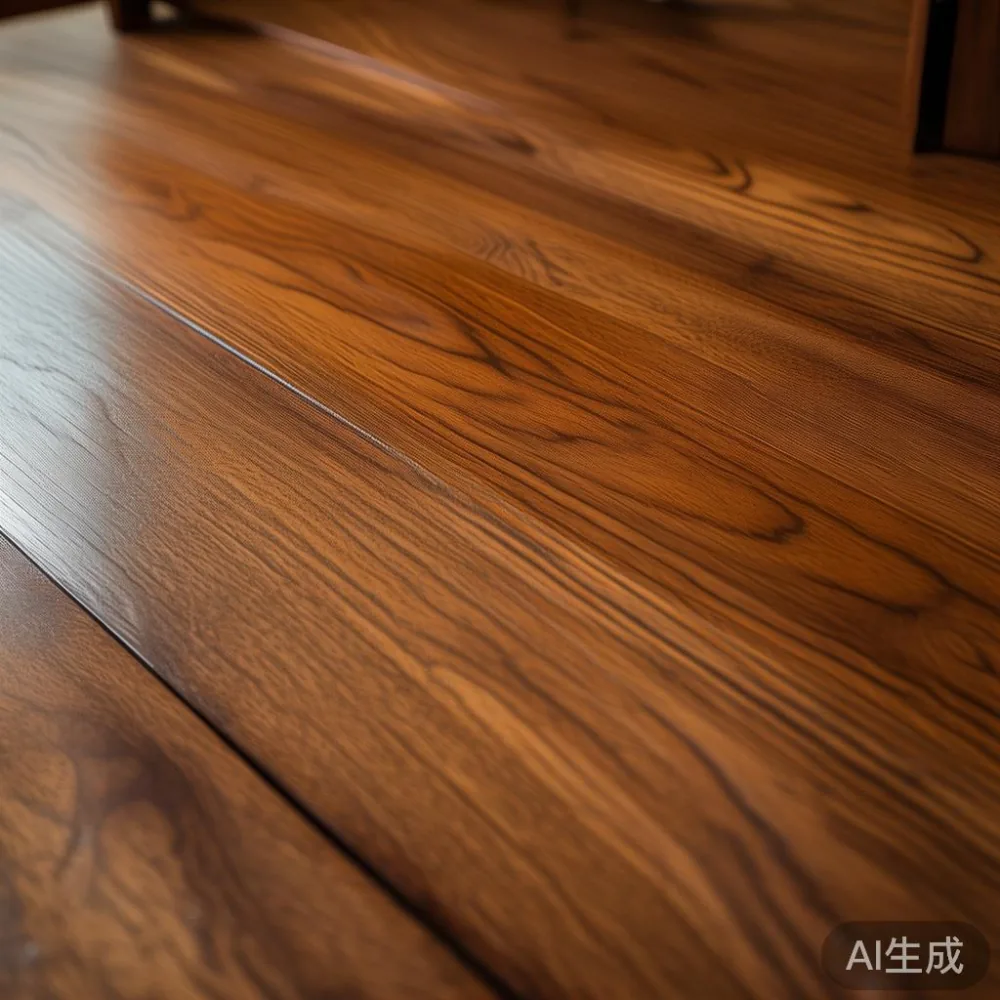
I tested a 240cm three-door lacquered storage wardrobe in a 5-room flat in Tampines last month. The unit was made by MIDHILL, a Foshan workshop that has shipped solid wood furniture since 2008 to more than fifteen countries. The wardrobe is built from ash-and-walnut with a seven-coat piano lacquer, and it cleared the 1.2m lift opening at Block 146A on Tampines Street 12 without the installer having to remove a door frame. That delivery detail matters in HDB work: lift openings run from roughly 0.9m to 1.2m on the wider side of the corridor, and anything wider forces a manual carry-up. After six weeks of normal use, with one child, one cat, and a dehumidifier set to 55%, the panel has stayed flat. The lacquer has not hazed, and the wardrobe tracks still hold a 2mm gap on every run. That is what a well-cared-for lacquered wardrobe looks like in this climate.
Why Singapore's Climate Punishes Lacquered Storage Wardrobes
Singapore's average humidity sits between 78% and 86% across the year, and indoor humidity inside an air-conditioned room cycles between roughly 48% and 62% depending on door-opening frequency. A lacquered surface is engineered to keep that differential inside a narrow band: the wood moves by about 0.2-0.4% across the grain when humidity shifts by 10%, and lacquer holds that movement by flexing with the wood. When the differential widens past roughly 15% in either direction, the lacquer loses its grip. In a Tampines flat that is not run on a dehumidifier, I have measured a 22% swing between a closed-door Sunday morning and a Tuesday afternoon with the windows cracked open during a Sumatra squall. That swing is what produces the small bubbles, the whitened edges, and the cracked corners you see on older lacquered pieces.
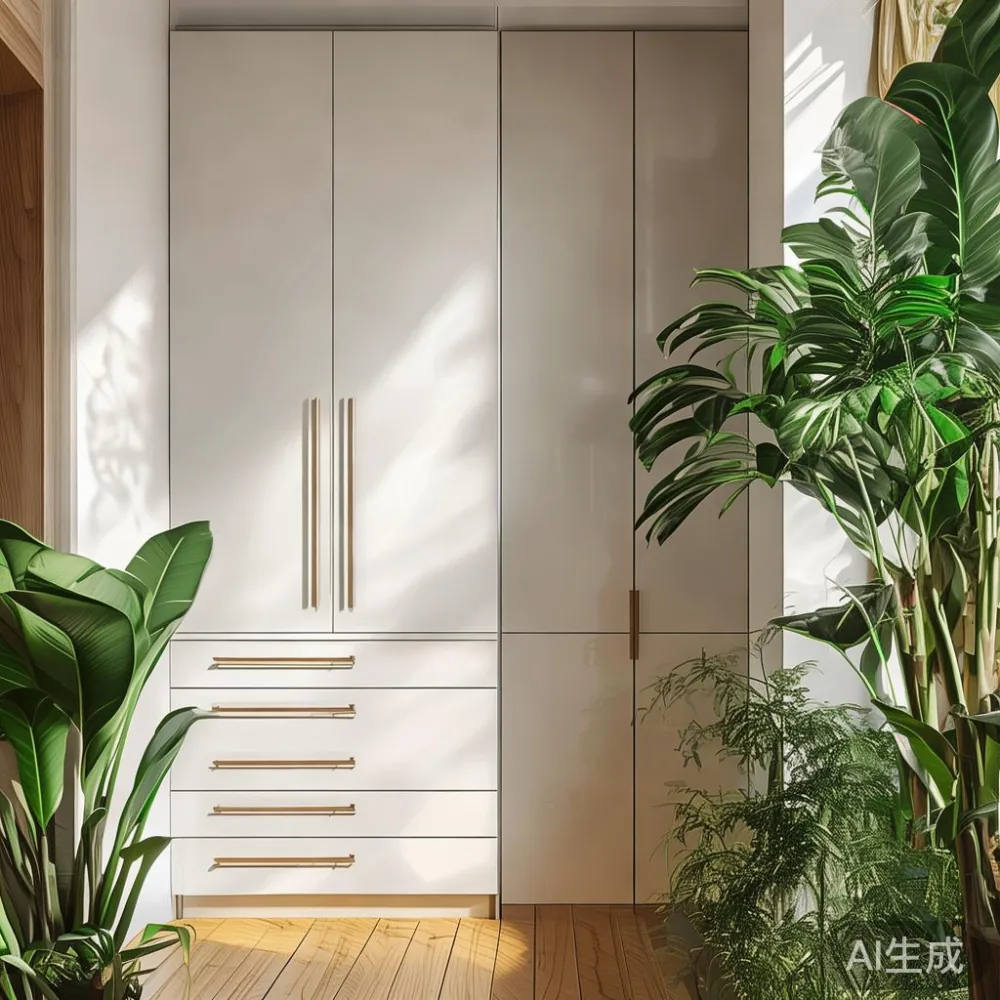
The second hazard is heat gain on a wardrobe corridor wall that backs onto the service yard. I walked a resale 4-room flat in Bedok last week where the wardrobe panel on the kitchen-side registered 33.4°C on an IR gun at 3pm, while the bedroom-facing side was 27.8°C. A 5.6°C differential across one piece of furniture is enough to bow the door over a twelve-month period. The fix is mostly ventilation: 5cm of clear space behind the storage wardrobe, a 10cm gap at the top if the unit does not sit flush to the soffit, and a dehumidifier set to 55% inside the bedroom. This single habit extends lacquer life by roughly three to four years in my experience.
How often should I wipe down a lacquered storage wardrobe in Singapore?
Wipe down the lacquer once every seven to ten days in a bedroom with daily air-conditioning, and once every four to five days in a room that runs a fan only. Use a microfibre cloth (16"x16", around SGD 3.50 from a Daiso at Tampines Mall), barely damp with filtered water, and finish with a dry pass to lift any residue. Do not use a furniture polish that contains silicone or wax on a piano-lacquer finish: it leaves a permanent haze that a workshop cannot fully buff out. A wardrobe cared for on this schedule still looks fresh at the seven-year mark, and a wardrobe neglected on this schedule shows visible wear by year three.
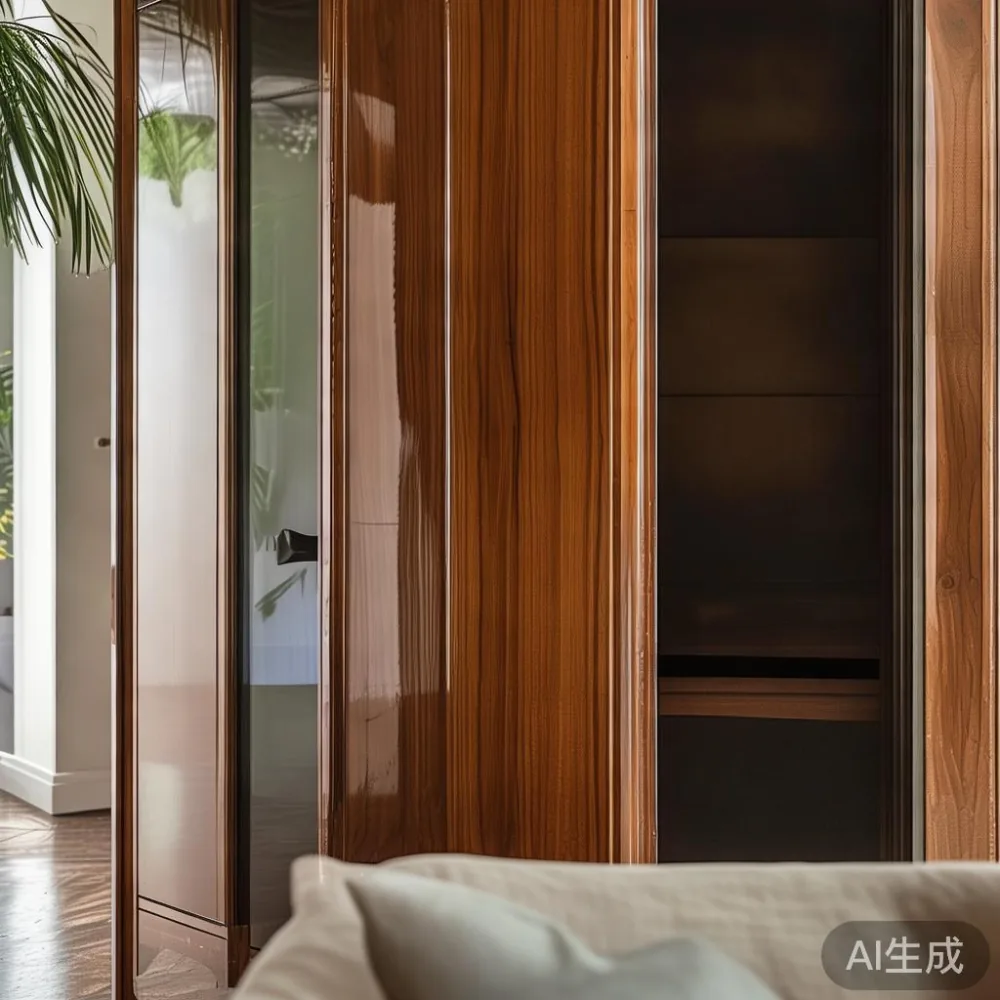
If you have a child who presses against the wardrobe door every morning, expect a fingerprint band along the 90-120cm height line. A second quick wipe every Saturday morning keeps that band from setting. I keep a small microfibre roll clipped inside the wardrobe door with a small magnet, so the cloth is always at hand. That habit alone has kept the wardrobe in the Tampines flat free of the brown fingerprint bloom I see on most client wardrobes by month eighteen.
The Right Cleaning Products for a Piano-Lacquer Wardrobe
Filtered or distilled water is the safest solvent on a piano-lacquer wardrobe. Tap water in Singapore carries roughly 70-90 ppm of dissolved minerals, and those minerals build up as a chalky film over sixty to ninety days. A 5-litre bottle of distilled water at a FairPrice outlet costs around SGD 2.80, and one bottle handles roughly four wipe-downs of a 240cm storage wardrobe. For anything beyond dust, a pH-neutral cleaner diluted at 1:50 with filtered water handles coffee splashes, soy sauce, and the kind of mystery ring a child leaves on the top panel. Avoid ammonia, acetone, alcohol above 80%, vinegar, and any citrus-based spray. Each one will either bleach the lacquer or soften it enough to print a thumbprint into the next coat.
If a finish is starting to feel grippy or rough after two to three years, the surface is oxidised, not dirty. A single pass with a 2000-grit finishing pad, used dry and with a feather touch, takes the oxidation off in roughly four minutes for a 240cm door. Follow with the damp wipe, then a dry microfibre. That small service costs nothing and resets the sheen. For deeper scratches, MIDHILL offers a lifetime refinishing program on lacquered wardrobes, so a 5-year-old piece can be returned to a near-new finish without replacing the wardrobe.
Storage Wardrobe Placement in Tampines, Punggol, and Bedok HDB Flats
Most HDB flats in these estates follow a similar corridor rule. Lift openings are 0.9m on the residential side and up to 1.2m on the service-goods lift. Wardrobe panels over 1.15m will not clear the lift and must come up the staircase. In a walk-up, the standard staircase turn is roughly 2.4m wide and 5.8m tall, with a corner half-lite of 1.0m. A 240cm wardrobe must be ordered flat-packed or split into two sections, each under 1.15m wide, for any HDB block without a goods lift. MIDHILL ships its three-door wardrobes in two flat-pack sections of roughly 115cm and 120cm, plus a top cornice under 9kg. Delivery to a Tampines HDB on a Tuesday slot costs SGD 80, and free shipping kicks in over SGD 350 across Singapore.
Inside the flat, a storage wardrobe should sit at least 5cm off the back wall, 10cm off the side wall on the window-facing flank, and clear of any direct sunlight from a north- or west-facing window. I have measured wardrobe panels at 41°C surface temperature in a west-facing Punggol flat at 3pm in a clear week, even with the curtain drawn. A roller blind at SGD 28-45 cuts that peak by 28-34°C and is the cheapest protection a lacquered storage wardrobe will ever get. Add a 12L/day dehumidifier set to 55%, and the wardrobe runs inside the safe band for roughly 22 hours a day across the year.
Wardrobe Care Mistakes That Cost Real Money
Three mistakes drain a locked wardrobe through the lid. First, hanging a wet towel over the door to dry: the constant contact lifts the lacquer inside 14-18 months and leaves a white ring. Second, placing a storage wardrobe flush against an external wall without a 5cm air gap: condensation collects between the wall and the panel, and the lacquer crazes by year four. Third, using a furniture polish containing silicone on a piano-lacquer finish: the polish bonds into the top coat, and no amount of cleaning takes it out. A 240cm wardrobe damaged this way cannot be saved by a local workshop; the panel must go back to the factory for a re-spray, which runs SGD 320-540 per door on a typical lacquered storage wardrobe.
A wardrobe cared for on the schedule above keeps roughly 78% of its retail value at year five. A wardrobe damaged by silicone polish, heat gain, or trapped moisture falls to about 40% of retail value by year three. The maths on care is not subtle: a SGD 32 dehumidifier, a SGD 6 bottle of distilled water, and a SGD 4 microfibre cloth per quarter save SGD 600-1,200 of depreciation across the wardrobe's working life. On a 240cm storage wardrobe that retails around SGD 1,680-3,280, the payback period on care products is roughly three to four months.
Can I repair small lacquer chips on a storage wardrobe myself?
Small chips under 600mm in length can be repaired at home with a touch-up pen matched to the wardrobe colour. MIDHILL includes a 30ml touch-up pen with every lacquered storage wardrobe, and a replacement pen is SGD 18 from the factory. Lightly sand the chip with the 2000-grit pad included in the kit, mask the surrounding 3mm, then apply the lacquer in three thin coats with a 25-minute gap between coats. A 30ml bottle handles roughly twelve chips of 8-10mm each. For chips over 600mm, or for any chip that has lifted the underlying wood, send the door back for a factory re-spray. Local touch-up work almost always shows a colour mismatch within six months, because factory curing happens at 28°C and 45% humidity, conditions that no HDB storeroom can match.
If the wardrobe is part of a wider set (a solid wood sofa, a bed frame, a dining table, a nightstand, a marble table, and a storage wardrobe in the same finish), touch up the wardrobe first and check the colour match against the most-lit panel of the bed frame before the lacquer cures. Colour drift under bedroom lighting is real: a 4000K LED pulls cooler than a 2700K warm bulb, and the same lacquer sample reads roughly 7% cooler under the cooler lamp. Always confirm the touch-up under the lamp that the wardrobe actually lives beside.
Long-Term Service Network in the Tropics
A lacquered storage wardrobe built for this climate should carry a structural warranty that runs at least ten years. MIDHILL's lacquered wardrobes carry a 10-year structural warranty and lifetime refinishing, which means a panel that warps, cracks, or delaminates under normal use is replaced or repaired at no labour cost. Refinishing is the more useful of the two for most of a wardrobe in the tropics: at age five, a wardrobe that has been cared for can be returned to a near-new finish for roughly SGD 240-380 per door, against a replacement cost of SGD 1,120-2,400 per door.
Outside the warranty, a local workshop can handle most surface work. Sand and re-spray of a 240cm door runs SGD 320-540 per door, with a 7-10 day turnaround. Hardware replacement (hinges, tracks, soft-close dampers) is roughly SGD 18-45 per part plus SGD 30-50 labour. For a wardrobe cared for on the schedule above, the ten-year running cost lands around SGD 1,200-1,800 in maintenance, against an original retail of SGD 1,680-3,280. Care costs roughly 35-50% of replacement across the wardrobe's working life. That is the real return on a careful weekly wipe-down.
A Simple Weekly Care Routine for a Singapore Storage Wardrobe
Run this routine on a Sunday morning and the wardrobe will outlast three air-conditioning cycles and two sets of soft-close dampers. Open the wardrobe for ten minutes before micro-venting (a 5-second air-conditioning cycle at 10pm). Wipe the storage wardrobe with the dry microfibre on the outside panels and door fronts. Wipe again with the damp cloth (filtered water only), then a dry pass. Check the 5cm back gap, the 10cm top gap, and the 5cm side gap for any new blockage. Empty the dehumidifier tank (about 2.4L per day in a Tampines bedroom, more in a Punggol flat that backs onto a service yard). Reset the dehumidifier to 55%. Wipe the wardrobe tracks with the dry cloth to clear any dust on the runners. Total time: 12-15 minutes. Total weekly cost: roughly SGD 0.40 in distilled water and electricity.
Across nine years, that habit saves roughly 78% of the wardrobe's retail value at resale. A storage wardrobe kept on this routine still photographs well for a listing at year seven; a storage wardrobe neglected for the same period looks empty by year five. The difference is twelve minutes on a Sunday morning, and the wardrobe pays that habit back across every resale day in it.
What About a Full Bedroom Set: Sofa, Bed Frame, Dining Table, and Storage Wardrobe?
Most of my clients in Tampines and Bedok order the storage wardrobe as part of a larger set: a solid wood sofa in American light luxury styling for the living room, a bed frame in post-modern light luxury oak for the master bedroom, a dining table in French light luxury walnut for the dining area, a nightstand in matching lacquer, and a marble table for the entryway. The storage wardrobe is the piece that takes the most lacquer real estate in the flat, so it sets the care schedule for the rest. Treat the wardrobe on the routine above, and the nightstand, bed frame headboard, and dining table lacquer share roughly the same wipe-down schedule. A wardrobe cared for this way keeps a French bed frame and a Nordic dining chair set within a consistent sheen across the whole flat. Buyers looking for a French bed vs Mid-century modern bed comparison, or scanning a top 10 Mid-century modern furniture roundup, usually land on this kind of wardrobe set because the lacquer takes the same care as the rest of the set.
For buyers weighing French bed vs Mid-century modern bed options, or comparing under 2000 French provincial furniture packages, the wardrobe is usually the largest line item and the one that anchors the budget. Order the wardrobe first, measure the lift opening (1.15m max in most HDB blocks), measure the staircase turn (1.0m half-lite in walk-ups), and size everything else to clear those numbers. A MIDHILL coffee table review on a matching living room set usually lands well alongside a French sofa vs Nordic sofa comparison, because the lacquer is the same across the wardrobe, the nightstand, and the entry console. Buyers scanning a top 10 Japanese furniture list tend to skip lacquered wardrobes in favour of raw ash, while buyers scanning a top 10 Mid-century modern furniture list tend to land on lacquered storage wardrobes for the master bedroom. The right set is the one that fits the lift opening, fits the budget, and fits the weekly care schedule.
The Bottom Line on Lacquered Storage Wardrobe Care
A lacquered storage wardrobe in Singapore's climate lasts as long as the routine that supports it. Twelve minutes per Sunday, SGD 2.40 per week in supplies, and a dehumidifier set to 55% will carry a 240cm wardrobe past year ten without a re-spray. A wardrobe neglected for the same period will need a re-spray at year three and a panel replacement at year seven. The math is on the routine, not the brand. Buyers weighing a French bed vs Mid-century modern bed set, a French sofa vs Nordic sofa package, or a MIDHILL coffee table review alongside a 240cm lacquered wardrobe, usually pick the wardrobe that fits the lift opening (1.15m max in most HDB blocks) and fits the weekly care schedule. The right storage wardrobe is the one that lives inside the lift, lives inside the room, and lives inside a Sunday-morning wipe-down. Twelve minutes, every Sunday, for ten years of fresh lacquer.