Caring for a Lacquered Storage Wardrobe in a Tropical Climate
Last month I visited a client in Punggol who had just moved into a new four-room HDB and asked the question I hear almost every week: "My wardrobe looks dull after three months in this humidity — what am I missing?" Her solid wood wardrobe with a high-gloss lacquered finish had been a centrepiece of her renovation, and within a single quarter the once-mirror panels were clouded with a fine haze, the edges near the floor were starting to swell, and the soft-close hinges were beginning to stick. The issue was not the wardrobe. It was the room, the climate, and a few care habits that needed adjusting for a city where the average relative humidity sits between 75% and 95% for most of the calendar.
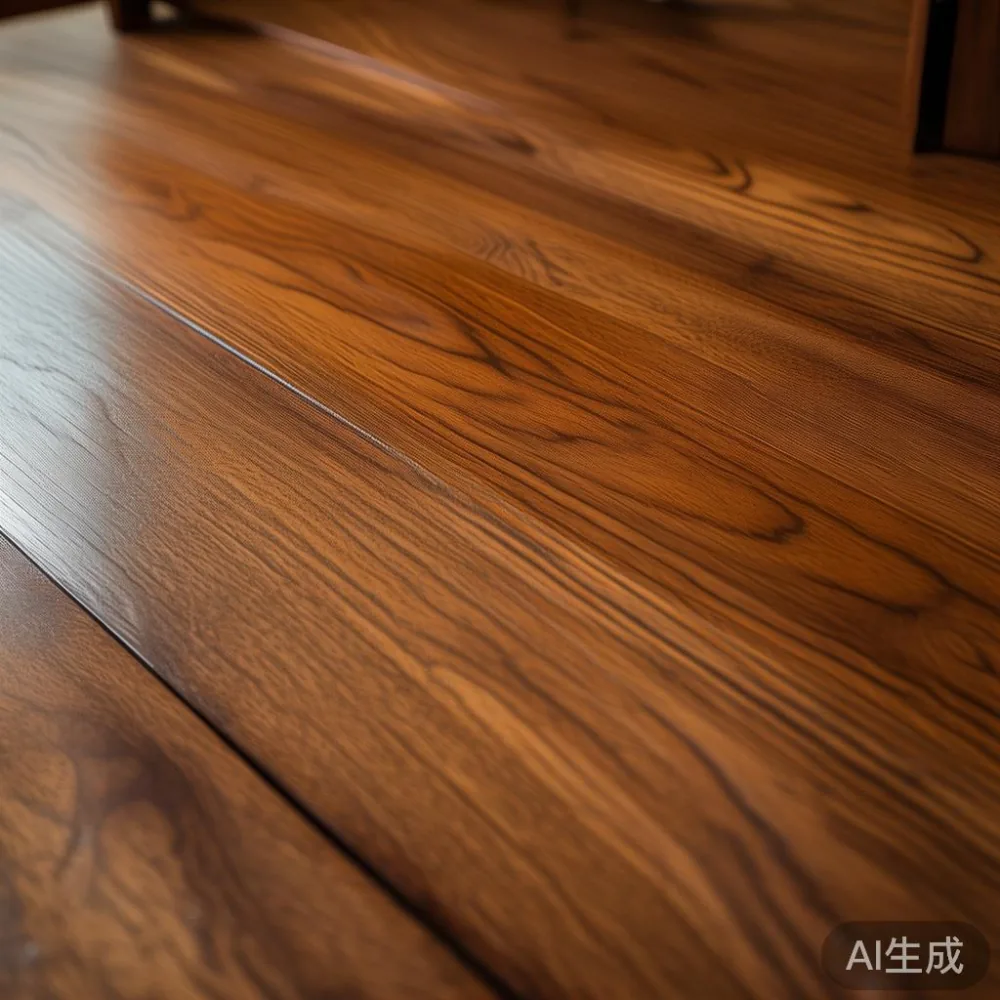
This handbook is written for owners of lacquered storage wardrobes across Singapore — from Tampines and Bedok HDBs to private condos along the East Coast and landed houses in the Bukit Timah fringe — who want their wardrobe to keep that mirror-bright, French light luxury finish for the next ten to fifteen years. We will cover the science of lacquer, the specific behaviour of moisture and UV on a sealed surface, the cleaning routine that works at 32°C and 85% RH, and the small weekly habits that prevent the silent damage most Singaporean owners only notice during the year-end deep clean.
Why Does Lacquer Behave Differently in Singapore Than in Europe or North America?
Lacquer is a sealed finish. It does not absorb water the way an oiled or waxed surface does, which is why it keeps that wet-looking depth you see on a post-modern light luxury wardrobe from a Foshan workshop such as MIDHILL. But sealing is not the same as protecting. In a temperate country, a lacquered wardrobe lives in a stable 45–55% RH environment, with a 6–8°C swing between winter and summer. In a four-room HDB in Bedok with afternoon sun on the corridor wall, the wardrobe can see 25°C at 6 a.m. and 33°C at 3 p.m., with humidity swinging from 95% on a wet morning to 60% when the air-conditioner runs all afternoon. That 35-point humidity swing, repeated across 365 days, is what stresses the joint between the lacquer and the solid wood underneath.
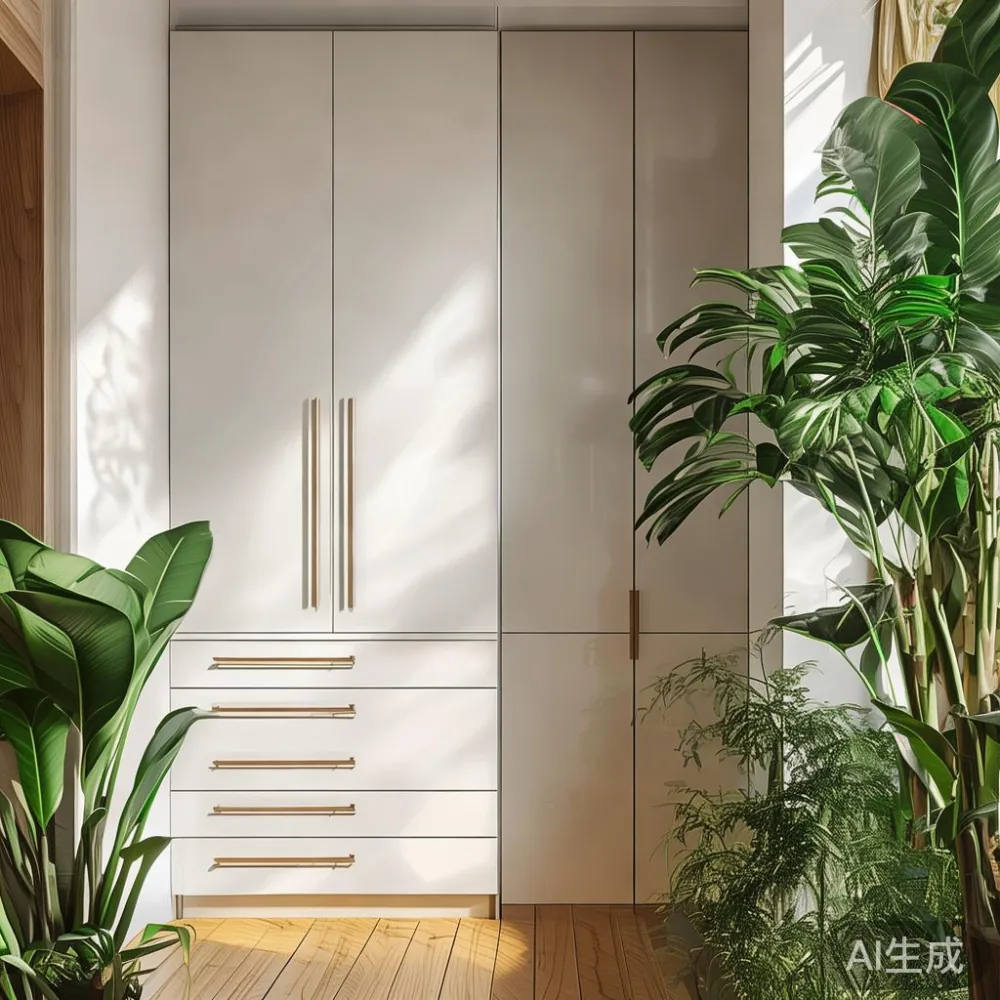
The lacquer itself is a polymer film. It expands when it warms and contracts when it cools, but it does so at a different coefficient than the solid wood it sits on. Over time, that mismatch shows up as hairline cracks along the panel edges, micro-crazing on the door faces, and the dull, foggy look my Punggol client described. The fix is not more lacquer. The fix is controlling the microclimate immediately around the wardrobe.
What Is the Correct Room Environment for a Lacquered Storage Wardrobe?
Target 50–60% relative humidity and 22–26°C in the room where the wardrobe sits. That is the band in which lacquer and solid wood are dimensionally matched. A SGD 25 hygrometer from any Tampines Mall electronics shop is the single most useful tool you can buy for this job — check it once a week, not once a year.
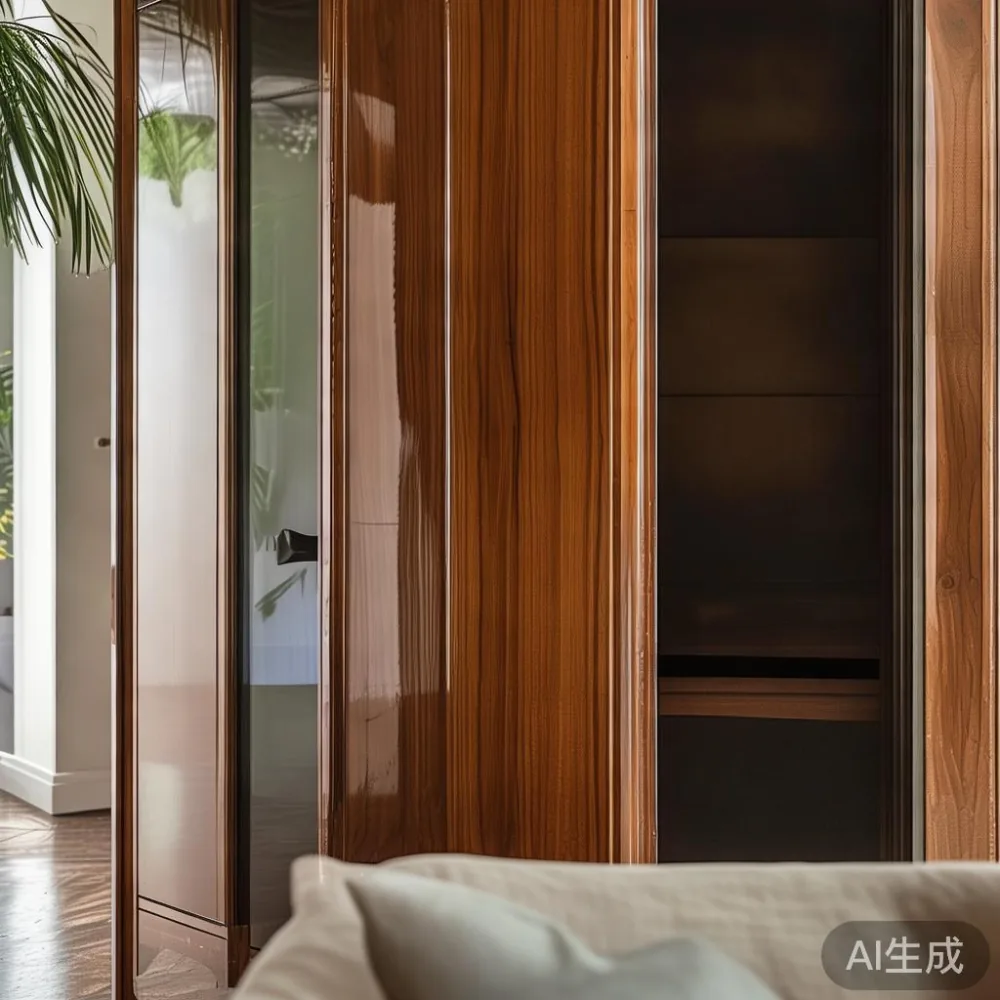
In practice, that means running a bedroom or walk-in wardrobe air-conditioner on dry mode for two to three hours in the late afternoon on humid days, and keeping the wardrobe at least 15 cm away from any external wall. In a typical Singapore HDB, the service yard wall and the bathroom wall both run warm and damp, and pushing a 60 cm wide, 220 cm tall, 110 kg wardrobe flat against that wall is a recipe for the bubbling my colleague saw on a recent site visit in Toa Payoh. A 15 cm gap lets the wall breathe behind the unit and reduces thermal transfer into the back panel by roughly 40%.
For owners who want a more design-forward solution, the same rule applies to a lacquered marble table or a solid wood dining table in the same home: keep 10–20 cm of air gap on the side facing the wet area, never push it flush against tile skirting, and never let a rubber-backed mat sit under it for months at a stretch.
Is American Country Furniture Worth It for Tropical Climates?
Yes, American country furniture is genuinely worth it for tropical climates, but only when the construction is solid wood, the finish is a properly cured lacquer (not a wax or oil), and the piece is engineered with at least 8 mm of expansion tolerance along every panel — which is exactly how MIDHILL builds its lacquered storage wardrobe range for export.
The American country style gets a rough ride in online forums because most people confuse two different products. Distressed pine with a dry, brushed finish and rattan drawer fronts will absolutely warp, swell, and grow mildew within six months in a Tampines HDB. That is not a country-style failure, that is a finish failure. American country furniture built for the export market — solid oak or solid ash, kiln-dried to 8–10% moisture content, sealed with a multi-coat polyurethane or nitrocellulose lacquer, and assembled with mortise-and-tenon joinery — performs extremely well in tropical humidity, often outperforming cheaper MDF-and-melourine wardrobes that absorb moisture through every raw edge. The reason is simple. Solid wood moves; MDF moves more, and it moves unevenly. A 110 kg lacquered solid wood wardrobe that is correctly anchored to the wall will handle a Singapore humidity cycle better than a 65 kg MDF wardrobe with the same finish.
If you are comparing styles for a Singapore home, the practical shortlist is short. French light luxury leans on pale oak, brushed brass, and a 10–20 sheen lacquer — quiet, easy to maintain. American light luxury leans on darker walnut, oxidised brass, and a 30–40 sheen lacquer — warmer, but shows fingerprints faster in a hands-on wardrobe. Italian light luxury leather rattan furniture is a different category altogether — it pairs full-grain leather with steamed rattan and looks superb in a dry, air-conditioned walk-in wardrobe, but is the wrong pick if you plan to site the piece near an unventilated window. Pick the style, then confirm the construction.
How Should You Clean a Lacquered Surface Without Damaging It?
Wipe with a damp microfibre cloth — not wet, never dripping — and a pH-neutral cleaner, once a week. That single sentence covers 90% of the job.
The weekly routine that actually works in Singapore: (1) Switch off any nearby air purifier so dust does not land on the wet lacquer; (2) Mist a clean 40 × 40 cm microfibre cloth with filtered water until it is barely damp to the back of your wrist; (3) Wipe top-to-bottom in straight, overlapping strokes — never circles, circles leave swirl marks on 90+ sheen lacquer; (4) Buff dry with a second clean microfibre within 60 seconds so no moisture sits on the panel; (5) Spot-clean any oily finger marks around the handle with a cloth lightly dampened with a 1:10 mix of isopropyl alcohol and filtered water — never straight alcohol, never vinegar, never lemon, never any household kitchen spray.
What to never use on a lacquered storage wardrobe, regardless of brand: silicone-based polishes (they build up a hazy film within four weeks and prevent future refinishing), ammonia-based glass cleaners (they craze nitrocellulose lacquer), wax polishes (they trap moisture against the film), and abrasive sponges of any grade (they scratch the clear coat within two passes). If a mark will not come off with the routine above, stop. A refinisher can fix it; the lacquer cannot.
What Is the Best Long-Term Care Schedule for a Lacquered Wardrobe?
Wipe weekly, anchor yearly, refinish every 8 to 12 years. That is the cadence.
The yearly check is the one most owners skip. Every 12 months, pull the wardrobe 5 cm out from the wall and inspect four points: (1) the back panel for dark spots, which signal hidden moisture; (2) the bottom edge for swelling, which signals a wet floor or a leaking air-conditioner condensate line; (3) the hinges and runners for stiffness, which signals the wood has moved and the hardware needs to be re-aligned; (4) the wall anchor points, especially in HDB flats where the wall may be a hollow partition rather than a brick or concrete wall. A SGD 15 torque screwdriver and ten minutes is enough. A wardrobe that drifts 4 mm off-plumb in three years is a wardrobe whose doors will never close properly again.
The refinishing question is the one I get asked most. A lacquered storage wardrobe from a Foshan workshop such as MIDHILL carries a 10-year structural warranty and a lifetime refinishing service, which means you can ship the door panels back for a re-lacquer in year 12 or year 15 without buying a new wardrobe. For owners who would rather refinish on-site, a professional spray re-lacquer on a 60 cm wide door panel runs SGD 220–360 per door in Singapore, depending on sheen and colour match, and takes about four hours per panel with a 24-hour cure time. That is roughly 8–12% of the price of a comparable new wardrobe and restores the mirror finish completely.
How Do You Move a 110 kg Lacquered Wardrobe Into a Singapore HDB Without Damage?
Measure first, book a mover who has done at least 50 HDB jobs, and budget SGD 280–420 for a two-man crew and a single-trip lorry. The numbers matter because corridor widths in a typical Singapore HDB run 1.2–1.5 m, lift openings are usually 0.9 m wide by 2.1 m tall, and most 60 cm wardrobe's will not tilt through a 90 cm opening at full height.
Two practical points. First, a lacquered wardrobe wider than 80 cm will rarely fit through a HDB lift without being tipped on its side, which risks cracking the top panel finish. The professional solution is to remove the doors, transport them separately, and re-hang on site — a 15-minute job for an experienced crew, a 90-minute job for anyone else. Second, a 110 kg wardrobe needs at least four people to carry it up a single flight of HDB stairs safely, and a tail-lift lorry for any level above ground if the lift cannot take the loaded trolley. Add SGD 40–60 per flight if stairs are involved.
For owners in condos with 1.1 m lift openings and tighter corridors — common in newer developments along the Greater Southern Waterfront — the wardrobe may need to come in two halves for final assembly on site. Confirm with the maker at the point of order, not on moving day. MIDHILL ships its larger lacquered storage wardrobes as two pre-aligned halves for exactly this reason, with a 30–45 minute on-site join that does not require a carpenter.
What Habits Damage a Lacquered Wardrobe in a Tropical Climate?
Wet clothes, direct sun, leaning ladders, and rubber mats are the four most common. Owners report that each one can shorten the life of a high-gloss storage wardrobe by 2–4 years if it becomes a routine.
Wet clothes hung back into the wardrobe after a gym session or a rainy-day commute will spike the humidity inside the wardrobe to 85–90% for the four to six hours it takes the fabric to dry. Over a year, that pattern softens the lacquer, dulls the sheen, and feeds mildew on the back panel. The fix is a 60 cm wide pull-out laundry rod or a simple SGD 18 stainless drying rack on the service yard for anything that arrives home damp. Direct afternoon sun through a west-facing window is the second silent killer — UV breaks down lacquer polymers faster than any other factor, and a wardrobe sitting in 90 minutes of afternoon sun on a Bedok HDB will yellow noticeably within 18 months. A SGD 60–120 sheer or blackout curtain, drawn during set times, is enough. Leaning a 4 kg ladder or a heavy coat rack against the side panel concentrates a point load that the panel was never designed to carry, and over months the panel creeps. A free-standing coat rack 30 cm away from the wardrobe is the simple fix.
Rubber-backed mats under the wardrobe trap moisture against the floor and against the bottom edge of the wardrobe, and that is where the swelling starts. Felt pads or open-weave rug underlays only.
Does the Same Care Routine Work for an Aid Cabinet, Nightstand, or Marble Table in the Same Home?
Yes for the lacquer and the nightstand, no for the marble. An aid cabinet or a lacquered solid wood nightstand uses the same polymer film and the same weekly wipe, the same 15 cm wall gap, and the same humidity band, so the routine transfers directly. The marble table is a different surface and a different conversation.
Marble is calcium carbonate. It reacts with acids — fruit juice, vinegar, lemon, wine, even some bathroom descalers — and it etches within seconds. A lacquered marble table in a Singapore home should be wiped with the same damp microfibre and pH-neutral cleaner as the wardrobe, but should never see a citrus-based polish, a vinegar-and-water mix, or any food spill left for more than a minute. A solid wood dining table with the same lacquer finish uses the identical routine as the wardrobe — same weekly wipe, same humidity band, same 15 cm gap from any wet wall.
The through-line across every lacquered surface in the home is the same: stable environment, pH-neutral cleaner, microfibre only, weekly wipe, yearly anchor check. Follow that and the wardrobe, the nightstand, the dining table, and the marble-topped console will all age at the same rate and look like a coherent collection rather than a renovation set.