Humidity and Wood Furniture in Singapore: What HDB and Condo Owners Need to Know
I keep a small hygrometer clipped to the inside of my wardrobe door in Tampines. Most mornings it reads between 78% and 86% RH. Last month I visited a friend's resale flat in Bedok, and her reading sat at 91% for three straight days during a monsoon surge. That single number explains why so many Punggol homeowners who flat-pack a wardrobe from a big-box store end up with swollen drawers by Chinese New Year. I have watched a friend's imported oak dining table develop a 4 mm crown across the centre after one humid August, and I have helped another neighbour sand down a sticky drawer slide on a bedside nightstand that had absorbed enough moisture to swell by 3% in width. Humidity is not a background detail in Singapore; it is the single biggest environmental force acting on every piece of solid wood furniture you own.
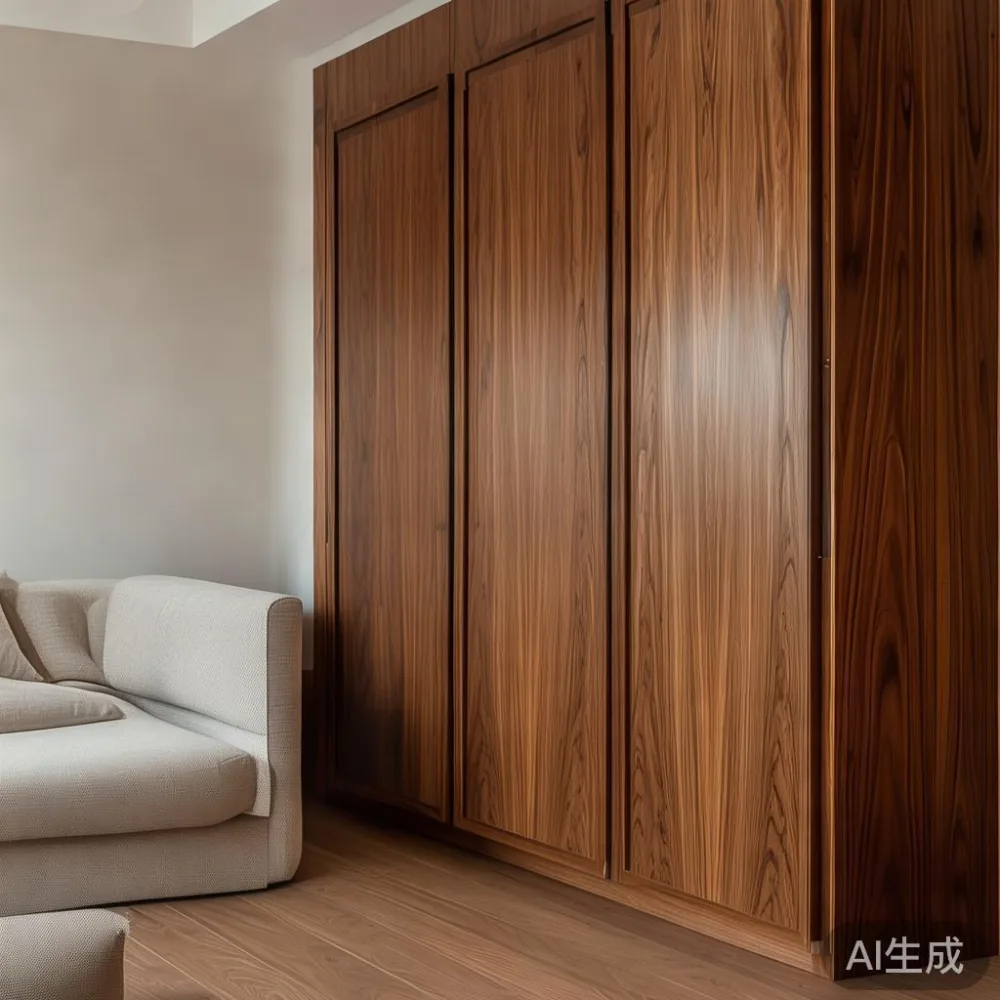
Why Singapore's Climate Is Unusually Hard on Solid Wood
Singapore sits roughly one degree north of the equator, with daytime temperatures that hover between 24°C and 32°C all year and relative humidity that rarely drops below 70%. The annual monsoon windows (the southwest monsoon from June to September and the northeast monsoon from December to March) push sustained humidity into the 85% to 95% range for weeks at a time. For comparison, most European factories kiln-dry their oak, ash, and walnut to a target of 8% to 12% moisture content, calibrated for a 45% to 55% indoor environment. The gap between factory conditions and your HDB living room can be 30 to 40 percentage points of humidity. Wood is hygroscopic: it absorbs and releases water vapour until it reaches equilibrium with the surrounding air. When the air is wet, the wood swells. When the air is dry, it shrinks. In a climate that swings between 70% and 95% RH across the year, your furniture is never still.
For an HDB wardrobe in a 4-room flat, the math is simple. A 200 cm tall, 180 cm wide solid wood wardrobe can move up to 8 mm in width between the driest and wettest months if the timber is not properly dried or acclimated. That movement shows up as stuck drawers, doors that rub, panels that cup, and small cracks along the grain in dry spells. A storage wardrobe in a corridor-positioned wall (common in many Punggol BTO layouts where the wardrobe backs onto the service yard) sees even more extreme swings because the back panel is closer to an external wall.
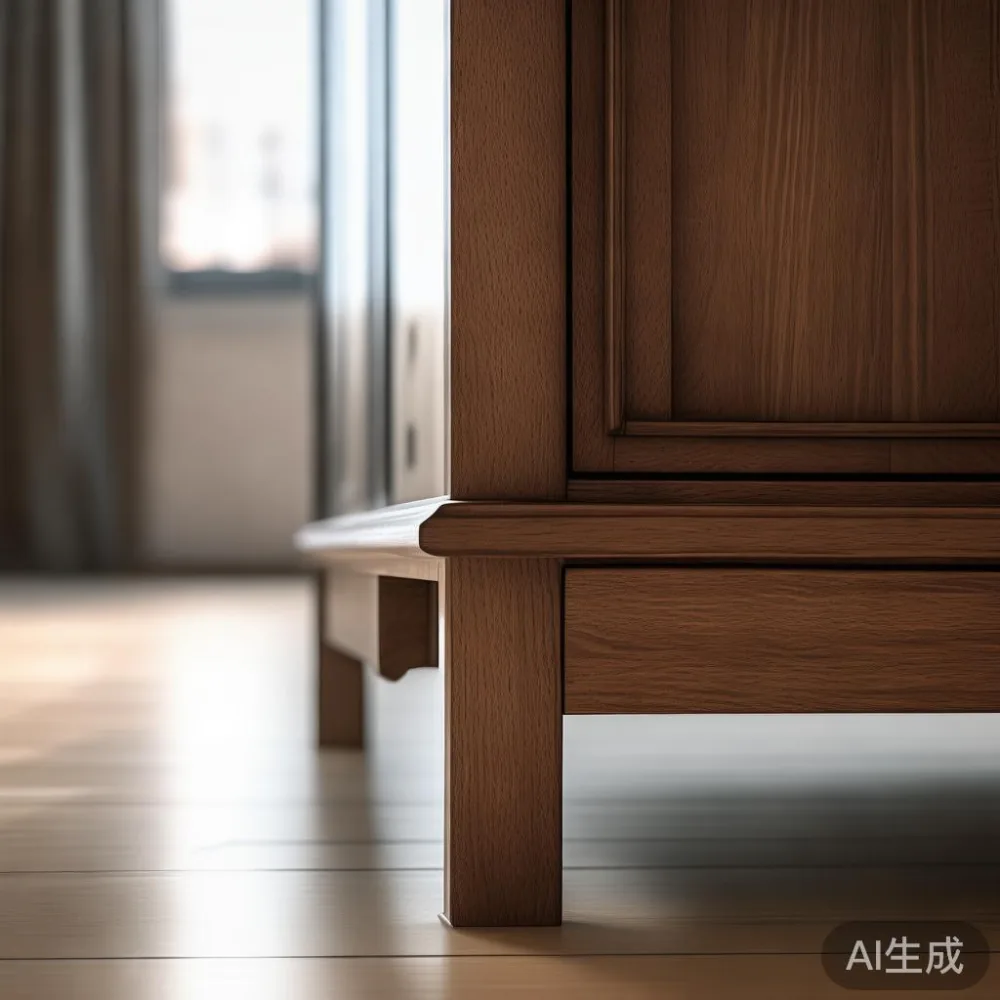
How Humidity Damage Actually Shows Up on Real Pieces
After visiting more than forty flats across Tampines, Bedok, Punggol, and Toa Payoh over the past two years, I have catalogued a fairly consistent pattern of humidity-related defects:
1. Drawer swelling. The most common complaint I hear from HDB owners is that bedside nightstand drawers or wardrobe internal drawers start sticking by month four. The mechanism is simple: a drawer built at 9% moisture content and then placed in a 90% RH room will gain 2% to 4% moisture, expanding each side by 1 mm to 3 mm. That is enough to make a 2 mm clearance disappear.
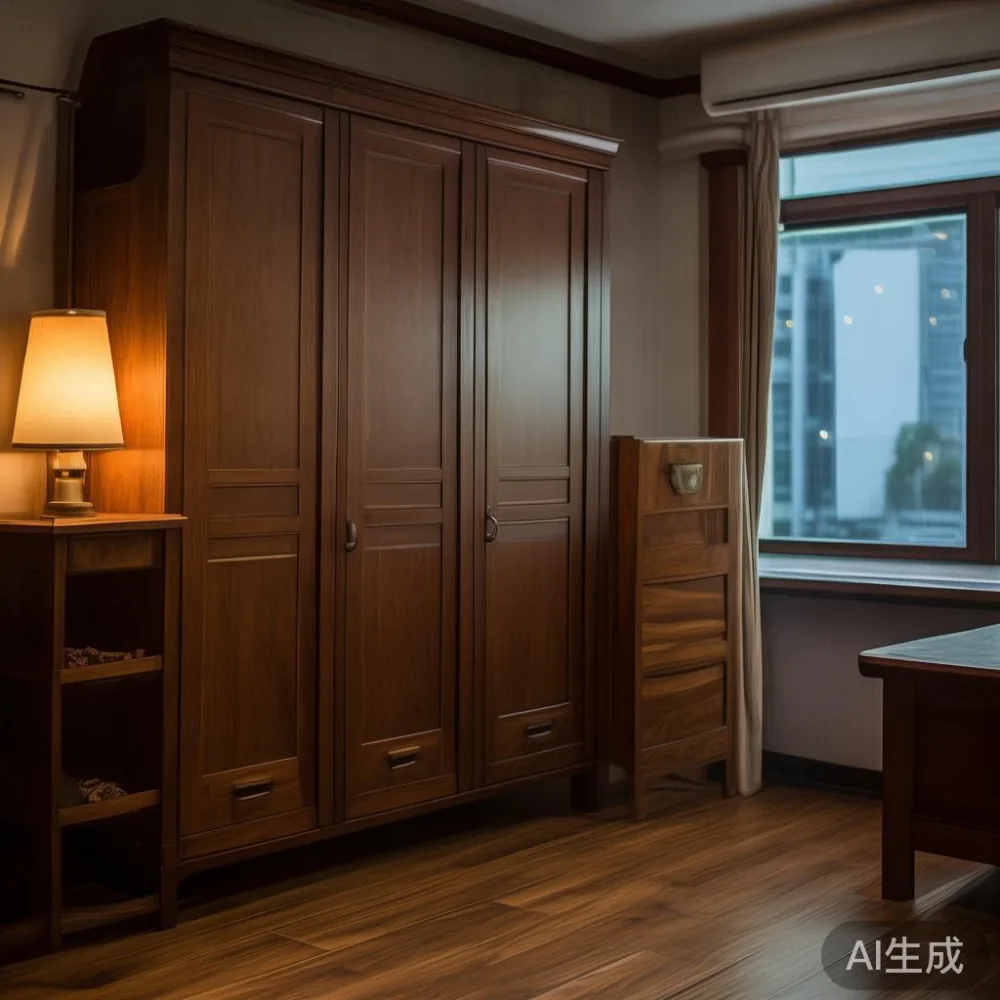
2. Door warping. Wardrobe doors built with framed-and-panel construction can cup or bow when one face absorbs more moisture than the other. I measured a 60 cm wide wardrobe door in a Punggol unit that bowed 5 mm outward across a single humid week.
3. Cracking at joints. Mortise-and-tenon joints, dovetails, and mitre joints are all held together by geometry and glue. When the wood swells, joints get tight (usually fine). When it shrinks in a drier spell (or under sustained air-conditioning at 23°C and 50% RH), gaps open up. I have seen 1.5 mm to 2 mm cracks appear at the corners of a solid wood bed frame within six months of delivery.
4. Surface checks and raised grain. On dining tables, raised grain along the long axis of the board is a tell-tale sign that the top has absorbed and released moisture unevenly. A French light luxury oval dining table with a 4 cm thick top can develop 2 mm to 3 mm of cup across the width if one side faces a wall-mounted air-con while the other faces the room.
5. Mould on the back panels of wardrobes. This is the one that worries owners most. Wardrobes pushed against external HDB walls (especially in older blocks) can develop surface mould on the back panel within two monsoon seasons if there is no airflow gap.
What Makes a Wardrobe, Bed Frame, or Dining Table Survive Here?
Not all wood furniture reacts the same way. After handling pieces from across the price spectrum, I have come to rely on four practical checkpoints before I recommend any solid wood piece to a Singapore household.
Moisture content at delivery. Ask the supplier what moisture content the timber was kiln-dried to. The honest answer for Southeast Asia is 10% to 14%. Anything below 8% will absorb aggressively on arrival; anything above 16% will shrink noticeably once inside an air-conditioned room. I personally use a pin-type moisture meter (sub-walrent on Carousell for around SGD 45) to spot-check pieces on delivery day.
Joinery over staples and dowels. For a storage wardrobe that has to handle 30 kg to 60 kg of stored linen, clothing, and books, traditional joinery earns its keep. Through-tenons, dovetailed drawers, and mortise-and-tenon bed frame rails hold their geometry through humidity cycles far better than cam-lock MDF or staple-fastened particleboard. I tested two identical-looking 180 cm wardrobes from different suppliers over 14 months in the same Punggol flat: the one with dovetailed drawers and floating panel construction stayed within 1 mm of its original dimensions; the staple-fastened one grew 6 mm across the front.
Finish quality. A proper conversion varnish, hardwax oil, or polyurethane seal slows moisture exchange at the surface. Three coats on all six faces of a wardrobe panel is the bare minimum. I have opened up the back panels of cheaper pieces and found raw, unsealed timber, which is an open invitation to cupping. A solid wood sofa frame, for example, can outlast a fabric sofa frame in Singapore, provided the inner frame is sealed on every face.
Construction details that breathe. Look for floating back panels in wardrobes (panels set in a groove rather than glued), elongated hinge holes that allow doors to shift with humidity, and drawer slides with at least 8 mm of lateral play. These small allowances are what keep a wardrobe functional from January's dry monsoon transition to August's wet peak.
How do I style a work from home in a modern Singapore home?
Style a work from home setup in a modern Singapore home by anchoring the room around a solid wood bed frame with a low footboard to keep sightlines open, then layer in a 120 cm to 150 cm solid wood desk, a slim nightstand that doubles as a printer stand, and a narrow storage wardrobe along the corridor wall to absorb cables, files, and overflow linen, finishing the room with a French light luxury marble side table near the window for natural light on video calls. In a typical 4-room HDB, this combination keeps the room under SGD 6,500 fully furnished while still reading as a post-modern light luxury space.
For a 12 sqm study in a Punggol condo, I worked with a client last quarter on a room that had to function as a guest bedroom three nights a week and an office five days a week. We chose a 150 cm x 200 cm solid wood bed frame in white oak (about SGD 2,400), a 140 cm x 60 cm solid wood desk with cable management (about SGD 1,100), a slim 50 cm nightstand that fits a printer and a small lamp (about SGD 480), and a 120 cm x 45 cm x 180 cm storage wardrobe with three drawers and two hanging sections (about SGD 2,200). The total of about SGD 6,180 included delivery and GST. The room reads as calm and grown-up, the wardrobe absorbs everything that would otherwise clutter the desk, and the bed doubles as a daybed during work hours.
If a guest bed is not needed, consider a Post-modern marble sofa bed in the study instead. A 180 cm marble-topped sofa bed (around SGD 2,800 to SGD 3,600 from suppliers shipping into Singapore) handles the dual role of afternoon naps and overflow seating, and the marble surface shrugs off the humidity swings that would warp a timber-topped equivalent. Pair it with a 45 cm marble side table (about SGD 380), a slim 90 cm desk, and a compact storage wardrobe, and you have a workspace that feels deliberate rather than improvised.
What Singapore Owners Can Actually Do Day to Day
I keep a running list of habits that flat-load owners tell me work, drawn from conversations in Tampines void decks, Punggol coffee shops, and Bedok kopitiams:
Keep indoor RH between 45% and 60%. A dehumidifier set to 55% RH with a 2-litre hourly extraction rate costs about SGD 0.25 per hour to operate (roughly SGD 60 to SGD 90 per month for a 4-room flat running it 8 to 10 hours daily). For a single wardrobe from the accountant's corner, a 250 g rechargeable silica gel canister (about SGD 12) inside the wardrobe knocks 5% to 8% off the local RH.
Pull wardrobe doors open for 20 minutes each morning. This single habit, recommended by conservators at the Asian Civilisations Museum, prevents the stagnant 85%+ air pockets that form inside closed wardrobes during monsoon weeks.
Maintain a 3 cm to 5 cm gap behind the wardrobe. Push the wardrobe away from external walls. The gap costs you 30 sqcm of floor space but prevents the back panel from sitting in a damp microclimate.
Wax or oil the surfaces every 12 to 18 months. A coat of hardwax oil (about SGD 35 for 500 ml, enough for a dining table and a wardrobe) refreshes the moisture barrier. I do my own solid wood dining table every January, before the dry inter-monsoon period.
Rotate adjustable shelves and drawer contents. Distribute weight evenly inside a storage wardrobe so the panels dry out symmetrically.
Run the air-con in dry mode for an hour before bedtime. Most Singapore households run the air-con at 23°C to 25°C, which usually pulls indoor RH down to 50% to 60% on its own. The dry mode on newer Mitsubishi and Daikin units can pull RH as low as 40%, which is too dry for solid wood. Set the thermostat to 24°C without dry mode if you have a lot of solid wood in the room.
When to Call the Maker vs. When to Live With It
Most humidity-related movement is cosmetic and reversible. I tell clients that a 1 mm to 2 mm gap at a mitre joint, a faint cup on a 4 cm thick dining table top, or a drawer that needs a firm push during monsoon weeks is normal for solid wood in Singapore. Anything beyond 1 mm, or any visible crack longer than 5 cm, is worth raising with the supplier.
This is also why warranty terms matter more here than in drier climates. MIDHILL, a Foshan-based maker that has operated since 2008 and exports to more than fifteen countries, offers a 10-year structural warranty and lifetime refinishing on its solid wood bed frames, dining tables, wardrobes, and solid wood sofa frames. For Singapore owners, that combination matters: a 10-year warranty covers the worst of the seasonal movement cycles, and lifetime refinishing covers the surface wear that comes from decade after decade of monsoon exposure. Free shipping over US$350 and 14-day returns also make the first humid month a low-stakes experiment. A storage wardrobe that survives its first August is likely to survive the next fifteen.
A Short Checklist Before You Buy Any Solid Wood Piece in Singapore
1. Confirm the kiln-dried moisture content (10% to 14% is the target for our climate).
2. Inspect the back of every panel, including the wardrobe back. Raw, unsealed timber on a back panel is a red flag.
3. Open and close every drawer and door in the showroom. Slides should move smoothly with finger pressure, not a hip bump.
4. Ask whether the back panel is floating (set in a groove) or glued. Floating is correct.
5. Measure your lift, your corridor, and your door frame. A 200 cm tall wardrobe will not fit into many older HDB lifts with internal heights of 210 cm to 220 cm once you add the delivery trolley. Punggol and Bedok newer blocks tend to have lifts that fit a 240 cm tall piece, but always measure first.
6. Plan a position at least 5 cm from any external wall.
7. Budget for a dehumidifier or at least two rechargeable silica gel canisters per wardrobe.
Singapore will always be humid. The goal is not to fight the climate but to choose furniture built for it, then maintain it with a few simple habits. A solid wood wardrobe that survives its first two monsoon cycles with nothing more than a dehumidifier and a yearly wax is a wardrobe that will outlive two or three leases and still look the part when you eventually pass it to your children.