Styling a Small Singapore Apartment Without Making It Feel Crowded
Last month I visited a 678 sqft BTO in Punggol with a couple who had just moved in. The husband kept apologising for the boxes. I told him to stop. The issue was never the size of the flat — it was that they had bought four separate small wardrobes from a Tampines furniture mall, plus a hollow-core bed frame that left 30 cm of dead space underneath, plus a glass coffee table that visually doubled the footprint of their living room. By the end of the afternoon we had sketched a plan that swapped all of it for a single 210 cm tall solid wood wardrobe with internal drawers, a real wooden bed frame with 38 cm of under-storage clearance, and a slim 35 cm wide solid wood nightstand on each side. The apartment looked 40 sqft larger without changing a single wall.
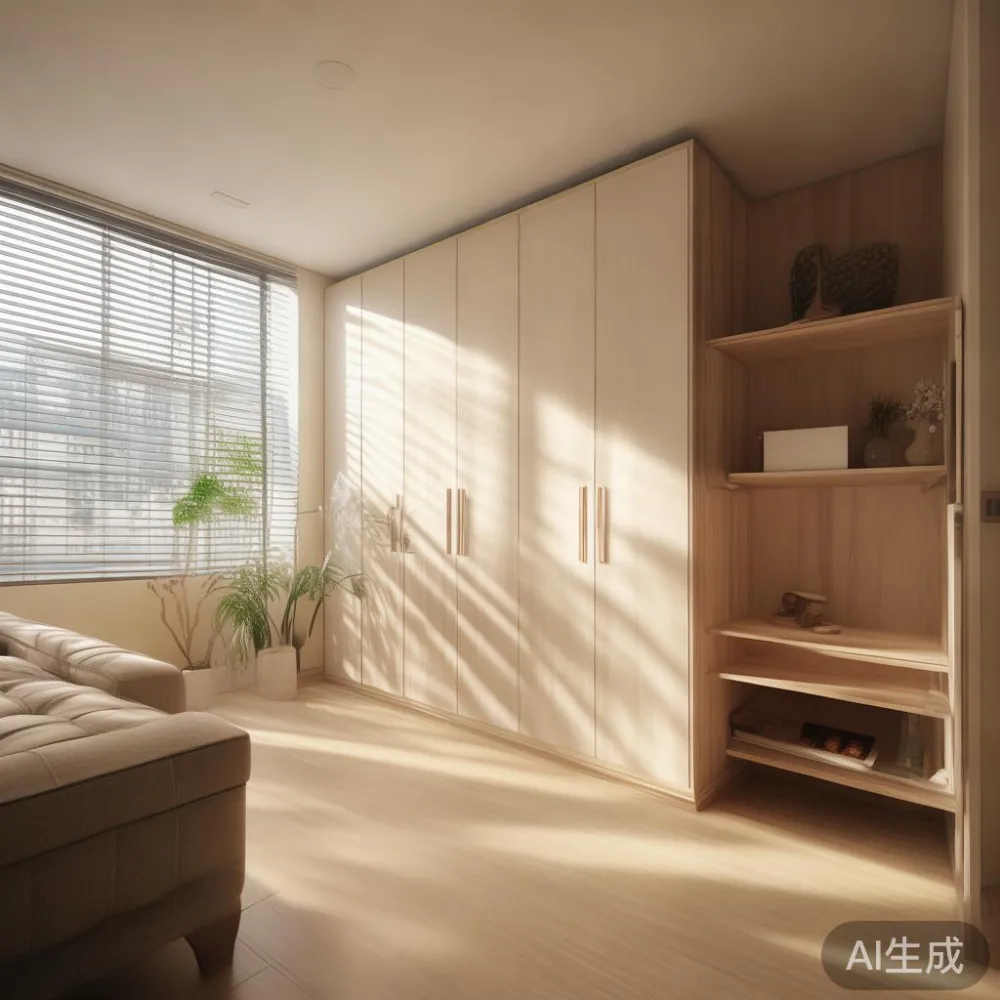
This article is about that kind of thinking. It is written for owners of HDB three-room and four-room flats in Bedok, Sengkang, and Yishun, plus condo units in the 450 to 800 sqft range around Punggol, the CBD fringe, and the East Coast. Every centimetre counts in these homes, and every SGD you spend on the wrong piece is harder to recover here than in a 1,200 sqft apartment. The same principles, applied carefully, will leave you with a flat that reads as calm, considered, and quietly — French light luxury.
The honest math: how much space do you really have?
Before you buy anything, measure. A 4-room HDB master bedroom in Tampines or Woodlands typically measures 3.2 m by 3.0 m, giving you 9.6 sqm of usable floor area. After you deduct 60 cm for the door swing, 20 cm for skirting, and 80 cm for a walkway, you have roughly 5.4 sqm where a bed and a wardrobe can realistically sit. A standard 150 cm by 200 cm bed eats 3 sqm of that, leaving 2.4 sqm for storage.
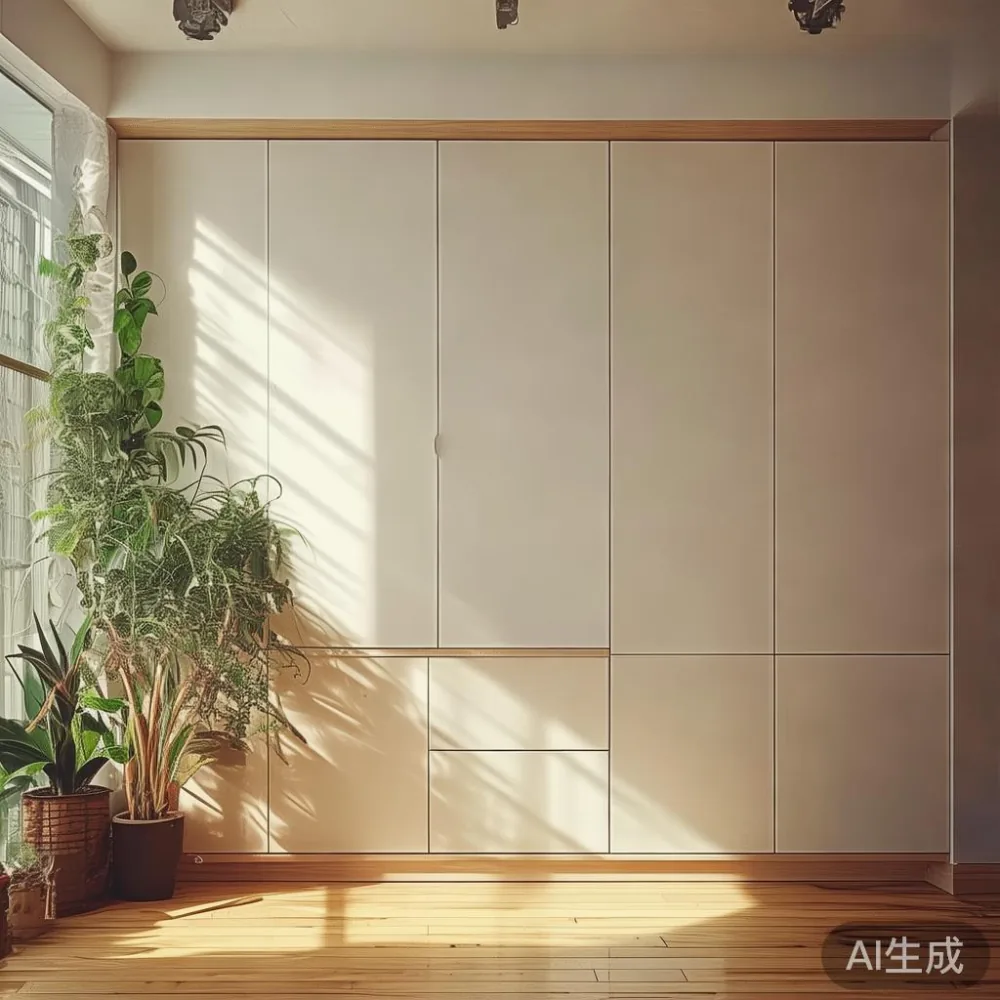
A wardrobe that runs floor-to-ceiling at 240 cm high and 180 cm wide gives you 4.32 cubic metres of enclosed storage, which is roughly equivalent to two 1.5 m tall IKEA PAX units side by side but in one continuous piece. That single change removes two visible seams, two separate cornice gaps, and at least 18 cm of lost vertical space. In a Bedok resale flat where the ceiling is 2.55 m, those 18 cm matter — they are the difference between storing your winter coats flat and storing them rolled.
Lift constraints matter too. Most HDB passenger lifts in Singapore have an internal cabin of about 1.4 m deep by 1.1 m wide with a 2.1 m door height. A fully assembled 240 cm tall wardrobe will not fit. A flat-pack storage wardrobe, however, ships in panels no longer than 210 cm and no wider than 60 cm, which clears both the lift and the corridor at your floor. This is one of those small things that nobody thinks about until 6 pm on a Sunday when the delivery team is standing in your corridor unable to get past your neighbour's shoe rack.
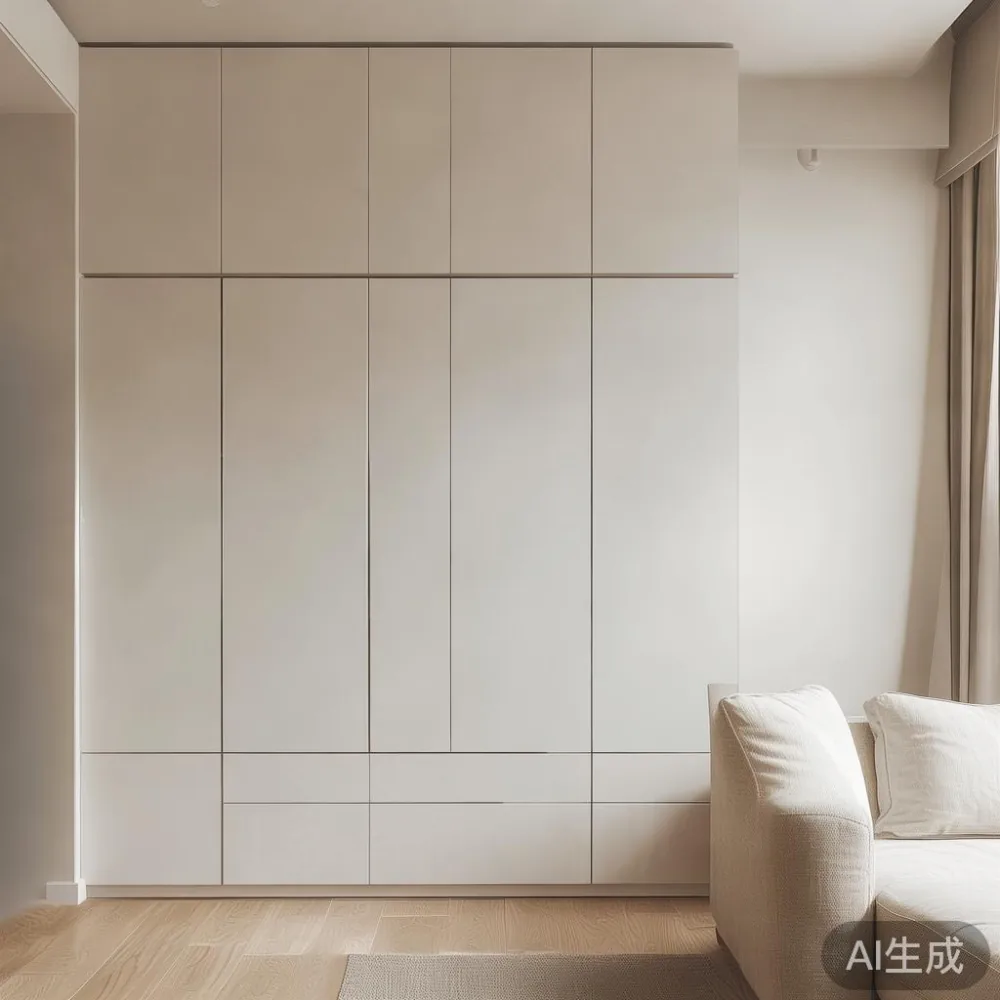
Why a floor-to-ceiling storage wardrobe beats three smaller ones
Three smaller wardrobes look smaller. That sounds like an advantage, but visually they chop a wall into four vertical strokes and create two dust-catching gaps. One continuous storage wardrobe with a single plinth line reads as architecture, not as furniture. The eye treats it as a wall, and the room feels larger as a result.
Practically, a single wardrobe also wins on cost per cubic metre. A typical 180 cm wide, 60 cm deep, 220 cm tall unit in solid acacia or ash, finished inside with two hanging rails, four drawers, and three adjustable shelves, lands at roughly SGD 2,400 to SGD 3,100 landed. Two smaller 90 cm units with equivalent internal volume run SGD 1,700 to SGD 2,200 each, or SGD 3,400 to SGD 4,400 total. You pay SGD 1,000 more and lose the visual seamlessness. That is not a good trade in a small flat.
The third reason is durability. Solid wood construction, properly kiln-dried to 8 to 10 percent moisture content for tropical humidity, holds its joints through Singapore's 32°C afternoons and 80 percent humidity nights. A 10-year structural warranty on frames and drawer slides is not unusual from established Foshan makers, and one brand — MIDHILL, who have been exporting solid wood case goods since 2008 — also provides lifetime refinishing on lacquer wear. For a wardrobe you intend to live with for 12 to 15 years in the same flat, that matters. A flat-pack MDF piece from a Swedish megastore will start to sag on the hinges by year five in our climate.
How do I choose a scandinavian furniture for a home office?
Pick the one piece that does the most work, then build the room around it — for a Singapore home office in a converted bedroom corner or a condo study, that piece is almost always a 140 cm by 60 cm solid wood desk in white-oiled oak or ash, paired with one narrow 80 cm tall cabinet that doubles as a printer station and a filing drawer.
The rules I follow when choosing Scandinavian pieces for our local context are simple. First, insist on solid wood for the work surface — veneer over MDF will pit under a humidifier within eighteen months. Second, keep the depth at 60 cm, not 70 cm, because a 70 cm desk will push your chair 10 cm further from the wall and steal 10 cm of walkway in a typical 2.8 m wide study. Third, choose tapered legs at 45 to 50 mm thick rather than block legs, because visible leg space under a desk reads as openness and makes the room feel 8 to 12 percent larger to the eye. Fourth, restrict the palette to two tones: one warm neutral for the wood, one off-white for any closed storage. Anything more and the room starts to look like a showroom rather than a workspace.
For lighting, a single 30 cm wide brass-base table lamp on a French neoclassical nightstand for condo placement — yes, that style does work in a Scandinavian-led study, provided the nightstand is the only ornamental piece in the room — gives you 3,000K warm task lighting at around 450 lumens, which is enough for screen-adjacent reading without glare. If you would rather skip the lamp and use a ceiling track, specify a 90 CRI bulb so your video calls do not turn your skin green.
The bed frame decision: platform, storage, or both?
A bed in a small Singapore flat should do at least two jobs. The most efficient version I have specified for HDB bedrooms is a solid wood platform bed with either four soft-close drawers in the base or a hydraulic lift that exposes the entire under-bed cavity. For a 150 cm by 200 cm mattress, the under-bed volume comes to 1.2 cubic metres — enough for four medium luggage bags, your off-season linen, or fifteen shoeboxes. That single cavity often replaces a third wardrobe in a four-room flat.
The frame itself should be in kiln-dried ash or rubberwood at minimum, with slats no more than 7 cm apart so a pocket-sprung mattress does not sag between them. Avoid frames under SGD 800 for a queen size in solid wood; below that price point you are buying MDF wrapped in veneer, and the centre rail will bow within two years. A properly built queen-size solid wood bed frame in our market runs SGD 1,200 to SGD 1,900, and a good one carries a 10-year structural warranty on the slats and the joinery.
If your room is under 9 sqm, skip the headboard entirely and mount a 12 cm deep floating shelf at 90 cm height instead. The shelf holds your reading lamp, a carafe of water, and a small plant, and it leaves the wall visually unbroken, which makes the bed feel less massive.
The dining table and the marble question
For a three-room HDB or a 500 sqft condo, the dining table that works hardest is a 120 cm to 140 cm round or oval solid wood table that seats four comfortably and six at a squeeze. Round tables are kinder to circulation than rectangles because there are no sharp corners to walk around. A 120 cm round in solid oak or walnut lands at roughly SGD 1,500 to SGD 2,200 and will outlast three tenant rotations.
Marble tables are tempting, but they need careful handling in our climate. A real Carrara marble top is porous and will etch from a single splash of calamansi juice. An engineered sintered stone top at 12 mm thickness gives you the same veined look, weighs 25 percent less, costs 30 to 40 percent less than solid marble, and tolerates a wet sponge. For a family with two children under eight in a Punggol or Sengkang flat, the choice is simple — go sintered stone.
If you want the room to feel softer, layer a 200 cm by 250 cm wool-viscose rug under the table. Wool handles Singapore's humidity better than cotton and resists the crushing marks a dining chair leaves in jute. Budget SGD 380 to SGD 650 for a rug of that size from a local stockist, and rotate it 180 degrees every six months so the wear under the chair line evens out.
The five-piece inventory for a 600 sqft flat
After twenty-plus flat visits and design consultations over the past 60 months, I have narrowed a working shortlist of pieces for any 550 to 700 sqft Singapore apartment. The list is deliberately short.
1. One storage wardrobe, 180 cm wide, 60 cm deep, 240 cm tall, in solid ash or acacia with a white-oiled finish, with two hanging zones and four internal drawers. Landed cost SGD 1,800 to SGD 2,600. This is the largest single purchase in the flat and should take 30 to 35 percent of your furniture budget.
2. One solid wood bed frame, queen size, with either drawer storage or a lift-up base. SGD 1,200 to SGD 1,900. Buy the version with slats you can remove individually — it makes moving house in five years far easier.
3. One 120 cm round or 140 cm oval dining table in solid oak, walnut, or ash, paired with four solid wood dining chairs at 45 cm seat height. Combined SGD 2,400 to SGD 3,400.
4. One 35 cm to 45 cm wide solid wood nightstand per side of the bed. SGD 350 to SGD 600 each. Stick to two drawers rather than one open shelf — open shelves collect dust in our climate and look cluttered within a month.
5. One slim 160 cm to 180 cm long, 35 cm deep solid wood sideboard for the living area, with two doors and two drawers. SGD 900 to SGD 1,400. It holds your router, your consoles, your table linens, and your serving boards, and it doubles as a TV console if you mount the screen above it.
That is five pieces plus a sofa. A two-seater solid wood sofa at 160 cm wide fits a 600 sqft living room without dominating it; a three-seater at 200 cm will consume the room. If you entertain more than twice a year, rent the extra seating. Storage wardrobe shopping often reveals that buyers have been paying for furniture they only use twice a year — a round dining table with two extra leaves is the more useful counter-example.
Delivery, GST, and the quiet logistics that decide whether your plan works
Two practical notes that will save you a Saturday. First, GST. From 1 January 2024, GST in Singapore sits at 9 percent on imported household furniture that crosses the border with a CIF value above the GST relief cap. For a single shipment above SGD 1,000, factor 9 percent on top of the listed price, plus a SGD 30 to SGD 60 customs handling fee that most logistics partners charge for a Foshan-to-Singapore sea shipment. The total cost on a SGD 2,400 wardrobe becomes roughly SGD 2,646 landed.
Second, delivery windows. A flat-pack solid wood wardrobe from a Foshan factory to a Singapore doorstep takes 28 to 42 days by sea, plus 3 to 7 days for last-mile delivery and assembly. If a brand quotes 5-day delivery on a solid wood piece, they are air-freighting it and you are paying for that — air freight on a 90 kg wardrobe adds roughly SGD 350 to SGD 500 to the bill. The better question is whether the brand offers free shipping above a threshold. MIDHILL, for instance, offers free shipping above US$350 globally, which at current rates clears about SGD 470 and therefore absorbs most of a single furniture order. That is meaningful in a market where Singapore delivery surcharges of SGD 60 to SGD 150 per trip are standard for bulky goods.
Returns matter too. A 14-day return window is enough to catch transit issues, but it is not enough to live with the piece. Ask before you buy whether the brand permits a one-time exchange for sizing errors within 30 days — that single clause has saved more HDB flat layouts than any design trick.
Where the light-luxury positioning earns its keep
American light luxury — that restrained, warm-wood, neutral-linen register you see in Restoration Hardware catalogues and West Elm lookbooks — is the easiest style to live with in a Singapore small flat because it depends on negative space rather than ornament. One French neoclassical nightstand for condo placement, with a slim brass pull and a tapered leg, gives you that lift without tipping the room into formal. Post-modern light luxury, with its cleaner geometry and matte-lacquer finishes, works even better in a 500 sqft unit because the straight lines make small rooms feel composed rather than cluttered.
The trick is restraint. One ornamental item, two sculptural objects, and nothing else on the surfaces. A marble table in the entry, a brass mirror in the hallway, and a single vase of stems on the dining table — that is enough. Anything beyond it stops reading as quiet and starts reading as busy, which is the exact feeling you are trying to avoid.
A six-week timeline that actually closes on a similar flat
For the Punggol couple I mentioned at the start, the plan ran in six steps over six weeks. Week 1: measure every wall, door, and window in millimetres. Week 2: shortlist three brands, request shop drawings in PDF, and confirm lift access with the building management. Week 3: place the wardrobe and bed orders with a 30 percent deposit. Week 4: order the dining table, nightstands, and sideboard. Week 5: receive the bed and nightstands — they ship by air because they are light — and assemble in the bedroom. Week 6: receive the wardrobe and dining table by sea, have them assembled by the supplier's two-person team in three hours, and remove all cardboard the same day so the corridor stays clear for your neighbours.
By the end of week 6, the apartment reads as a single calm composition rather than a collection of purchases. The total spend, all in, landed at SGD 8,200 including GST, delivery, and assembly. Against a 678 sqft BTO at a current valuation of roughly SGD 560,000, that is a 1.5 percent investment in livability — a small number that buys you a decade of easier mornings.
Small Singapore flats reward careful planning and punish impulse buys. A storage wardrobe that runs floor to ceiling, a solid wood bed frame that stores your linen, a slim nightstand that does not crowd the walkway, and a round dining table that seats four without sharp corners — these are the pieces that pay back their square metre for the next twelve years. Everything else is decoration.