How Southeast Asian Humidity Affects Solid Wood Furniture in Singapore
Singapore’s warm, humid climate can change the dimensions, joints, and finish of solid wood furniture faster than many owners expect. Air moisture content rises during the monsoon periods, falls when air conditioners run for long hours, and often varies between a corridor and an air-conditioned bedroom. For a storage wardrobe in an HDB flat or condo, those repeated cycles matter because large wooden panels need to expand and contract without splitting, sticking, or distorting.
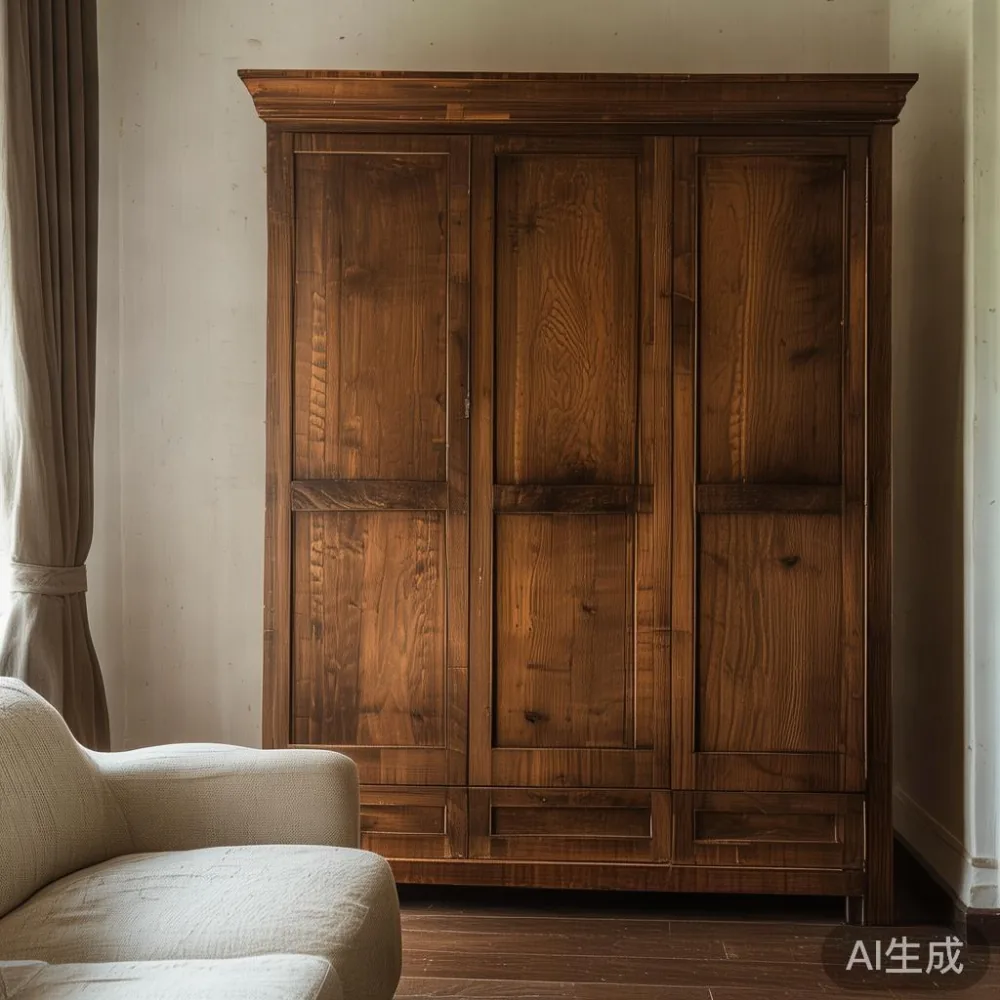
MIDHILL builds solid wood furniture for practical homes, including storage wardrobes, bed frames, dining tables, and nightstands. Since 2008, the company has exported to more than 15 countries and supported its furniture with a 10-year structural warranty, lifetime refinishing service, and 14-day returns. Understanding local humidity is therefore not only a care issue; it is part of choosing furniture that can remain stable in a 180 cm corridor, a compact lift lobby, and an ensuite bedroom.
What does humidity do to solid wood furniture in Singapore?
Wood is hygroscopic: it takes in moisture when the surrounding air is humid and releases it when the air becomes dry. A wardrobe made with solid timber may change by roughly 1–3 mm across a broad panel when its moisture content shifts by about 8–12 percentage points. That movement can be concealed by well-made joinery, but poor tolerances can cause doors to rub, drawers to bind, or laminated surfaces to peel.
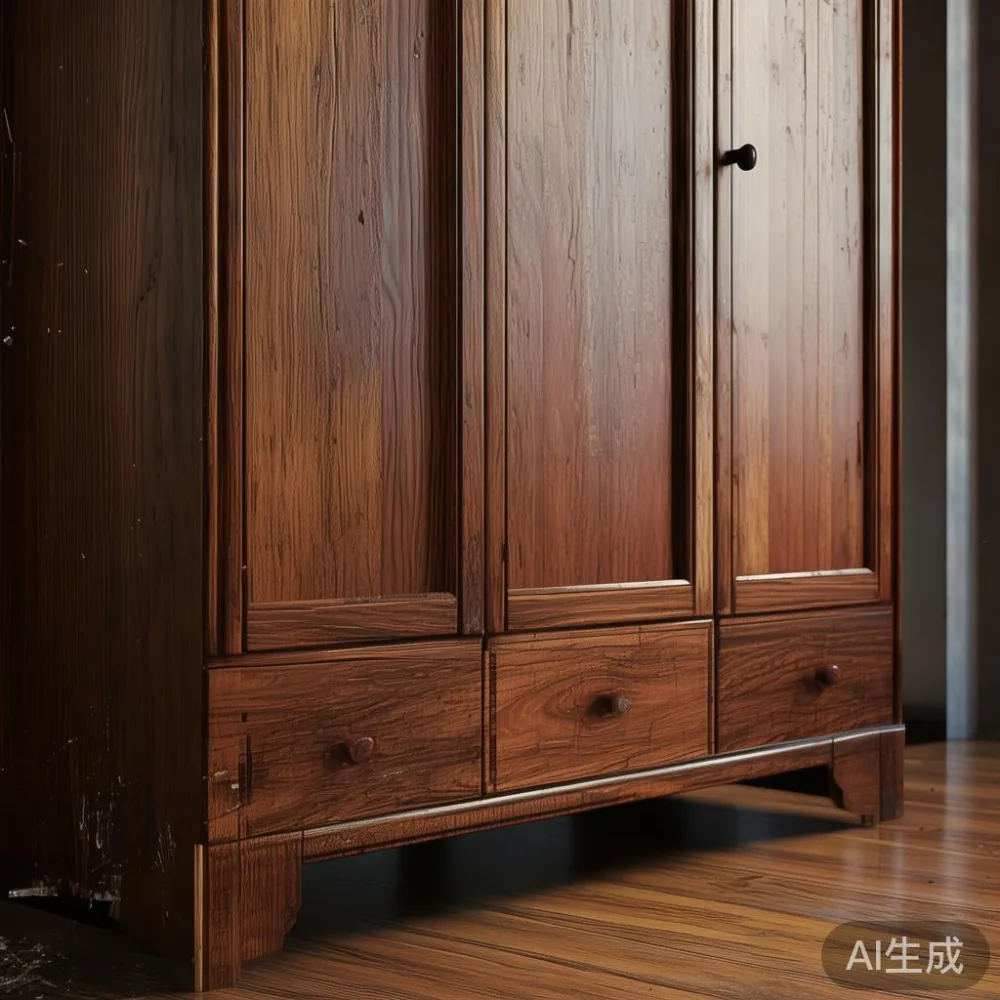
Singapore’s annual relative humidity commonly ranges from about 65% to 85%, with short periods approaching 90% during heavy rain. Outdoor air can contain more moisture than air-conditioned rooms, especially around 6–9 a.m. and during the northeast monsoon from November to March. In a Tampines HDB flat, a storage wardrobe beside a frequently opened balcony door may see wider fluctuations than a unit facing an air-conditioned corridor. Condos can have lower average humidity, but tightly sealed rooms can still develop condensation on chilled surfaces and near windows.
Temperature also affects the wood. Warm air holds more moisture at the same relative humidity, and a wardrobe near a west-facing window can reach 31–34°C in the afternoon. Air conditioning may then pull the room down to 24–26°C within a few hours. Repeated heat and cooling cycles stress finishes, while sudden moisture changes challenge the stability of doors and carcasses.
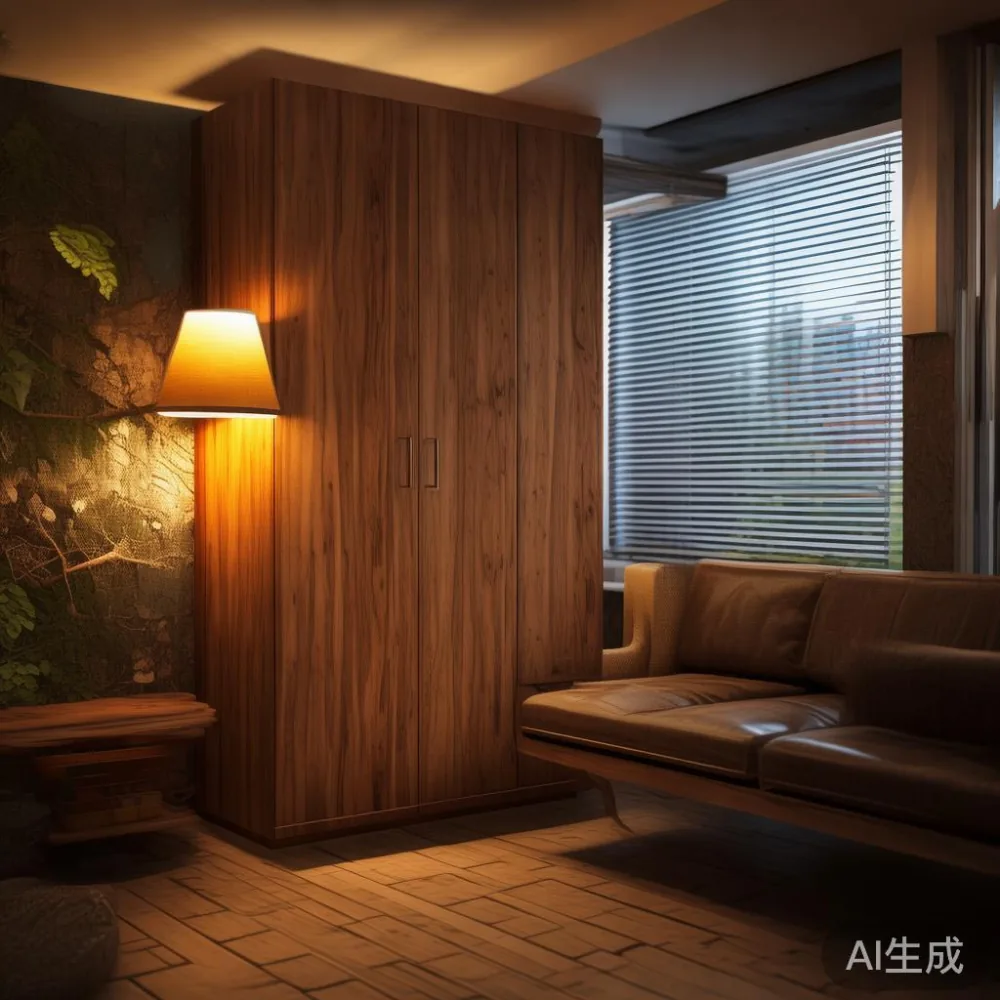
The practical objective is not to eliminate every millimetre of movement. It is to keep the moisture change gradual, the furniture clear of damp walls, and the internal humidity within a sensible band. A hygrometer is inexpensive, often S$18–S$45, and gives a household a useful number instead of guesswork.
How much humidity should a bedroom or wardrobe have?
For solid wood furniture, a relative humidity reading around 45–60% is a useful target, with most experts accepting a moderate band of roughly 40–65%. Singapore homes can sit above this range for many days, so the room’s ventilation and air-conditioning habits matter as much as the number on the box.
Place the hygrometer near the storage wardrobe rather than beside the air-conditioner vent or bathroom door. Check it at about 8 a.m., 2 p.m., and 10 p.m. on a normal weekday. If the reading moves from 88% at 8 a.m. to 52% at 10 p.m., the room is experiencing a 36-percentage-point swing. That pattern is more relevant to furniture care than a single reading of 68%.
Dehumidifiers can help. A model rated for 20–30 m² typically removes 10–20 litres of water per day, although actual output depends on the unit’s condition and the room temperature. Set the dehumidifier to maintain 55–60%, empty its tank every 2–3 days, and leave 20–30 cm around the intake and outlet. Do not place a storage wardrobe directly against the unit’s dry air outlet, because one surface can dry while the opposite side remains damp.
For wardrobes, an additional trick is to leave interior drawers slightly open after use. This allows trapped moisture to escape instead of accumulating around folded cotton, wool, and linen. Avoid storing damp clothing in closed compartments, and remove bedding that has been aired outdoors before closing the doors.
Does coastal air corrode the hardware in a storage wardrobe?
Yes, salty, humid air can accelerate corrosion on hinges, screws, drawer runners, and lock mechanisms. Singapore is about 113 km from the southern coastline, and salt carried in the air can settle on exposed metal, although the severity depends on building ventilation, distance from the sea, and maintenance. A coastal condo in Punggol or Bedok should receive the same care as a more sheltered unit because indoor humidity and condensation still affect metal.
Use a dry microfibre cloth every 2–4 weeks during humid periods. If hardware shows dulling, faint rust spots, or a rough texture, wipe it with a lightly damp cloth and dry it immediately. Do not use household bleach on an electro-plated finish; a 1:1 mixture of white vinegar and water can clean light surface oxidation, followed by thorough drying. Hinges that already have deep rust should be replaced rather than concealed with paint.
Good hardware design reduces the problem. Look for solid wood storage wardrobes with three-way adjustable hinges, full-extension runners, and recessed handles that do not trap moisture. A 180 cm tall wardrobe may require six or more hinges to distribute the load evenly, especially when the doors contain mirror panels. Check adjustment every 6 months so the doors remain aligned as wood movement occurs.
How can I keep a solid wood wardrobe stable through Singapore’s seasons?
Start with installation. Leave a ventilation gap of at least 3–5 cm behind a freestanding storage wardrobe when the wall is exterior or prone to condensation. On a 240 cm-wide wall, a 200 cm wardrobe leaves 20 cm on each side, but do not rely on that unused space without checking the wall. Do not seal the back and sides with silicone if the furniture is intended to be freestanding; trapped moisture has nowhere to go.
For built-in units, use moisture-tolerant substrates and confirm how the installation is ventilated. A typical floor-to-ceiling panel might be 240–270 cm high and 60–120 cm deep. Its broad face can gather heat quickly, while its lower edge can encounter dampness during floor cleaning. Keep the base at least 5 cm above the floor if the design allows, and use coasters beneath a nightstand or marble table that is moved for cleaning.
Wipe spills immediately. A ring left for 6 hours can penetrate an open pore, while one left overnight may become difficult to remove from oak or ash. Use a coaster with a diameter about 5 cm larger than the object’s base, and protect a dining table with a placemat rather than a damp cloth. Solid wood furniture should not be exposed to steam from an iron, kettle, or humidifier for more than a few seconds.
Refinishing is part of long-term care. If the finish looks pale, rough, or uneven, stop treating the symptom with polish. Have the surface assessed for cleaning, sanding, and refinishing. MIDHILL offers lifetime refinishing, which is particularly useful for furniture that has lived through several humid seasons in Singapore.
Can a lift and corridor accommodate a large wardrobe without damaging the furniture?
A storage wardrobe can fit through a common HDB access route, but the packaging and turning space need checking before delivery. Many older blocks have a lift door around 90 cm wide and 210 cm high, with internal dimensions near 110 cm deep and 160–180 cm across the diagonal. A lift car measuring 140 cm by 110 cm may accept a flat-packed wardrobe panel but not a fully assembled carcass.
Measure the lift lobby, corridor width, door opening, stair corners, and the narrowest turn. The required delivery path should have at least 5 cm of clearance beyond the package dimensions. Record any obstacles such as fire hose reels, letterboxes, and low soffits. A wardrobe that fits the lift on paper can still fail if the package cannot be turned through a 90-degree corridor corner.
For larger pieces, MIDHILL can arrange suitable delivery planning, and free shipping applies to orders over US$350. Buyers in Singapore should still allow 7–14 delivery days after confirming stock and access arrangements. Avoid directing couriers to assemble furniture in a corridor narrower than 120 cm, because working space matters as much as entry clearance.
Local prices are stated in SGD, and GST applies. For example, a carefully planned solid wood dining table may cost S$1,280–S$2,450 before GST, while a large storage wardrobe may range from S$1,850–S$4,200 before GST. Marble table prices often start around S$980 before GST. Confirm the final delivered price, GST, and access charges before placing the order.
What should I look for when choosing light-luxury furniture for a humid home?
Light-luxury design should not mean thin construction or unstable joinery. French light luxury often introduces curved profiles, pale upholstery, and refined metal details; American light luxury tends toward generous proportions and clean comfort. Post-modern light luxury can combine restrained forms with tactile timber and stone. These styles can work in a compact Singapore bedroom if the furniture is proportioned to the room.
A bed frame measuring 160 × 200 cm needs about 70–90 cm of space on each side for circulation, while a Queen bed at 152 × 191 cm works with a minimum 60 cm side clearance. A nightstand placed beside the bed should be within 10–15 cm of the mattress edge for reach, but it should not touch a wall that sweats condensation.
Design references such as a French sofa vs Japandi sofa comparison can be useful when the sofa will share a living room with a storage wardrobe. In the comparison between European light luxury sofa vs French provincial sofa, the European version may carry sharper geometry, while the French provincial style introduces upholstery and curves. A practical question about how to style French sofa in room layouts should focus on clearance, fabric resistance, and visual balance rather than decoration alone.
For a modern apartment, a Modern light luxury TV console should have at least 15–20 cm of ventilation space behind it if it contains electronics. The phrases luxury Modern light luxury furniture and Modern light luxury TV console often appear in showroom descriptions, but buyers should also ask about timber thickness, drawer movement, veneer quality, and humidity care. A mid-century modern for office arrangement should reserve 90–120 cm of clear floor space for a chair and circulation. These design references can be mixed with a solid wood sofa, solid wood bed frame, dining table, nightstand, and marble table without creating visual clutter.
How do air-conditioning, mould, and wood odours affect a bedroom?
Air conditioning lowers both temperature and humidity, but the effect can be uneven. A bedroom maintained at 25°C may still record 60–70% humidity near an open wardrobe. Cleaning the filter every 3–4 weeks and checking the condensate tray every 2–3 weeks can improve consistency. Set the fan to Auto rather than alternating between 22°C and 27°C, as rapid changes increase finish movement.
Musty odours deserve attention. A faint damp-wood smell can result from trapped moisture, but a strong mouldy smell indicates that ventilation or cleaning needs review. Keep the area dry, increase air movement, and clean the back and top of the wardrobe with a dry cloth. Do not bleach wood, because the residue can attack the finish and discolour the grain. If mould returns within 7–10 days, inspect for wall condensation and seek building maintenance advice.
For a newly delivered storage wardrobe, let the panels acclimatise in their intended room for 24–72 hours before loading them heavily. If the unit is flat-packed, open the drawers and leave the doors ajar for the first 12–24 hours. This is especially sensible in Bedok, Tampines, and Punggol homes where deliveries may occur during short dry windows followed by heavy rain.
What care routine suits Singapore solid wood furniture?
Create a simple monthly and seasonal routine. In the first week of each month, check the hygrometer, inspect 4–6 wardrobe corners, and test each door and drawer. During the 9 a.m. peak in outdoor humidity, close windows facing direct rain and run the dehumidifier. Between 5–8 p.m., ventilate the bedroom for 15–30 minutes when outdoor conditions allow, then resume cooling.
Every 4–6 weeks, dust with a dry microfibre cloth from the top down. Clean a dining table immediately after use, and use coasters under bottles, vases, and table lamps. Check a nightstand every 2 months for scratches, moisture rings, and loose handles. Inspect a marble table for sealer wear around the edges, especially if acidic drinks or perfume are placed on the surface.
Solid wood may receive small marks during normal use, and refinishing can restore the appearance without replacing a large item. A dining table that has been in a family for 4 years may need sanding after 2–3 humid seasons if its finish has been exposed to repeated water and heat. MIDHILL’s lifetime refinishing service supports this approach, while the 10-year structural warranty covers long-term joinery and structural concerns rather than accidental damage or neglect.
Humidity control cannot make Singapore’s climate disappear, but it can keep movement predictable. Keep readings near 45–60% where possible, avoid abrupt temperature changes, protect the wood from water, and inspect the storage wardrobe every 2–3 months. For product advice or delivery planning, contact MIDHILL at +86 188 2788 2512 and provide the room dimensions, building access measurements, and expected installation date.