Living with Wood in Southeast Asia: A Singapore Homeowner's Guide to Humidity and Your Storage Wardrobe
Last month I visited a friend's newly renovated four-room HDB flat in Punggol. Everything looked magazine-perfect on handover day: a 1.8 metre solid wood bed frame from a regional brand, a tall storage wardrobe in American light luxury styling with reeded panels, a six-seater dining table in warm walnut tones. Three weeks later she sent me a photo: a faint hairline crack running from her wardrobe door panel down toward the base, and a slightly sticky drawer on her nightstand that refused to close. She had not spilled anything. She had not dropped anything. The culprit was sitting invisibly in her 23-square-metre living room all along: humidity.
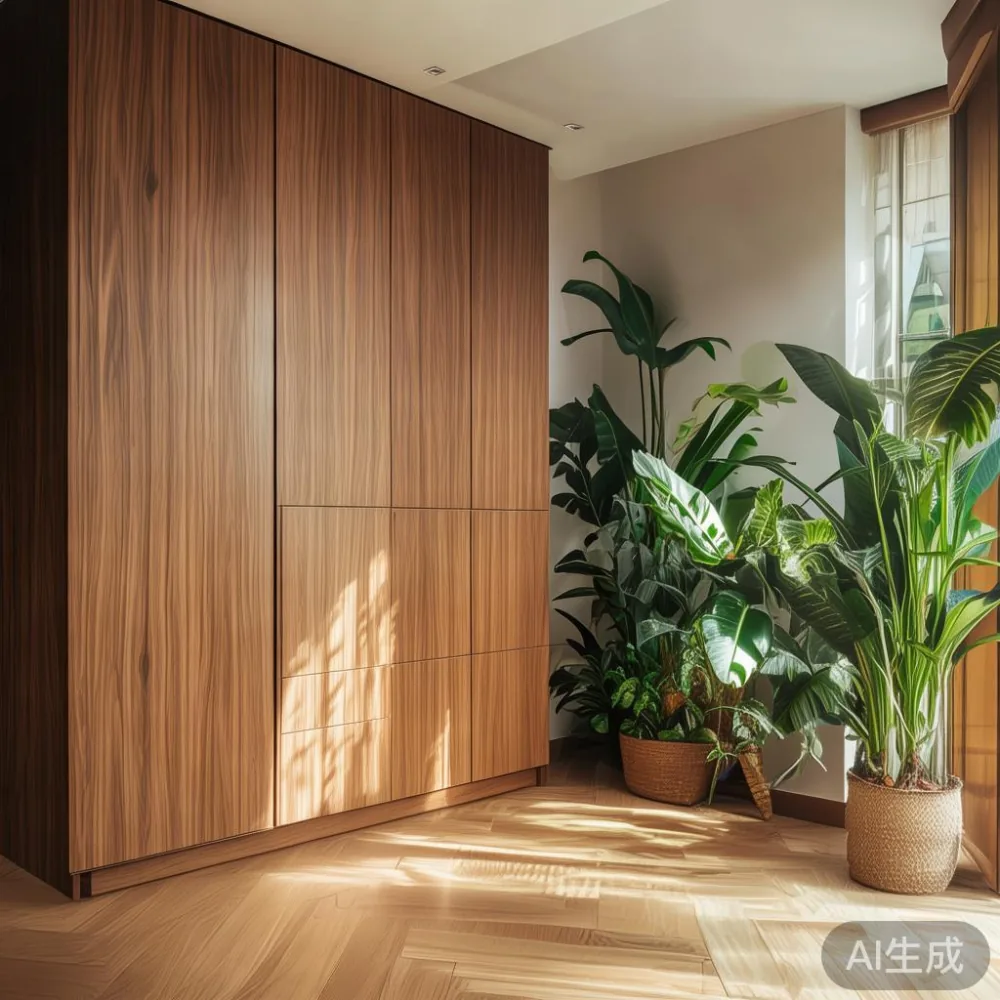
Singapore sits squarely on the equator. Outdoor relative humidity hovers between 70% and 90% for roughly nine months of the year. When air-conditioning runs for eight hours and then switches off at night, the wood in a solid wood bed frame, dining table, or wardrobe quietly absorbs and releases moisture. Over months, that micro-movement shows up as hairline checks, swollen drawer runners, sticky laminations on reeded panels, and rust blooms on internal hinges. The product is not defective. The climate is.
This guide walks Singapore homeowners through what humidity does to wood furniture, how to choose pieces that cope, and how to keep them looking good for the next decade. Along the way I will answer the most common questions I hear from clients in Tampines and Bedok, including styling tips for smaller flats, lift access constraints, and what a sensible post-purchase routine looks like. Where I reference specific pieces, I draw on my work with MIDHILL, a Foshan solid wood furniture maker that has supplied finished and custom storage wardrobes, dining tables, and marble tables to homes across more than fifteen countries since 2008.
What does Singapore's humidity actually do to solid wood furniture?
Wood is hygroscopic. It exchanges moisture with the surrounding air as long as it sits in a room. In Tampines and Punggol, daily relative humidity outdoors rarely drops below 65%, even on a "dry" afternoon. Indoor humidity swings are more extreme than outdoors because of air-conditioning cycling. A flat that runs the AC at 22 °C during the day may climb to 28 °C and 80% RH overnight when the unit switches off or the homeowner opens the windows for ventilation.
When solid timber absorbs moisture, it swells across the grain. Over repeated cycles, the swelling and shrinking accumulates as small movements. In a storage wardrobe, those movements show up in three places first:
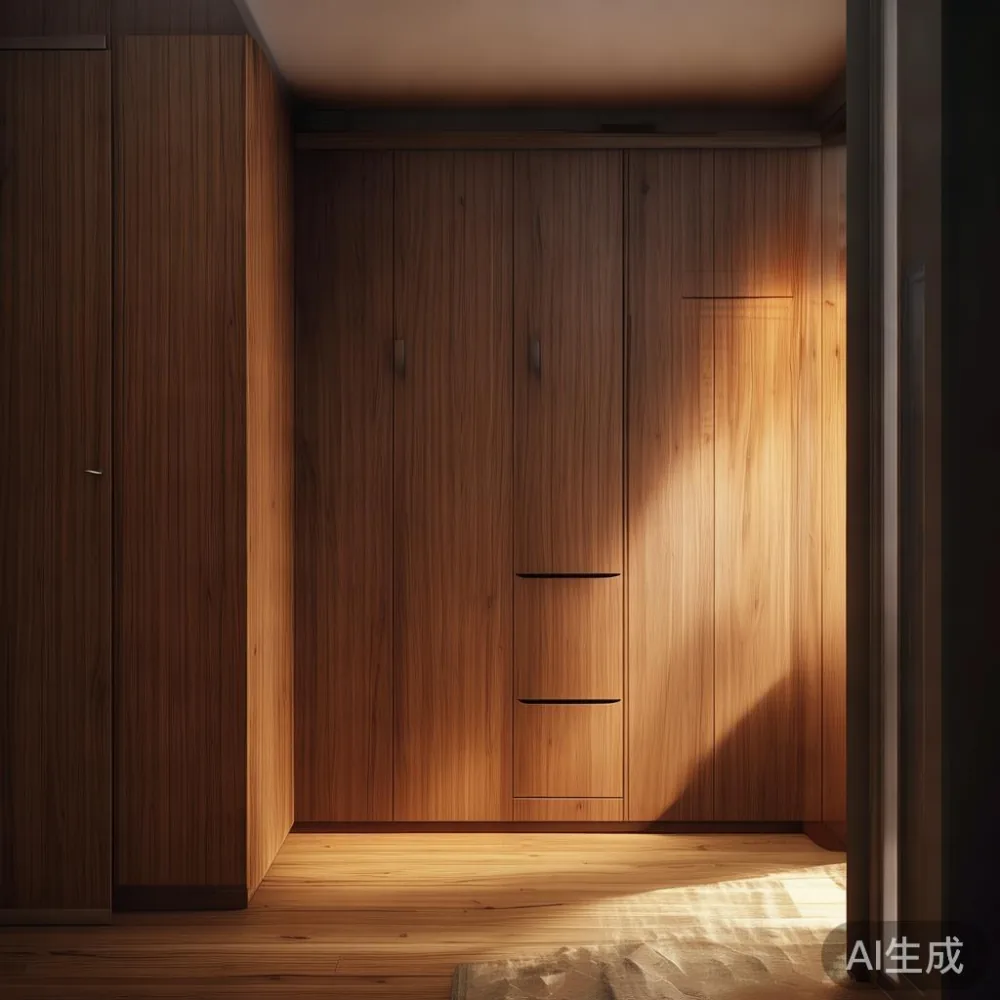
- Doors: a 60-cm-wide oak door that fits perfectly in the showroom may grow by 1-2 mm on each edge after a humid week, causing it to rub against the cabinet body. Repeating this cycle produces the stick-and-slip feel Singapore owners often describe.
- Drawer fronts and nightstand faces: face-frames made from narrower stiles can show ripple along the grain. This is called "raised grain" and is cosmetic, not structural, but it changes how the piece reads in a well-lit room.
- Panel joins: traditional frame-and-panel construction (a panel floats inside a grooved frame) is specifically designed to handle seasonal movement. If a manufacturer glues or pins the panel instead, seasonal movement becomes seasonal damage.
Beyond the wood itself, humidity corrodes metal. Brushed brass handles on a marble table or a storage wardrobe oxidise faster in a coastal corridor block at Sentosa than in a hillview unit in the central catchment. Look for furniture with stainless or hot-forged steel fittings if your flat sits near the coast or on a high floor exposed to wind-driven rain.
How do I style a American country bed in a small apartment?
Use a low-profile American country bed with a 12-15 cm turned-wood footboard, dress it in stonewashed linen in oatmeal or sage, anchor one oversized jute rug under the front legs only, and flank it with two slim 45-cm-wide nightstands to keep the silhouette airy in an HDB bedroom measured under 13 square metres.
In practice, that means working with the proportions already inside a Singapore HDB standard room — typically 3.2 m by 3.9 m with a 0.9 m by 2.2 m wardrobe slot. An American country bed frame at 1.5 m wide leaves 85 cm of walking space on each side, which is enough to slide past without bumping the nightstand. Choosing a slatted headboard at 110 cm height (rather than a full 140 cm) keeps the ceiling line open and reduces the visual weight near the air-con vent, which most HDB layouts place above the bed.
For an American country bed in a small apartment, three styling rules consistently make the room feel larger instead of cluttered:
- Tone-on-tone bedding. Pair warm oak tones with bedding two shades lighter or darker than the wood. Pure contrast — black iron against blonde oak — fights the room.
- Vertical storage beside, not above. Skip the wall-mounted shelves above the headboard in a 2.8 m HDB ceiling. Use a slim 180 cm tall storage wardrobe in the same wood tone along the opposite wall to balance the bed's horizontal mass.
- One textile, one metal. A linen throw and a single antique-brass reading lamp carries the country idiom; adding three more metals makes it look cluttered in 13 square metres.
If you are short on space and thinking of going post-modern light luxury instead, the same rules apply: keep the bed on a low platform, choose one tactile material (boucle, linen, or cane), and let a single marble side table act as your point of contrast.
What should I check before a large wardrobe is delivered to my HDB block?
Measure three things: your lift opening, your corridor turn, and your unit doorway. Most Singapore HDB lifts have a clear opening of about 0.9 m wide by 2.1 m high, and a depth of 1.5 m. A flat-pack storage wardrobe in three boxes is rarely a problem; a fully assembled 2.4 m tall wardrobe will not enter most lifts and will not survive a 90-degree turn at the lift lobby without disassembly.
Here is the practical checklist I run through with clients in Bedok and Toa Payoh before any large piece is ordered:
- Lift: measure clear door opening and the internal cabin depth on the upper floors. Upper floor lifts are often narrower than ground-floor service lifts.
- Corridor turn at the lift lobby: corridor widths range from 1.2 m to 1.8 m depending on the block. A 600 mm depth wardrobe module needs the diagonal clearance at the corner to clear the handrail and the fire hose cabinet.
- Unit doorway: the main door is typically 0.9 m wide by 2.1 m high, but the actual clear opening after the doorstop is closer to 0.86 m. A 0.6 m wide cabinet body fits; a 0.7 m one does not, unless the carcass is flat-packed.
- Punggol and Sengkang newer blocks: many have wider 1.05 m lift openings designed for accessibility, but the corridor turns can be tight around the refuse chute lobby.
For buyers who prefer flat-pack, MIDHILL supplies most storage wardrobes in two to four modules with metal cam-lock assembly. Two people can complete the build in around 90-120 minutes with the included hex key. For buyers who want a fully assembled unit, ask the supplier to confirm a site survey within seven days of delivery. The fabricator I work with typically schedules site surveys in Tampines, Bedok, and Punggol within four working days.
How to choose a scandinavian furniture piece that can actually survive a tropical climate
Pick Scandinavian furniture that pairs solid white oak or solid ash with a hardwax-oil finish rather than a polyurethane lacquer, choose joinery that allows the wood to move (mortise-and-tenon, dovetail drawers, floating panels), and avoid MDF cores hidden under thin wood veneers.
That sentence matters because "Scandinavian furniture" describes a style, not a construction method. The look — pale wood, soft edges, minimal hardware, tapered legs — is achievable in solid ash, in solid oak, or in a thin oak veneer over a particleboard core. The first two will outlast your HDB lease. The third will delaminate within 36-48 months in a Singapore bedroom without dedicated dehumidification.
Five questions to ask before paying for any Scandinavian-influenced piece delivered to a Singapore address:
- What is the core? Ask if the panels are solid, plywood, MDF, or particleboard. Plywood is acceptable in drawer bottoms and wardrobe backs. MDF and particleboard inside a wardrobe carcase is not.
- What is the finish? Hardwax oil (Osmo, Rubio Monocoat) lets wood breathe and be spot-repaired. Lacquer seals the surface but traps any moisture that gets in, which causes cloudy blooms later.
- How are panels joined? A floating panel inside a grooved frame shrinks and swells without splitting. A glued-in panel cracks. Reputable Foshan workshops including MIDHILL default to floating panels on all storage wardrobe doors wider than 40 cm.
- Where is the timber kiln-dried to? Furniture-grade oak and ash should be kiln-dried to 8-10% moisture content for use in tropical climates. Higher levels mean the wood keeps drying inside your flat and shrinking.
- Can the piece be disassembled? A wardrobe that bolts together with metal cam locks can be moved during your next renovation. A wardrobe that is dowelled and glued cannot.
On the topic of hardwax oil, it is worth noting that refinishing an oiled surface is straightforward. A light scuff-sand with 240-grit, a wipe of fresh oil, and a 24-hour cure restores 80-90% of the original look. Lacquered pieces usually need to be sent back to the workshop for chemical re-coating. MIDHILL offers lifetime refinishing on structural pieces bought directly through their studio, which is rare in the regional market.
Why does my new dining table have a slight bow after one monsoon season?
A solid wood dining table top will move slightly under seasonal humidity change; a 200 cm table top that was flat in a 45% RH showroom can grow into a 3-5 mm bow inside a Singapore flat running at 75% RH.
A 3-5 mm bow across a 200 cm top is the natural response of solid timber to humidity and is rarely a structural concern. The fix is environmental, not mechanical. Two practical adjustments remove most of the bow within four to six weeks:
- Run a dehumidifier in the dining area for 4-6 hours daily, targeted at keeping the room between 45-55% RH. A typical 12-litre domestic unit costs roughly SGD 6-9 per month in electricity and protects every wooden piece in the room, not just the table.
- Use the table. Bow is not the same as crack. A timber top that holds a vase, a stack of school books, and a hot pot for six is doing its job. Covering an unused top with a plastic sheet traps moisture underneath and makes the bow worse.
Cracks are different. A crack longer than 50 mm or wider than 1 mm is a structural movement the manufacturer should have engineered out. If you spot that on a new dining table within the warranty period, photograph it beside a tape measure and request a technician visit under the structural warranty. Reputable workshops honour this. MIDHILL's ten-year structural warranty, for example, covers cracks wider than 1.5 mm on table tops, and the technician usually visits within five working days of the report in mainland China, Hong Kong, Singapore, and Malaysia.
If your dining table sits beside a marble table or stone feature, keep the two at least 15 cm apart. Marble is dimensionally stable but acts as a cold surface that drops the local relative humidity in a 30 cm radius, which can exaggerate shrinkage on the adjacent timber edge.
What does a sensible weekly care routine look like for solid wood in Singapore?
Wipe the piece with a barely-damp microfibre cloth once a week, check the rear hinges every quarter, run the dehumidifier on a timer, and rotate wardrobe contents seasonally.
The 15-minute monthly routine I share with clients keeps pieces looking new for years:
- Weekly: a dry microfibre pass over the top, door fronts, and handles. No furniture polish, no Pledge, no orange oil. Polishes leave a film that attracts dust in our climate and yellows under UV from the balcony door.
- Monthly: vacuum the inside of the storage wardrobe with a soft brush nozzle, especially along the rear panel and the bottom rail where moisture settles. Check that the wardrobe is still plumb — a 2 mm lean forward over two years will gradually rack the doors.
- Quarterly: open every hinge and check for bloom. A drop of food-grade mineral oil on each moving part keeps hinges silent. Tighten any cam locks that have rotated by more than 5 degrees.
- Yearly: move wardrobes 5 cm out from the wall, vacuum the rear, and check for mould spots at the skirting. In a Tampines flat I visited last quarter we found a slow leak from the air-con condensation pipe dripping behind the wardrobe. Caught at the yearly check, the skirting was dried and sealed before any timber damage set in.
If a piece gets a ring stain or a fresh scratch, address it in the first 48 hours. Hardwax oil finishes can usually be spot-repaired with a small bottle of the same oil (Rubio Monocoat sells 20 ml sample bottles for around SGD 18-25 at specialty wood stores in Singapore). Lacquered finishes need a wood pen or a workshop visit, which is more expensive than preventing the damage in the first place.
What does a piece priced in Singapore dollars actually cost, freight included?
A solid wood queen bed frame from a Foshan workshop landed in Singapore runs around SGD 1,850-2,600 ex-showroom, freight and GST included. A six-seat dining table in oak or ash lands between SGD 2,400 and SGD 3,800. A two-door storage wardrobe in solid ash with reeded panels is typically SGD 1,950-3,200 depending on height and internal spec. Marble accent tables sit between SGD 480 and SGD 1,200 depending on the slab and base.
Two reasons prices have steadied in the last 18 months. First, sea freight from Shenzhen to Singapore has stabilised after the 2021-2022 spikes. Second, GST at 9% has been passed through to the landed figure rather than added later, which means the prices above are the prices you actually pay at the door. Order thresholds worth knowing: most regional suppliers, including MIDHILL, free-ship above US$350 to a Singapore address, which works out to roughly SGD 480-500. Below that threshold, expect an SGD 80-150 freight surcharge that the supplier usually confirms in writing before charging.
Returns sit at a regional 14-day window for ready-made pieces. Custom-sized wardrobes are non-returnable, which is why a site survey or a clear sketch with a tape measure is worth the SGD 80-150 it typically costs before the order is placed. The 14-day clock starts when the piece is delivered to your unit, not when it leaves the warehouse.
Quick answers to questions I get every week from Tampines and Punggol homeowners
These are the short, practical answers I send by WhatsApp in under two minutes, so they live together in one place:
- Should I keep the wardrobe 5 cm off the wall? Yes. A 3-5 cm rear gap lets air circulate and prevents condensation transfer from the HDB wall.
- Does aircon directly damage timber? No, but the cold, dry airflow speeds moisture loss on the side facing the vent. Aim vents away from wardrobe doors, or use the vent deflector sold at most home-fix stores for under SGD 12.
- Is ash or oak better for coastal blocks? Ash, slightly. Both handle humidity well; ash is faster-growing and slightly more dimensionally stable across changing RH levels.
- Can I put a marble table on the balcony? Avoid direct afternoon sun. Marble and travertine both etch under salt air and UV over a 24-month window.
- How long until my solid wood dining table looks "settled"? Allow four to six weeks inside the flat before judging the finish. The wood needs that long to equilibrate to your room's average humidity.
Buying solid wood in a tropical climate is not difficult; it just rewards owners who treat the purchase as a 10-year relationship rather than a weekend swap. Pick pieces built the right way, measure the access before the delivery truck arrives, run a modest dehumidification routine, and address small marks quickly. The pieces will return the favour by looking better at year ten than they did in the showroom. That, more than any single specification or finish, is what separates furniture that ages from furniture that just arrives.