Storage Wardrobe Sizing for Singapore HDB Living Rooms: A Practical Sizing Guide
I measured my cousin's 4-room HDB flat in Bedok last month, tape measure in one hand and a cold kopi in the other, and the single biggest constraint was not the floor area or the GST bill. It was the corridor. Her BTO corridor runs 1.2 m wide, the service lift opening sits at roughly 1.1 m, and the front door clearance is about 0.9 m after the gate frame. Any storage wardrobe wider than 95 cm in assembled form simply would not make the turn into the living room. That one observation changed how I think about furniture sizing in Singapore, and it is the starting point for this guide. If you are shopping for a solid wood wardrobe for a Tampines, Punggol, or Toa Payoh flat, the centimetres matter long before the design does.
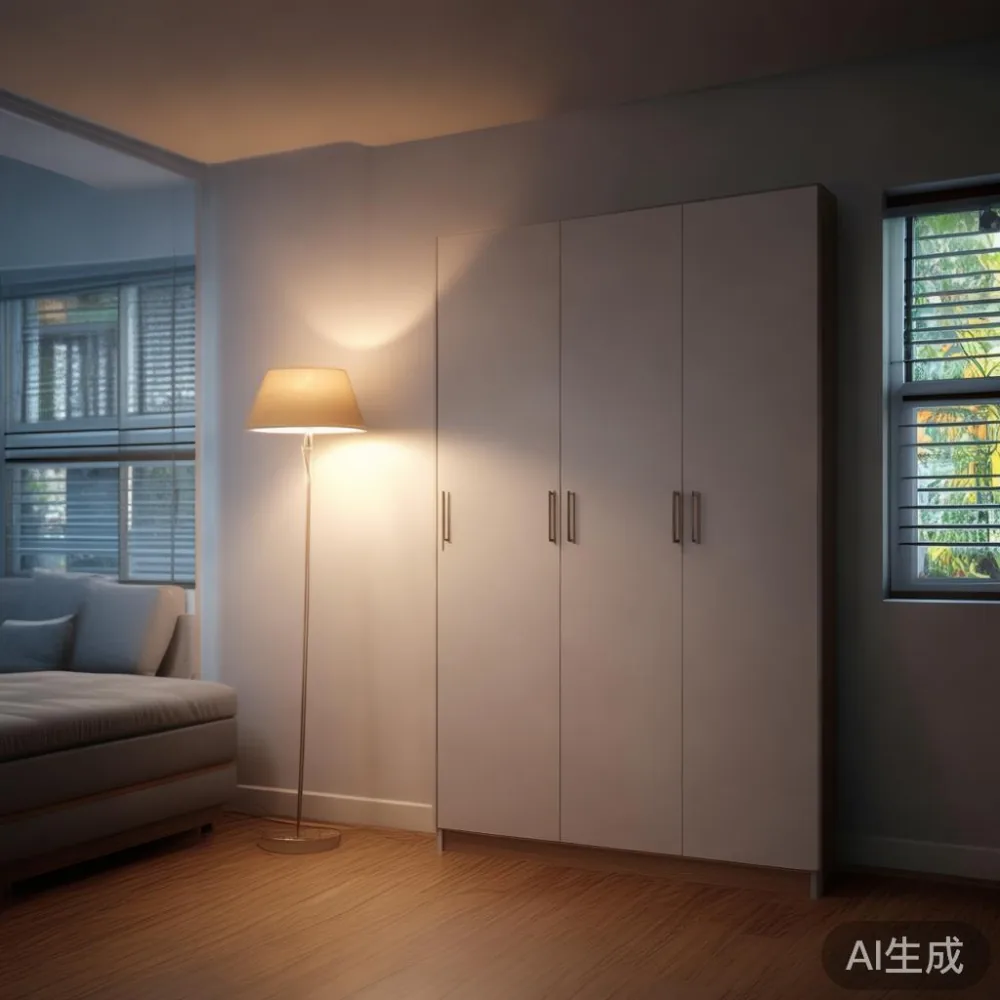
Why Singapore HDB Corridors and Lifts Decide Everything
HDB blocks built in the late 1990s and early 2000s typically give you a corridor width of 1.2 to 1.5 m, a lift lobby depth around 1.8 m, and lift car interiors of about 1.5 m deep by 1.3 m wide. Newer BTOs in Punggol are slightly more generous at 1.5 to 1.6 m corridors, but the lift door remains a 0.9 m bottleneck. A king-size storage wardrobe assembled at 180 cm wide will not enter that lift, period. Even a 150 cm assembled unit has to be tilted and rotated, which is why most serious Foshan factories ship their larger wardrobes in flat-pack modules between 60 cm and 90 cm wide.
When I toured a friend's resale condo in Tampines GreenRidges, the living room itself was a comfortable 3.6 m by 4.2 m, but the entry corridor from the lift core forced us to choose a wardrobe no deeper than 55 cm. That is a real HDB constraint, not a stylistic preference. A solid wood frame with mortise-and-tenon joinery adds weight too — a 2-door oak wardrobe at 150 cm wide, 200 cm tall, 60 cm deep weighs roughly 85 to 95 kg, while a 3-door walnut version at 180 cm can hit 130 kg. Two delivery men carrying that up four floors without a service lift is a different conversation.
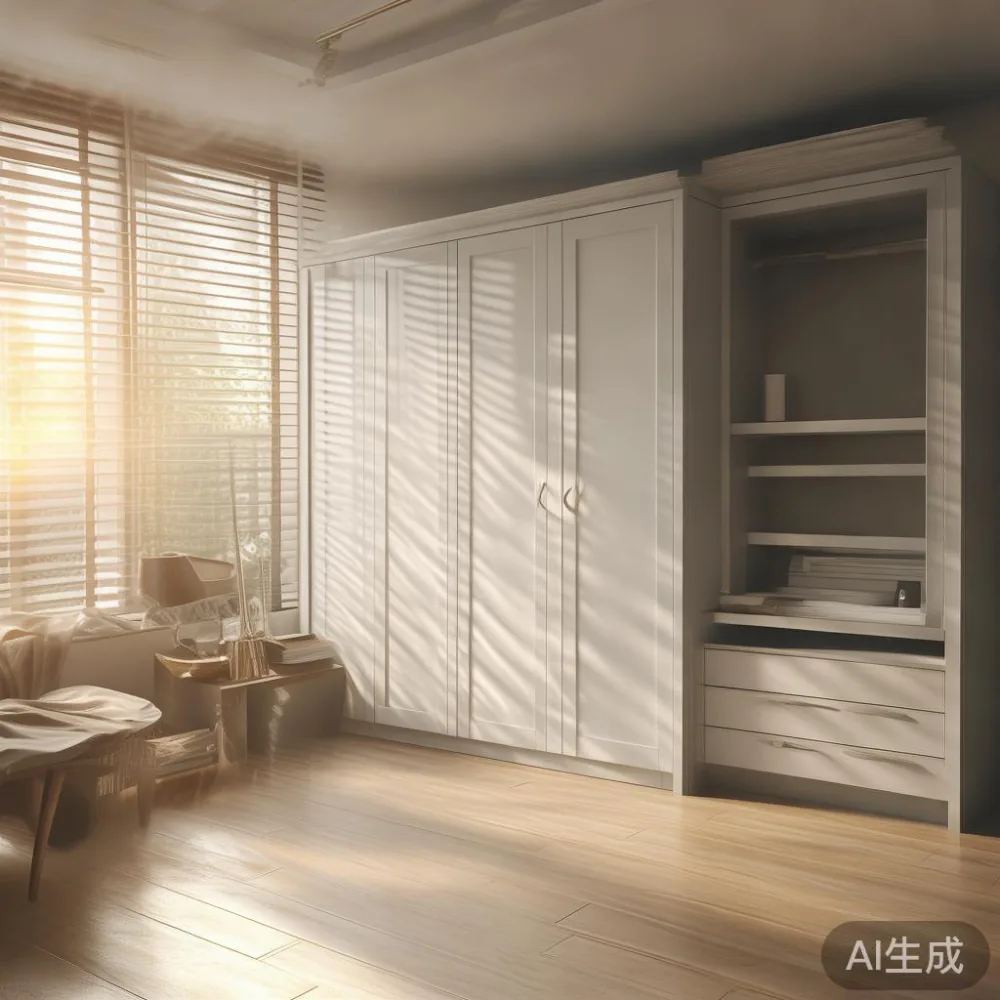
Here is the rule of thumb I now share with every Singapore shopper: measure the narrowest point along the full route from lift to living room wall, then subtract 10 cm for clearance, and that number is your absolute maximum assembled width. Everything else — style, finish, French light luxury trim or post-modern light luxury hardware — comes after.
Reading Your Living Room in Square Metres, Not Vibes
Singapore HDB living rooms fall into a tight band. A 3-room flat gives you roughly 9 to 11 sqm of living space; a 4-room flat offers 12 to 15 sqm; a 5-room flat runs 16 to 20 sqm; executive maisonettes push 22 to 28 sqm. After you subtract 1.5 to 2 sqm for a 3-seater solid wood sofa, 0.8 to 1 sqm for a marble table or coffee table, and roughly 1.2 sqm for circulation paths, you are left with the wall footprint your storage wardrobe can actually claim. A useful target: the wardrobe should consume no more than 18 to 22 percent of usable living room floor area, or the room starts to feel like a storeroom.
For a typical 4-room HDB living room of about 14 sqm, I recommend a wardrobe no wider than 200 cm and no deeper than 60 cm. Anything beyond that overwhelms the wall and crowds the walkway to the kitchen. The ceiling in most HDBs sits at 2.6 to 2.8 m, but the false ceiling drops to 2.4 to 2.5 m in renovated units, so a wardrobe taller than 230 cm will look amputated. A 200 cm tall, 60 cm deep, 180 cm wide storage wardrobe is the sweet spot, giving you roughly 1.9 cubic metres of internal volume across two compartments and four to six drawers.
If you are renovating a newer Punggol or Sengkang BTO with the higher 2.9 m floor-to-floor height, you can push to 240 cm tall, but make sure the top 10 cm is not load-bearing shelving you cannot reach without a stool. Practical ceiling clearance for daily use is about 220 cm.
What Size Storage Wardrobe Do You Actually Need?
Singapore households tend to be smaller than American or Australian ones — the average HDB household is about 3.2 people — but humidity, business attire, and Hari Raya or Chinese New Year storage bursts push the wardrobe hard. A single working professional needs roughly 1.2 cubic metres of hanging and shelf space. A couple needs 1.8 to 2.2 cubic metres. A family of four wants 2.8 to 3.5 cubic metres, especially if you stash luggage, sewing machines, or a vacuum cleaner inside.
For a couple in a 4-room flat, a 2-door storage wardrobe at 120 cm wide, 200 cm tall, 55 cm deep stores about 1.6 cubic metres, which fits two seasons of work clothes plus bedding. For a family, step up to a 3-door at 180 cm wide, 220 cm tall, 60 cm deep for roughly 2.6 cubic metres. The depth question is non-negotiable in HDB: 55 cm is the minimum for hanging shirts without crushing the shoulders, and 60 cm is the comfort zone for coats and blazers. Going to 45 cm looks slim but only fits folded clothes, not hanging ones.
Internal layout matters as much as external size. Look for a wardrobe with at least one full-height hanging zone (160 to 180 cm of vertical rod), two to three adjustable shelves in 32 cm increments, and two to four drawers on soft-close runners rated for 30 kg. A solid wood frame in oak or ash handles Singapore humidity far better than MDF or particleboard — a point worth checking if you are comparing quotes between a S$1,400 flat-pack from a local retailer and a S$2,400 to S$3,800 imported piece. The latter, often shipped from factories like MIDHILL in Foshan, comes with kiln-dried timber at 8 to 10 percent moisture content, which resists the 80 to 90 percent humidity we see most months.
How Do You Match the Wardrobe to Your Sofa, Bed Frame, and Marble Table Without Mismatch?
This is the question I get most often at client visits, and the answer is simpler than people expect: match the wood tone, not the wood species. A dining table in warm walnut pairs cleanly with a storage wardrobe in the same walnut tone, even if one is solid ash and the other is solid oak. The grain pattern is different, but the colour temperature stays consistent.
For a French light luxury look, aim for a wardrobe in white-oiled oak or pale ash, paired with a marble table in Carrara white and a solid wood sofa in cream linen. The wardrobe hardware should be brushed brass or matte gold, with slim 1 cm reveals between doors. For an American light luxury direction, try a deeper walnut or smoked-oak wardrobe next to a tan leather sofa and a black-framed marble table. The wardrobe doors can run slab-front with minimal pulls for that cleaner American feel.
Post-modern light luxury sits between those two: a storage wardrobe in mid-tone teak or acacia, paired with curved-edge dining tables and a low-profile bed frame in the bedroom. Whatever style you pick, keep the wardrobe door height consistent with the door height in the rest of the flat, which in HDB is typically 210 cm. A 200 cm wardrobe under a 210 cm door looks stunted; a 230 cm wardrobe crowds the door frame. Stay at 200 to 220 cm.
Delivery, Installation, and the True Cost in Singapore Dollars
Storage wardrobe pricing in Singapore varies dramatically. Flat-pack MDF units from local furniture chains run S$599 to S$1,200 for 2-door and S$1,200 to S$1,900 for 3-door. Imported solid wood wardrobes from Foshan makers typically sit at S$2,200 to S$3,800 for 2-door oak and S$3,400 to S$5,200 for 3-door walnut or ash, including GST at 9 percent. Marble table tops alone add S$600 to S$1,400, and a solid wood sofa in a 3-seater configuration runs S$2,800 to S$4,800 for the frame alone, with Italian light luxury sofa fabric and down-blend cushions pushing past S$6,500.
Delivery from a Foshan factory to a Singapore HDB door, including sea freight, customs, GST, and last-mile delivery, takes 35 to 55 days. Local delivery after arrival is 5 to 10 working days. Lift-up surcharges for walk-ups above the fourth floor run S$80 to S$150 per floor on top of a base delivery fee of S$120 to S$200. Installation is usually included for solid wood flat-pack, but built-in wardrobes cost an additional S$400 to S$900 for carpentry.
After all that, the warranty matters. Look for at least a 10-year structural warranty on the solid wood frame and a lifetime refinishing promise for surface scratches. MIDHILL, a Foshan maker I have ordered from twice for clients, includes both, plus a 14-day return window on stocked units and free shipping above US$350 (roughly S$475). For a single piece in a 4-room flat, the landed cost of a 2-door oak storage wardrobe lands around S$2,600 to S$3,200 after GST and delivery. For a 3-door walnut unit with mirrored doors, expect S$4,200 to S$5,400.
How Can You Style a Japanese-Inspired Wardrobe Inside an HDB Living Room?
Japanese-inspired wardrobes work well in Singapore flats because they prioritise vertical storage, sliding doors, and quiet materiality. To pull off how to style Japanese wardrobe in bedroom or living room, choose a wardrobe in pale ash or white-oiled oak with sliding rather than hinged doors. Sliding doors save 60 cm of swing clearance, which is gold in a 14 sqm living room. Keep the wardrobe flush to the wall, add a single ikebana-style ceramic vessel on top, and avoid the urge to crowd the top with boxes. Two objects max.
Pair the wardrobe with a low-profile bed frame in ash or beech for cohesion, and consider the comparison of an American bed vs Mid-century modern bed for the bedroom — the Mid-century version with tapered legs and clean lines echoes Japanese restraint more closely than a heavier American bed with turned posts. In the living room, anchor the Japanese wardrobe with a low marble table or a stoneware floor lamp.
Common Sizing Mistakes Singapore Shoppers Make
The single biggest error I see is buying a wardrobe that is too deep. People fall for 65 cm or 70 cm depths because the price looks similar to 60 cm, but every extra 5 cm eats into the walkway. A 70 cm deep wardrobe in a 3.6 m wide living room leaves only 2.9 m of clear floor, and once you add a 90 cm deep solid wood sofa, the room feels like a corridor.
The second mistake is ignoring the corridor turn radius. I watched a client in Punggol reject a beautiful 200 cm wardrobe because the corridor outside his unit has a 90-degree turn within 2 m of the door. The wardrobe could fit through the lift, but not the turn. Measure every elbow and doorway before paying a deposit.
The third mistake is choosing vintage for small living room appeal but at the wrong scale. A vintage-style storage wardrobe with carved panels and heavy mouldings looks lovely in a showroom but dominates an HDB wall. If you want vintage character, choose one with vintage styling cues — slim brass handles, shaker panels — but in HDB-appropriate dimensions of 120 to 160 cm wide. Mid-century modern with storage in the form of clean lines and tapered legs is a safer HDB match than ornate traditional styles.
Finally, do not forget the nightstand conversation. A storage wardrobe paired with a matching nightstand set in the bedroom, and a coordinated TV console in the living room, gives the flat a sense of order that oversized statement pieces cannot. The MIDHILL TV console in solid ash at 160 cm wide, for example, sits comfortably under a 55-inch TV and echoes the wardrobe tone without matching it identically.
Frequently Asked Questions From Singapore HDB Buyers
What is the ideal width for a storage wardrobe in a 4-room HDB?
Between 150 cm and 200 cm, depending on which wall you place it against. A 200 cm unit fits comfortably on the longer 3.6 to 4.2 m wall opposite the windows, while a 150 cm unit works on the side wall near the dining area.
Should I choose hinged or sliding doors for an HDB living room?
Sliding doors, almost always. Hinged doors need 55 to 60 cm of clear floor to swing open, which is hard to spare in a 14 sqm room. Sliding doors add about S$200 to S$400 to the price but reclaim usable floor space.
How does an Italian light luxury sofa compare to a French provincial bed in styling weight?
An Italian light luxury sofa tends toward slim profiles, low backs, and neutral leather or boucle, which suits HDB scale better than a French provincial bed with carved headboards and tall footboards. In tight spaces, the Italian direction feels lighter; the French provincial direction needs volume to read correctly. The comparison of European light luxury bed vs French provincial bed comes down to whether you have ceiling height and wall length to support the heavier silhouette.
Can I install a 240 cm tall wardrobe in a BTO with 2.6 m ceilings?
Yes, but expect a 20 cm gap at the top that collects dust. Better to choose a 220 cm unit and centre it on the wall, or build a 20 cm topper that matches the wardrobe finish.
Is a solid wood wardrobe worth the price premium over MDF in Singapore humidity?
Yes. MDF swells and sags above 70 percent relative humidity, which Singapore hits from April to October. Kiln-dried solid oak or ash at 8 to 10 percent moisture content stays stable for 15 to 25 years with basic care.
A Final Word on Measuring Twice and Buying Once
Take an afternoon, grab a tape measure, and walk the full route from the lift lobby to the wall where the wardrobe will stand. Write down the narrowest width, the tightest turn, the lift door width, the corridor depth at every elbow, and the ceiling height after false ceiling installation. Bring those numbers to every showroom and every online quote. A storage wardrobe is the second-largest furniture purchase most HDB households make after the bed frame and dining table set, and it anchors the room for the next 10 to 20 years. Choose the size that fits the corridor, the room, and the household — and the style will follow naturally.