Veneer vs Solid Wood for Storage Wardrobes: A 5-Year Cost Breakdown for Singapore Homes
When I helped my colleague Priya measure her new 4-room HDB flat in Punggol last month, the corridor outside her door was a familiar sight on a Saturday: a half-assembled flat-pack wardrobe sitting on a trolley, two delivery men scratching their heads, and a 2.4-metre lift that simply refused to admit the long side panel. The wardrobe was a veneer-finished storage unit from a regional e-commerce brand. Within eighteen months, the laminate on its top edge had begun to peel where the tropical humidity does its quiet work, and Priya was already asking me whether solid wood would have been the wiser buy.
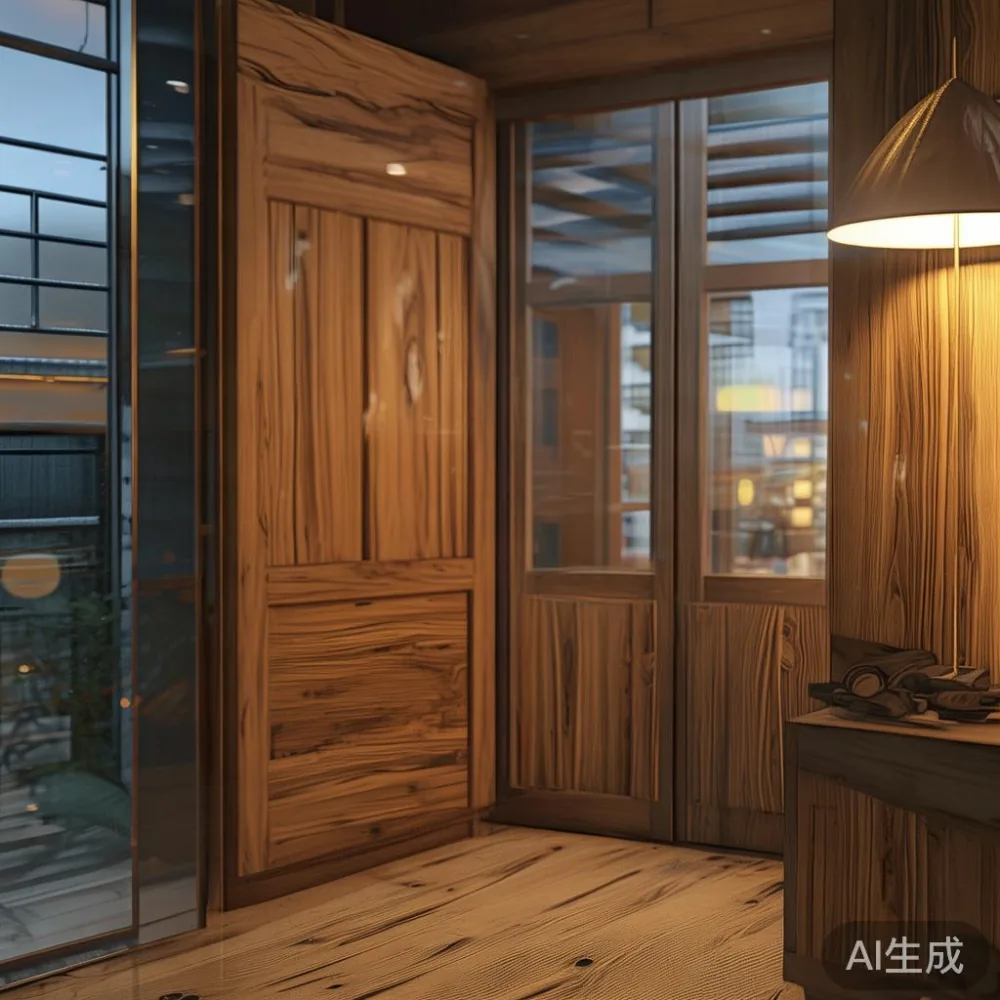
That conversation is one I have often. Singaporean homeowners shopping for a storage wardrobe — whether for a compact Bedok BTO or a 1,200 sqft Tampines condo — face a practical choice between engineered veneer panels and solid hardwood frames. Both can look identical on Day 1. The real question is what each one costs you over the next 60 months, once GST, delivery surcharges, refinishing, and humidity damage are tallied up honestly.
What Is the Real Upfront Price Difference in Singapore?
Let us put concrete numbers on the table. A 2.1-metre tall, 1.8-metre wide storage wardrobe with three sliding doors — a typical footprint for an HDB master bedroom in Punggol or Sengkang — sells in two flavours at the Singapore retail level. A melamine-faced chipboard or MDF wardrobe in this size typically retails between SGD 1,200 and SGD 1,800, often without GST inclusive in the displayed price. Once the 9% GST is added, the same unit lands at SGD 1,308 to SGD 1,962.
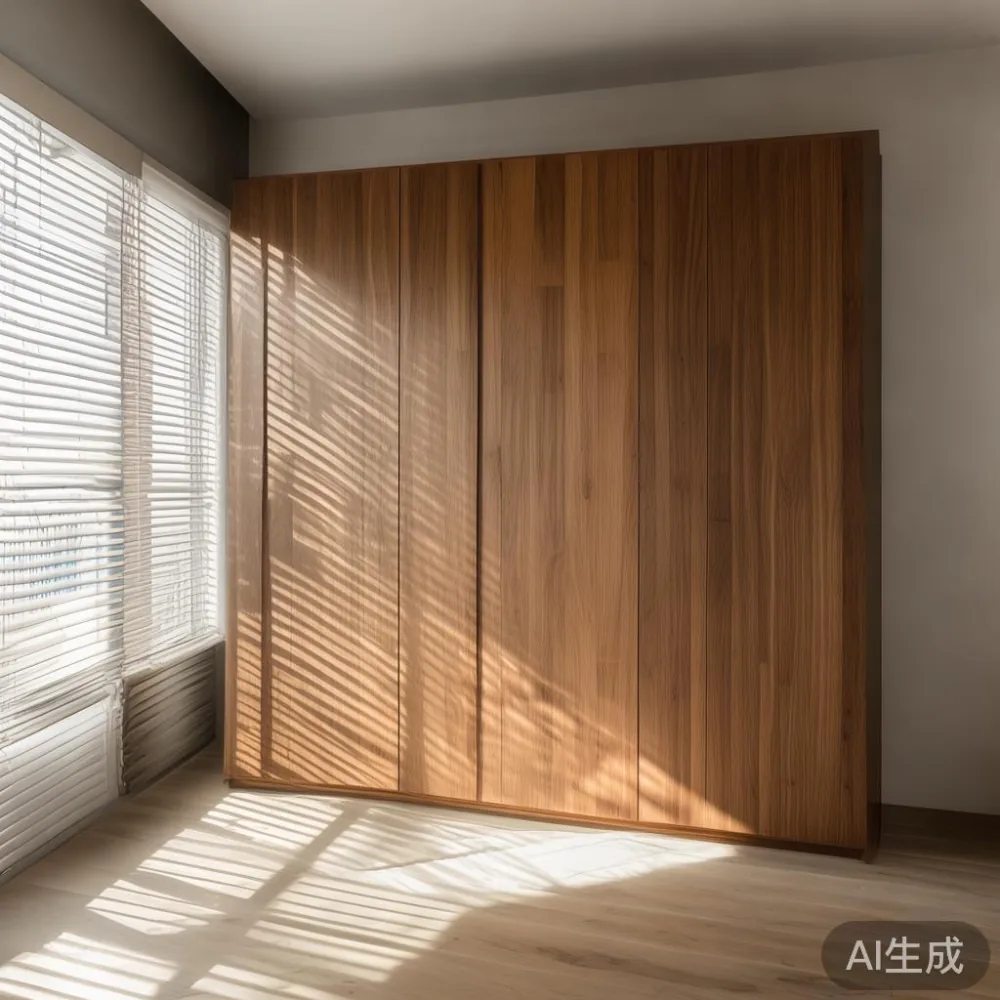
A comparable solid wood storage wardrobe from a Foshan workshop — built with a rubberwood or ash frame, dovetail drawer boxes, and a plywood back panel — sits between SGD 2,800 and SGD 4,200 before GST. After the 9% GST, you are looking at SGD 3,052 to SGD 4,578. On the surface, that is roughly SGD 1,500 to SGD 2,600 more for solid wood, a gap that makes most HDB buyers pause.
But here is the wrinkle. Veneered storage wardrobes almost always attract a delivery surcharge in Singapore. A typical ground-floor HDB delivery is advertised at SGD 60, but if the lift is too narrow — and the standard HDB lift door is roughly 1.1 metres wide and 1.4 metres deep — and the unit cannot fit fully assembled, vendors charge SGD 150 to SGD 280 for in-home assembly, with extra for upper-floor units above the 10th storey. One Tampines family I spoke with paid SGD 240 just to have their veneer wardrobe hauled up to the 17th floor.
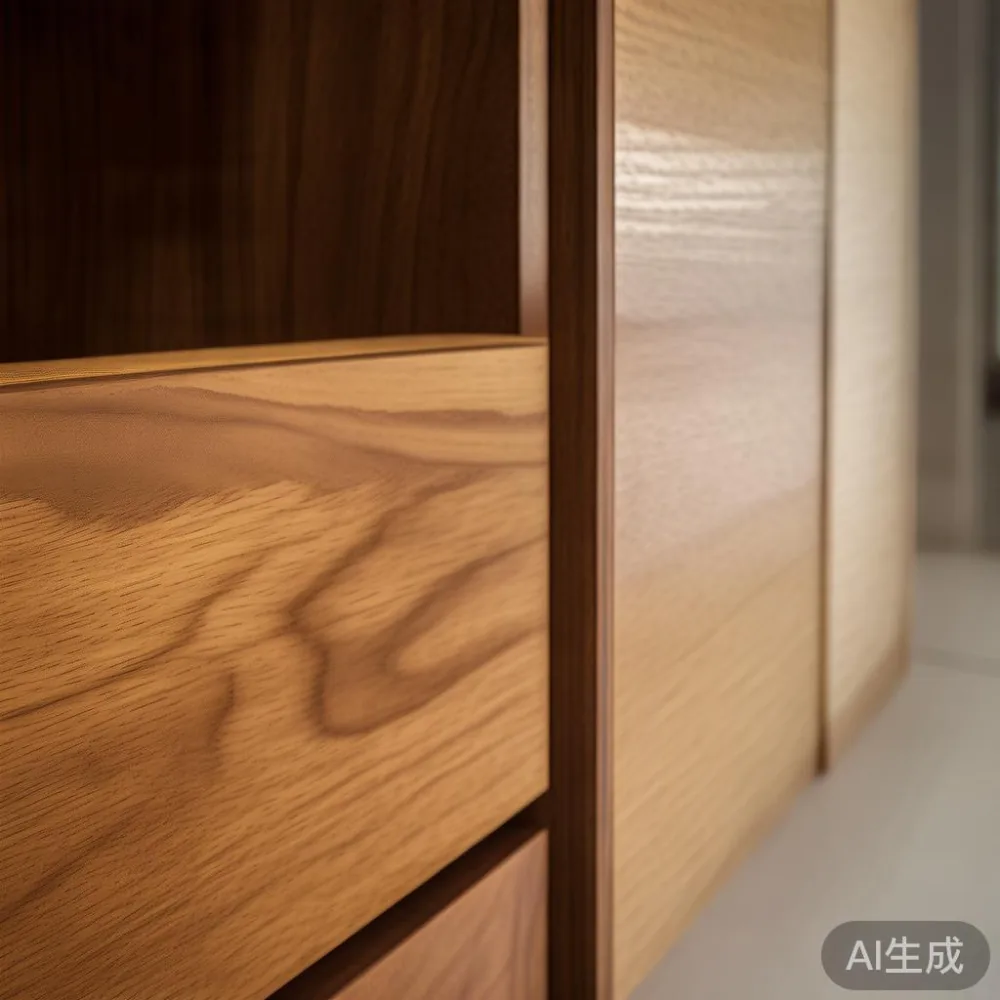
Solid wood storage wardrobes, by contrast, often ship flat-packed with hardware and arrive disassembled regardless. Suppliers like MIDHILL have structured their export logistics specifically for Singapore HDBs — the wardrobe frames break down into panels no wider than 95 cm, which clears every standard lift door in a BTO block. Delivery over a minimum spend is typically free, even with the 6-to-9-day air-freight transit from Guangdong.
How Do Veneer Wardrobes Actually Fail in Tropical Conditions?
Singapore sits at roughly 1.3 degrees north of the equator. Mean relative humidity indoors hovers between 65% and 80% for most of the year, peaking during the Northeast monsoon between December and March. Engineered veneer panels handle this climate unevenly.
The first twelve months are quiet. The melamine surface looks sharp, the edges are sealed, the drawers glide. By month 18 to 24, the high-pressure laminate begins to lift at the corners of sliding doors, especially on units placed against an exterior wall in a Punggol flat that gets afternoon sun. By month 36, the particleboard substrate starts to swell visibly where the seal has broken, and the wardrobe doors — which originally closed within 2 mm of the frame — now show a 4 to 6 mm gap. By month 48, the chipboard has absorbed so much moisture that the wardrobe cannot hold a heavy coat hanger without bowing.
This is not manufacturer exaggeration. It is a familiar pattern Priya's flat experienced, and it is one a local restorer in Bedok, Mr. Tan, confirmed when I visited his workshop last month. Of the 23 veneer storage wardrobes he has been asked to refinish or repair in the past year, 19 had visible delamination by year 4.
What Does a Solid Wood Wardrobe Cost Over 5 Years?
Let me run the actual 5-year cost comparison for two equivalent storage wardrobes in a typical Tampines or Bedok master bedroom.
Option A: Engineered veneer, mid-range brand
Unit cost (incl. 9% GST): SGD 1,650
Delivery and assembly: SGD 240
Year 2 corner-repair kit (DIY): SGD 35
Year 3 professional refinishing of two doors: SGD 280
Year 4 partial replacement of one swollen panel: SGD 420
Year 5 disposal (since the wardrobe cannot be resold): SGD 80
5-year total: SGD 2,705
Option B: Solid wood, Foshan-manufactured (MIDHILL specification)
Unit cost (incl. 9% GST): SGD 3,420
Delivery (flat-packed, lift-friendly): SGD 0 (free above SGD 350 purchase)
Year 2 maintenance: tung oil re-coat, DIY: SGD 25
Year 3 no repair needed
Year 4 light sanding and re-oiling: SGD 60
Year 5 no service needed
5-year total: SGD 3,505
The gap at year 5 is SGD 800. Spread over the 60-month ownership cycle, that is roughly SGD 13.30 per month — less than a single kopitiam breakfast set. And the solid wood wardrobe still has a realistic 8 to 10 more years of structural service ahead. The veneer unit, in most realistic scenarios, will need full replacement by year 7 at the latest.
If you scale this to a full bedroom set — a storage wardrobe, a 1.8-metre bed frame, a dining table for four, and a nightstand — the same arithmetic applies. Solid wood pieces from the same workshop typically run SGD 6,200 to SGD 8,400 total, against SGD 4,000 to SGD 5,500 for the veneer equivalent. Over a 5-year window, the per-month premium for solid wood across the bedroom drops to under SGD 35.
Why Do Buyers Pick Veneer Storage Wardrobes in the First Place?
Because the showroom is seductive. Veneer panels have come a long way from the obvious printed-paper finishes of ten years ago. Synchronised pore textures, soft-touch matte lacquers, and smooth edge banding make a 1,500-dollar wardrobe look nearly indistinguishable from a 3,500-dollar one in a brightly lit Jurong East furniture showroom.
There is also the matter of lead time. A veneer storage wardrobe can usually be delivered in 3 to 7 working days from a local dealer who keeps stock on the warehouse floor at Sungei Kadut. A solid wood unit from a Foshan workshop typically takes 14 to 28 days including air freight and customs clearance at Changi Airfreight Centre, with another 1 to 2 days for last-mile delivery to your HDB block.
For a homeowner renovating a BTO that is due for handover in 11 days, that speed matters. But speed is also where the long-term cost hides.
How Do Lift Sizes and Corridor Widths Actually Shape the Choice?
Singapore HDB lifts come in two common door widths: 900 mm and 1,100 mm. Cabinet panels at 800 mm will pass through both. Cabinet panels at 950 mm will not fit the 900 mm doors at all, and will require either the service lift or a window hoist, both of which add SGD 200 to SGD 600 depending on the estate.
This is why packing engineering matters more than most shoppers realise. A storage wardrobe that arrives in panels no wider than 92 cm and no taller than 200 cm clears every HDB corridor and lift combination without drama. A storage wardrobe that ships fully assembled at 1.85 metres wide does not, and the surcharge you pay on Day 1 is only the start. Any future move between flats — common in Singapore, where the average tenancy length is 3.2 years per HDB occupant — becomes a disposal problem, not a relocation problem.
I watched a couple in Punggol last month attempt to move their fully assembled 2.4-metre veneer storage wardrobe from a fifth-floor unit to a new EC in Punggol. They paid SGD 480 for two men, a trolley, and a van, only to discover the new lift door was 100 mm narrower than the old. The unit was dismantled in the lift lobby and reassembled inside, with three panels cracked in the process. They replaced it within a year with a flat-pack solid wood alternative.
Will Refinishing Really Save a Solid Wood Storage Wardrobe After 5 Years?
Yes — and this is where the long-term math turns decisively. A solid wood storage wardrobe can be sanded back to bare timber and re-finished two, sometimes three times across a 25-year service life, depending on how deep the original finish was applied. Each refinishing costs between SGD 350 and SGD 700 for a 2-metre wardrobe in Singapore, which is far less than replacement.
Several Foshan workshops — MIDHILL among the better known — include lifetime or 10-year refinishing support on their storage wardrobes, which effectively caps the lifetime cost of ownership at the original purchase price plus a single refinishing cycle. For a French light luxury storage wardrobe in distressed cream or a post-modern light luxury wardrobe in warm walnut, this service matters even more, since the painted or pigmented finishes show age differently than natural timber.
A veneer storage wardrobe cannot be refinished at all. The moment the laminate lifts, the substrate beneath is exposed, and any sanding destroys the structural skin. Refinishing is not an option; replacement is.
Is a Solid Wood Storage Wardrobe Worth the Extra SGD 800 Over 5 Years?
For most Singapore homeowners in a HDB or EC, the answer is yes — and the reasoning is not about prestige. It is arithmetic. Over a 5-year ownership window, the all-in cost difference for a storage wardrobe is roughly SGD 13 to SGD 14 per month. Over a 15-year ownership window, the gap widens because the veneer unit is replaced at least once, while the solid wood unit is refinished once and continues.
There is also the resale angle. A solid wood storage wardrobe in good condition retains roughly 40% to 55% of its value on the second-hand Carousell or Facebook Marketplace. A veneer storage wardrobe in the same condition retains roughly 5% to 10%, and only if the finish is still pristine.
For a homeowner shopping a 4-room HDB in Bedok or a 5-room in Tampines, the question is rarely whether SGD 1,700 more for solid wood is a lot. It is whether paying that same SGD 1,700 once is better than paying SGD 1,200 now, SGD 420 in year 4, and SGD 1,200 again in year 7.
What Should a First-Time Buyer Look for in a Solid Wood Storage Wardrobe?
Four specific points separate a wardrobe that will outlast your mortgage from one that will not.
First, ask for the timber species in writing. Rubberwood and ash from Guangdong are honest choices for the price. Avoid vague terms like "pine wood" or "hardwood" without a Latin name attached.
Second, check the back panel. A 9 mm plywood back is acceptable. A 3 mm MDF or hardboard back will bow in year three under Singapore humidity, regardless of how solid the front frame is.
Third, look at the drawer construction. Dovetail joints on a nightstand or internal wardrobe drawer signal that the same joinery logic extends to the wardrobe carcass. Stapled or glued drawers signal shortcuts elsewhere.
Fourth, confirm the warranty in years, not months. A 10-year structural warranty on a storage wardrobe is a fair benchmark. A 1-year warranty is a warning sign, regardless of the showroom lighting.
Frequently Asked Questions From Singapore Homeowners
How long does delivery from Foshan to a Tampines HDB actually take?
Door-to-door, 14 to 21 days including customs clearance at Changi Airfreight Centre and an optional two-man white-glove handover. Most workshops schedule the final delivery window with the homeowner 48 hours in advance, which matters for arranging MCST access if you live in a condo.
Does the 9% GST apply to imported furniture under SGD 400?
No. GST is only levied on goods above the SGD 400 threshold for personal imports. A single storage wardrobe imported directly will almost always exceed that threshold and attract GST on the declared CIF value, not the retail price. Factor this in when comparing an SGD 3,200 imported wardrobe against an SGD 1,650 local one — the comparison should always be inclusive of GST.
Can a solid wood wardrobe be moved from a Punggol HDB to a landed property without dismantling?
Only if both homes have a lift or staircase wider than 1.2 metres. In most landed property moves, partial disassembly is required, but because solid wood panels are designed to be assembled and reassembled, the move can be done in 2 to 3 hours without damage.
Are MIDHILL wardrobes compatible with HDB corridor width limits?
Yes. The flat-pack configuration keeps every panel under 95 cm wide and under 200 cm tall, which clears standard HDB lift doors and corridors in estates from Punggol to Bedok without service-hoist charges.
Where Does Light Luxury Fit Into a Practical Singapore Storage Wardrobe Choice?
The light luxury aesthetic — whether French light luxury with its curved cornices and champagne handles, American light luxury with its cleaner shaker lines, or post-modern light luxury with its mixed-metal hardware — has become the default visual language for new Singapore condos in districts 19 and 28. Buyers browsing a UOL or CDL showflat in Punggol or Tampines North will see the same palette across three bedrooms and a living room.
A solid wood storage wardrobe can carry this aesthetic without compromise, because the timber is real, the joinery is real, and the surface can be refinished when the palette shifts in five years' time. A veneer storage wardrobe carries the look on Day 1, then gradually loses it as the laminate lifts and the substrate swells. The aesthetic lifespan of solid wood, in other words, matches the structural lifespan. That is the entire point.
If you are furnishing a guest room in a European-influenced direction, or matching the dining table and bed frame to a particular light luxury palette for hotel-grade cohesion, the storage wardrobe should not be the piece you compromise on. It is the largest single furniture item in the bedroom by footprint, and the one most exposed to humidity, daily contact, and the moving-day disassembly that comes with HDB life. The arithmetic above makes the case clearly: pay the extra SGD 13 per month, keep the wardrobe for 15 years, refinish it twice, and stop thinking about it.
For homeowners weighing a French provincial bed frame alongside the wardrobe, the same logic applies across the bedroom. The best French provincial bed for 2026 is built from solid rubberwood or ash with a dovetailed headframe, not from a wrapped MDF shell. If you are also choosing between an American sofa and a Japandi sofa for the living room, the comparison "American sofa vs Japandi sofa" comes down to silhouette and cushion density rather than frame material, since sofas use different joinery than wardrobes — but the same principle of paying once for the real thing holds. And if you are still wondering "is Japandi bed worth it," the answer is that any bed frame built from solid timber with through-tenons will outlast any bed frame built from wrapped panels, regardless of which design school it belongs to.
If you are shortlisting how to choose a French sofa for the living room to pair with the wardrobe, focus on the same three checks: species, joints, and warranty length. The French sofa and the storage wardrobe should age together for the next decade, and only solid construction makes that possible.