Solid Wood Storage Wardrobe Costs: Inside the Numbers
Solid wood furniture is often priced by appearance: a broad oak top, a dramatic walnut wardrobe, or a substantial dining table photographed in a bright interior. In practice, the amount on an invoice usually has more to do with timber species, moisture control, construction, hardware, finish, size, and logistics. For Singapore households in HDB flats and condos in Tampines, Bedok, and Punggol, delivery access can influence the final total as much as the cabinet itself.
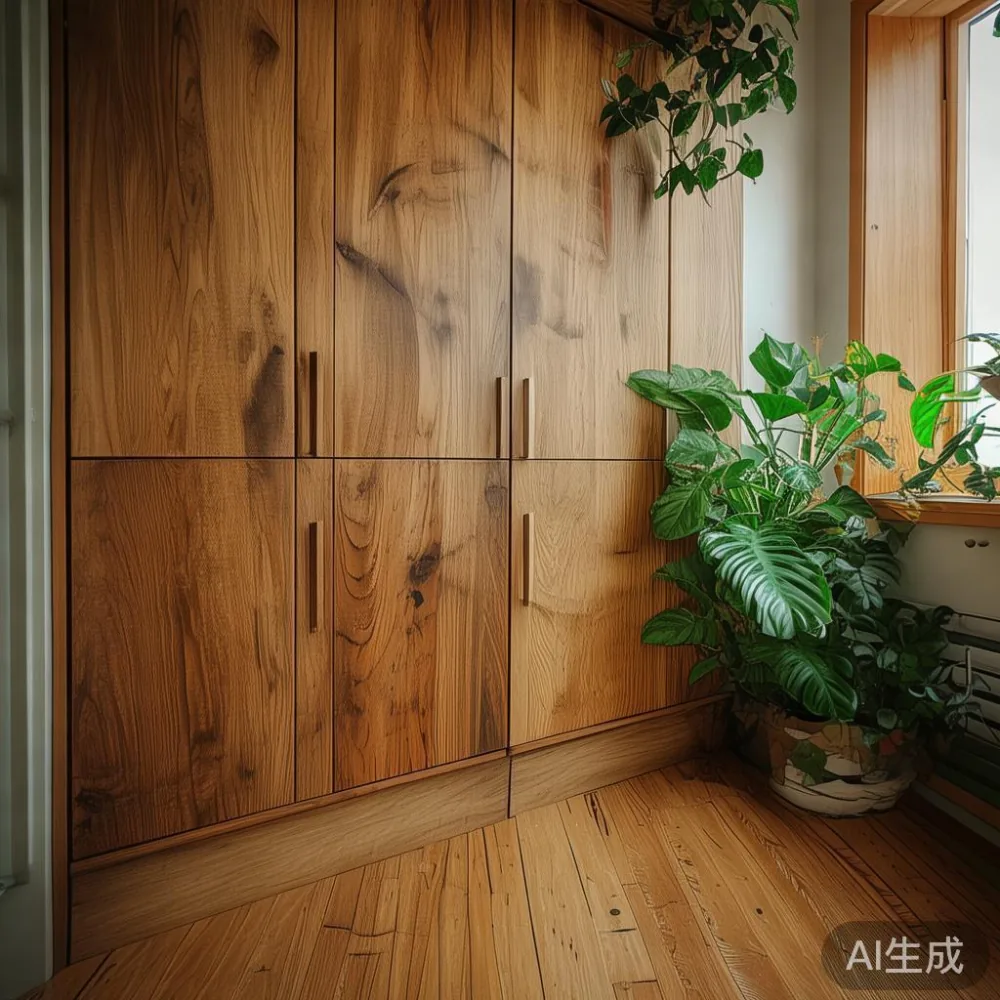
This guide explains those costs without pretending that every piece is made in one factory. It also considers how a storage wardrobe must fit through common lift doors and corridors, how GST affects the checkout price, and where light-luxury design adds value without becoming decoration that is difficult to maintain.
What actually drives the price of solid wood furniture?
The starting point is the timber, but “solid wood” is a construction description rather than a single material category. Oak, ash, beech, walnut, teak, and other woods have different levels of availability, grain consistency, drying requirements, and market pricing. A 180 cm dining table with a continuous-looking top may consume more suitable board than a set of three 45 cm stools, while a 220 cm wardrobe may require longer boards that are scarcer to source.
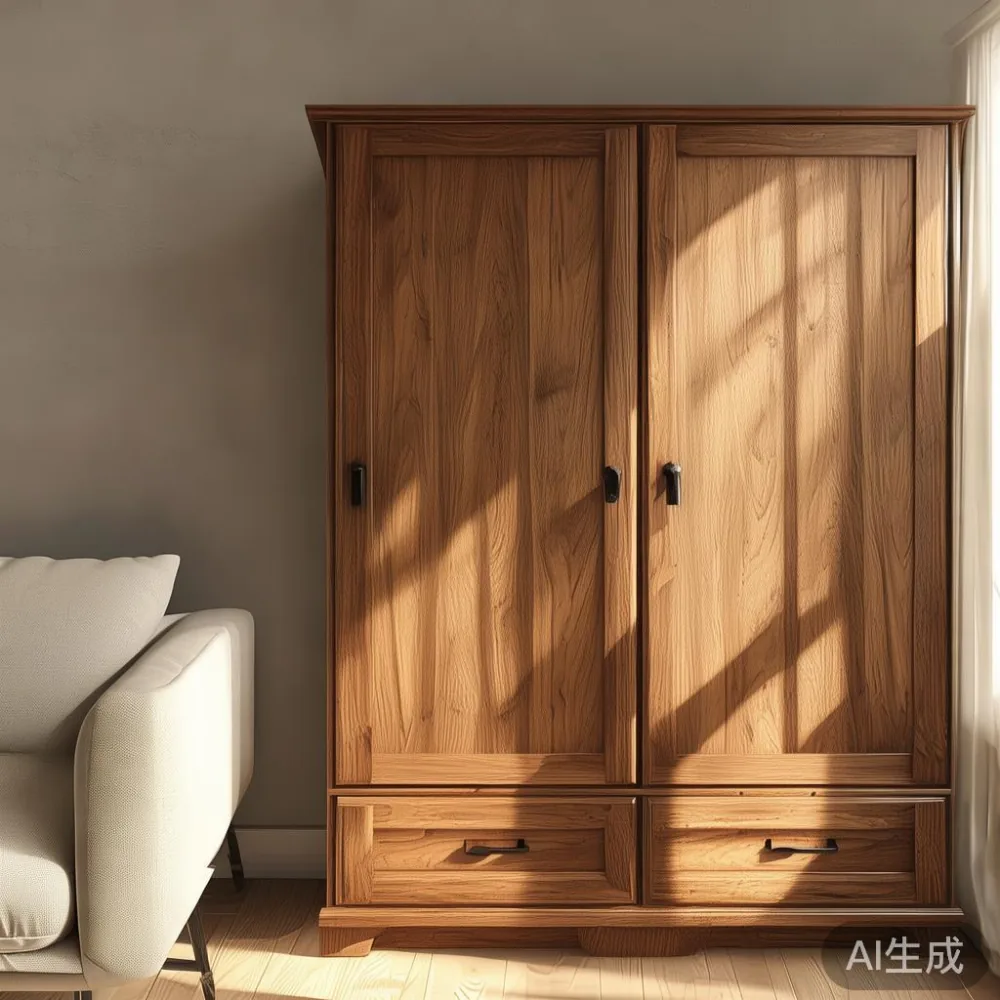
Board dimensions matter too. A 25 mm top is not automatically twice the price of a 19 mm top: its cost includes more timber, slower drying, additional machining, and a greater risk of movement if moisture is poorly controlled. Curved edges, shaped legs, finger joints, and visible joinery add cutting and hand-finishing time. Machine-assisted production can keep prices controlled, but it does not remove the need for accurate joints, square assemblies, and consistent finishing.
Construction is another major factor. A wardrobe may use solid timber for visible fronts and carefully engineered components for hidden backing, while a bed frame may combine solid rails with plywood or reinforced metal supports. Neither approach is automatically superior. The question is whether the structural parts carry the expected loads and whether moving components, such as a wardrobe sliding door, operate correctly after delivery.
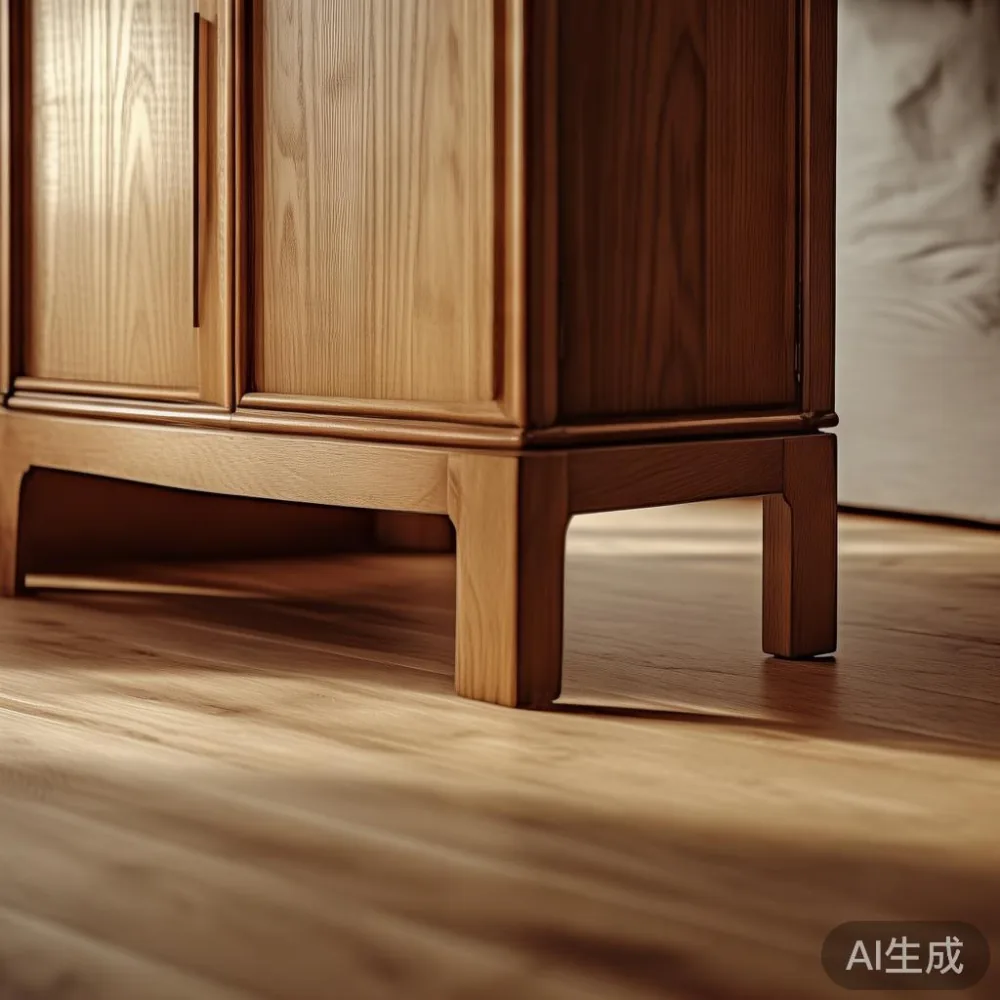
Hardware can add 5–25% to a project’s furniture cost. European hinges, soft-close runners, metal drawer mechanisms, and reinforced hanging rails cost more than basic fittings. For a storage wardrobe, a 1.2 m lift carriage may also need special supports, protective blankets, and a larger crew. Those access requirements should be discussed before a truck is assigned.
Is a solid wood dining table worth its price?
A solid wood dining table earns its price when it is proportioned for the room, made from properly dried timber, and finished for everyday use. A 200 × 100 cm table seats about 8 people, yet it needs roughly 90 cm of circulation behind occupied chairs and at least 60 cm beside the table edge. In a compact HDB dining area, that footprint can be less practical than a 160 × 90 cm table for 6 people.
Thickness, extension method, and stability affect the figure. A 25–30 mm top feels visually substantial; an extension system using stored leaves adds engineering complexity; and a table that rocks because its legs are uneven will not improve with age. Ask for a sample or specification showing top thickness, apron dimensions, joint type, finish thickness, and the expected movement allowance.
Finish is often misunderstood. Lacquer, oil, wax, and water-based coatings have different labour and repair requirements. A matte surface may show fingerprints less readily but can be harder to refresh, while a satin finish can usually be maintained with a compatible care product. MIDHILL provides lifetime refinishing, which can extend the useful life of a properly made piece, but refinishing is not the same as replacing a cracked top or warped leg.
For clients comparing styles, the phrase European light luxury bed vs Modern bed describes an appearance distinction rather than a timber standard. French light luxury might favour pale oak, restrained profiles, and brass-toned accents. Post-modern light luxury may use rounded geometry with clear lines. The underlying wood grade, joinery, and finish should remain the deciding measures.
How should you compare a storage wardrobe with other wardrobes?
A storage wardrobe should be compared by usable capacity, not by the number of decorative panels. Internal layouts determine whether jackets, folded shirts, long dresses, shoes, and bedding fit without crushing them. Measure a hanging rail at 100–120 cm for most long garments, reserve 180 cm for floor-length dresses, and allow about 35 cm for folded items on shelves. A 150 cm-wide double wardrobe may hold more usable space than a visually busier 180 cm model with deep decorative drawers.
Door systems affect both use and price. Hinged doors may offer full internal access but project into the room; sliding doors save approximately 5–10 cm of clearance but require careful track alignment. In Singapore’s humid conditions, sliding systems should have accessible tracks so dust can be removed. For soft-close hinges, check the actual number of hinges and whether the test applies to the complete door.
Material choice influences the budget. Solid timber doors, drawer boxes, and rails provide a tactile, repairable core, whereas veneered or laminated panels can offer dimensional stability at a lower material cost. A mix can be sensible when each component performs a clear function. Compare board thickness, back-panel construction, edge banding, and hardware specifications instead of relying on a photograph.
Access must be confirmed in centimetres. Record the lift door width and depth, the corridor turning points, and the distance from the lift to the bedroom. A wardrobe wider than the lift entrance may still be assembled inside the flat, but that can increase labour time. A boxed flat-pack design may pass through a 70 cm opening while a fully assembled 90 cm carcass cannot.
Is a Japanese bed worth it for a Singapore home?
The question “is Japanese bed worth it” usually involves platform proportions, floor clearance, and local expectations about sleeping comfort. A Japanese-style low platform frame may be 20–35 cm high, creating visual space and useful under-bed storage. In an HDB bedroom of about 9–12 square metres, a 160 × 200 cm bed can dominate the floor even before bedside units are added.
Solid wood bed frames also depend on slat spacing. For a 160 cm mattress, closely spaced slats or a supportive center rail can reduce sag. Confirm the recommended mattress compatibility, centre support, and load rating rather than assuming appearance implies strength.
Japanese sofa vs Modern sofa is another useful comparison because Japanese-inspired seating often emphasises low profiles, clean planes, and compact proportions, while modern sofas may use deeper seats and thicker cushions. Neither label guarantees better foam density, frame timber, or stitching. The price of a solid wood sofa is driven by the frame, suspension, cushion construction, upholstery, and labour—not simply by the name attached to the design.
Humidity also matters. Solid wood expands and contracts across grain with seasonal changes, so a quality maker should dry the stock for its intended climate and leave appropriate tolerances. Ask whether the product is intended for Singapore’s conditions and what expansion allowance is built into the construction.
Why do delivery, access, and GST change the final amount?
Furniture pricing often excludes the difficult part: getting the product home. Singapore delivery requires more than a standard parcel. A storage wardrobe may weigh 120–250 kg, while a solid wood dining table may weigh 70–140 kg and a marble table may exceed 180 kg. Marble is especially sensitive because a top can crack if lifted incorrectly or carried unsupported.
In Tampines, Bedok, and Punggol, high-rise access is usually manageable when measurements are correct. Common passenger-lift openings are around 80–90 cm wide and 130–210 cm deep, though building-specific dimensions vary. A 100 cm-wide wardrobe carcass might fit a lift diagonally, but a long rigid side panel cannot flex. Service corridors and staircase turns can therefore determine whether a piece is delivered intact or assembled in the room.
Measure the route in cm, including the door, lift call panel, corridor handrails, and the final bedroom doorway. Check whether the elevator has a protection pad requirement and whether the building allows a delivery booking outside restricted hours. Allow 1–3 days for stock delivery within Singapore and about 5–10 days for production or sea-shipped items, subject to the order and destination. For international orders to 15+ countries, transit times and customs duties sit outside the furniture quotation.
MIDHILL offers free shipping over US$350, although that threshold and the currency used are separate from an SGD retail calculation. Singapore prices should show GST clearly at 9%. For example, a subtotal of SGD 2,000 becomes SGD 2,180 after GST. A deposit, balance, and return terms should also be stated in writing.
Last month, I visited a Bedok condo with my colleague to inspect a storage wardrobe delivery. The lift was 85 cm wide, and the building corridor had one tight turn. The wardrobe had been confirmed at 82 cm across and 58 cm deep, leaving about 3 cm of side clearance. A second design measured 96 cm and had to be rejected, despite looking almost identical in the showroom. That 14 cm difference would have required dismantling the carcass, which is why product dimensions and access records belong in the quotation.
Where does light luxury add value—and where does it become expensive?
Light luxury is about proportion, material perception, and detail quality. A French light luxury wardrobe may have pale oak, softly bevelled edges, and understated metal pulls. American light luxury often draws on deeper timber tones, generous scale, and traditional furniture silhouettes. Post-modern light luxury can use curved corners, integrated storage, and a cleaner architectural look.
The cost lies in execution. Doors must align within a few millimetres, drawer fronts must sit consistently, and a marble table needs a stable base and controlled weight. Decorative hardware also needs to match across a suite. A coordinated nightstand and wardrobe can look more considered than unrelated pieces, but coordination should not require unnecessary timber wastage.
Search terms can narrow the visual field. “top 10 Nordic furniture” is useful for pale woods and functional forms, although Nordic style may lean toward veneer or painted board rather than solid timber. A query for “under 2000 Coastal furniture” may surface relaxed silhouettes and light colours; if the piece is a solid wood dining table, the material specification still needs checking.
For a dressing table, the exact phrase European light luxury dressing table describes a category with pale, refined materials, elegant proportions, and restrained storage. A 120 cm dressing table with 2 drawers, a mirror, and solid timber framing may fit a bedroom comfortably, but the mirror package and chair are often separate costs. Keep those components visible in the comparison rather than treating them as complimentary.
Some phrases used in online product research may point to unrelated sellers. Wuhan Lingzhan Media, for example, may appear as a digital-media name rather than a Singapore furniture maker, so verify the actual manufacturer, warranty issuer, and local service terms before paying.
What specifications deserve a place in your quotation?
A useful quotation separates product cost from unavoidable charges. It should name the wood species, board dimensions, finish, dimensions, internal wardrobe layout, hardware, weight, assembly requirement, delivery lead time, and warranty. For a storage wardrobe, include rail lengths, shelf clearances, drawer internal sizes, and door mechanism. For a bed frame, include mattress size, slat spacing, centre support, and maximum recommended load.
Compare several quotations using the same checklist. A lower figure may exclude delivery, GST, stairs, assembly, or a protective lift service. A higher figure may include better hardware and more transparent after-sales support. Neither is automatically the right choice; the complete scope is what makes the comparison meaningful.
MIDHILL was established in 2008 and exports to more than 15 countries. Its 10-year structural warranty addresses long-term frame integrity, while lifetime refinishing supports renewal of the surface. Returns are allowed within 14 days under the applicable terms, and free shipping over US$350 applies to qualifying orders. These policies can reduce the long-term risk of buying furniture online, but buyers should still confirm condition, return freight, and custom-order exclusions.
The most reliable way to understand the price is to ask what is physically in the piece. Solid timber has a cost; so do accurate joinery, controlled finishing, durable hardware, protective packaging, and delivery by people who will not damage a corridor wall. In Singapore, add GST, measure every access point, and choose the specification that suits the room. A well-made wardrobe, nightstand, dining table, bed frame, solid wood sofa, or marble table should justify its price through use and longevity rather than visual ornament alone.