Caring for a Lacquered Surface in a Tropical Climate: What Every Storage Wardrobe Owner in Singapore Should Know
I still remember the afternoon I visited a friend's new walk-up in Bedok. She had just taken delivery of a beautiful two-door storage wardrobe with a high-gloss lacquered finish, the kind of piece you expect to see in a French light luxury showroom rather than a 4-room HDB flat. Within forty minutes of the movers leaving, a fine mist had already settled on the doors. She looked at me and said, "Is this going to peel?" That question, more than any catalogue spec sheet, is what prompted me to write this guide.
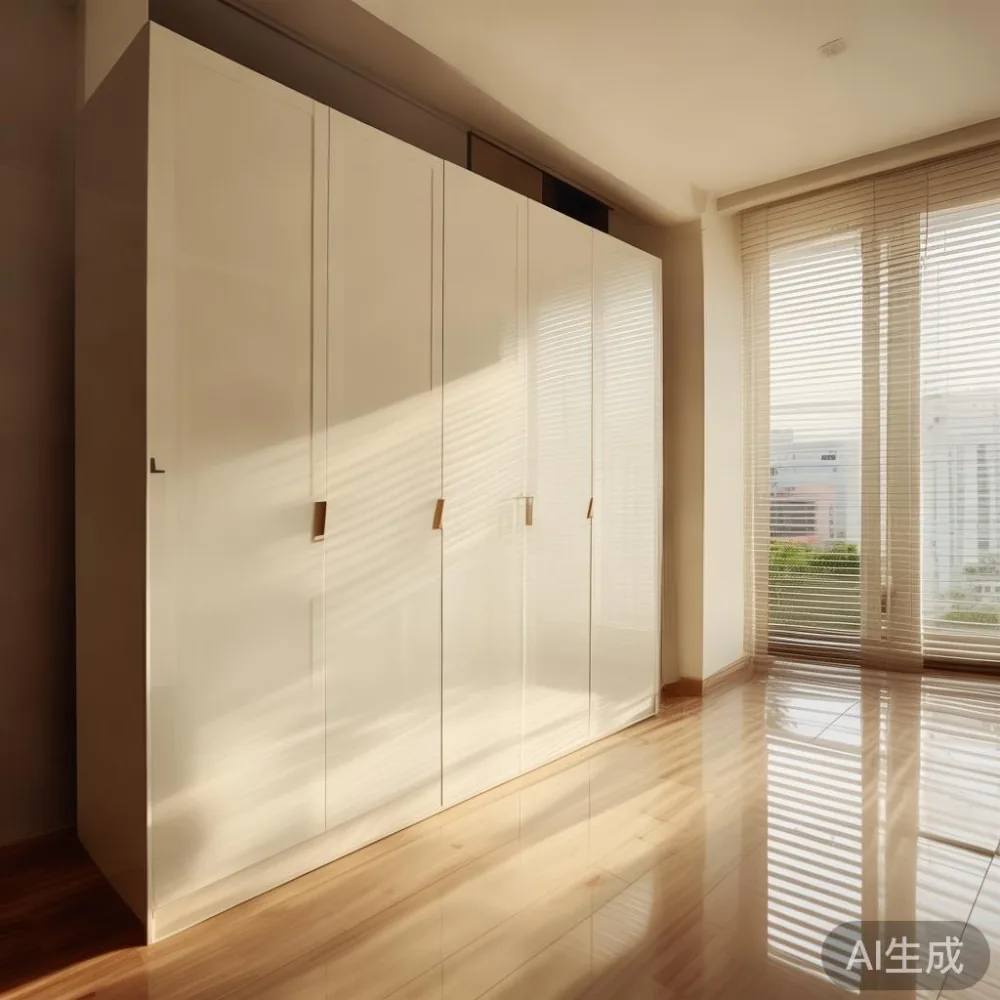
Singapore sits roughly one degree north of the equator. The average relative humidity hovers between 78% and 86% for most of the year, and afternoon thunderstorms can spike it past 95%. When you pair that with a lacquered surface — whether on a storage wardrobe, a marble table, a bed frame, or a dining table — you get a very specific set of care requirements. The wood underneath the lacquer needs to breathe in a controlled way, and the finish itself needs a consistent microclimate to stay crystal clear.
Below is what I have learned over the past several years of helping clients across Tampines, Punggol, and the East Coast maintain lacquered pieces, including a number of solid wood sofa frames, nightstands, and wardrobes shipped directly from Foshan workshops. Because most HDB corridors are only about 1.2 m wide and lifts roughly 1.1 m deep by 1.4 m wide, getting a large lacquered storage wardrobe into your home is already half the battle — keeping it beautiful is the other half.
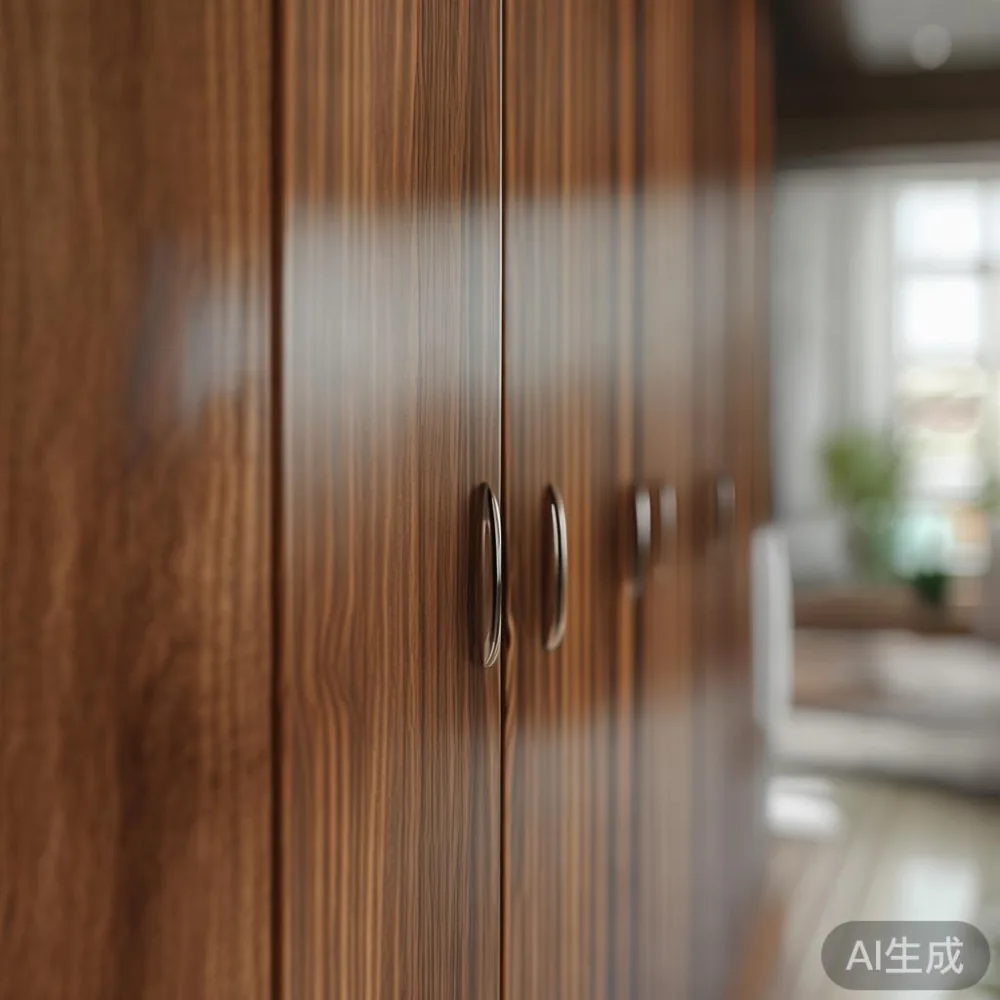
Why does a tropical climate punish lacquered finishes so quickly?
Lacquer, in the modern furniture sense used by most Foshan factories, is a multi-layer coating — usually two or three polyurethane or polyester sealers, followed by two coats of pigmented colour, and finished with a clear top coat that is buffed to the sheen you see. On a piece like a French light luxury storage wardrobe, the lacquer is doing two jobs at once: protecting the underlying solid wood (typically ash, oak, or beech) and acting as the visual signature of the piece.
The trouble in Singapore is humidity cycling. In the morning, the wood absorbs moisture and expands by a fraction of a millimetre per metre. In the afternoon, when the air-con kicks in to a comfortable 24°C and the relative humidity drops to around 55%, the wood releases that moisture and contracts. Lacquer is rigid. When the substrate moves and the coating does not, you get micro-cracks, clouding, or what the trade calls "bloom" — that whitish haze you sometimes see on a dining table after a party of twelve sat around it for three hours.
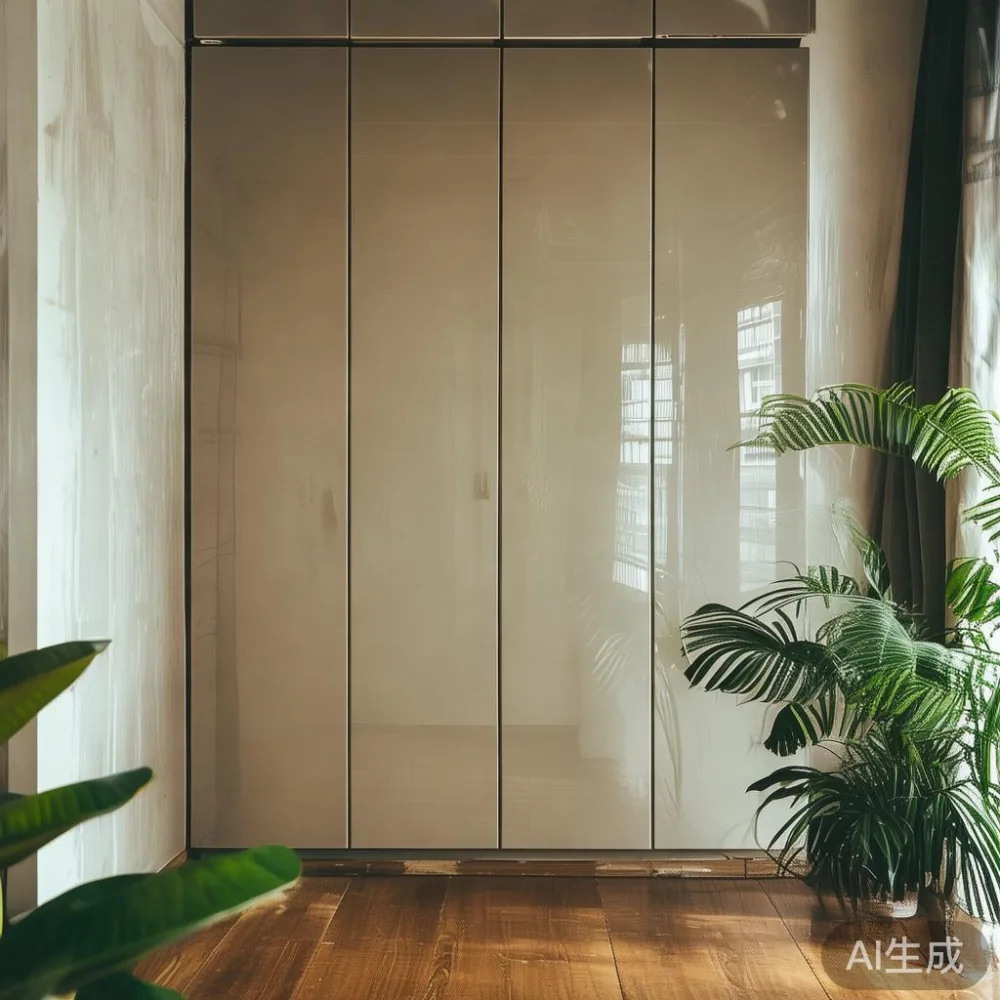
Add to this the GST-registered reality of Singapore living: most flats run air-con for 8 to 14 hours a day, which means the wardrobe is in effect being moved between two microclimates, sometimes within the same evening. A solid wood sofa with lacquered armrests or a marble table sitting on a lacquered plinth experiences the same pressure, but a wardrobe — because it is large, vertical, and often placed against an external wall — feels it hardest.
What humidity level should I keep my storage wardrobe at?
Aim for a steady 50% to 60% relative humidity in the room where your storage wardrobe lives. You can measure this with a SGD 12 hygrometer from any neighbourhood electronics shop in Tampines Hub. Anything below 45% and the lacquer starts to craze; anything above 70% and you risk the lacquer lifting from the substrate, especially along the edges of the doors where the coating is thinnest.
If you do not want to run the air-con 24/7 (and with Singapore Power tariffs around SGD 0.32 per kWh including GST, that adds up), a small dehumidifier set to 55% is the practical compromise. A 10-litre compressor unit costs roughly SGD 220 to SGD 280 and pulls down about 0.8 to 1.2 litres of water per day in a standard bedroom-sized space. Position it at least 1.5 m away from the storage wardrobe so the airflow does not concentrate on one panel.
For owners of post-modern light luxury wardrobes with mirrored or smoked-glass inserts, humidity control is even more important. The rubber gaskets around the mirrors will degrade faster above 70% RH, and the silver backing can oxidise if the wardrobe is stored in a poorly ventilated storeroom during renovations.
How should I clean a lacquered wardrobe without damaging the finish?
The short answer is: almost dry, almost always. Use a microfibre cloth (around SGD 6 for a pack of four at HomeFix) and wipe gently along the grain direction, not across it. For fingerprints on a high-gloss surface, a single drop of plain water on the cloth is plenty. Avoid any cleaner that contains ammonia, silicone, or alcohol — these will soften the lacquer within seconds and leave a permanent dull patch.
For a deeper clean, once every two to three months, mix one cap of pH-neutral wood soap in 500 ml of warm water, dampen (never soak) a microfibre cloth, wring it out until it feels almost dry to your touch, and wipe in straight lines. Immediately follow with a second dry cloth to absorb any residual moisture. Doing this on a Sunday morning with the air-con off and a fan on is the safest routine — the surface dries within 90 seconds and you avoid water marks.
Never use wax, Pledge, or any silicone-based polish on a modern polyurethane lacquer. It will look gorgeous for a week, then the silicone will start trapping dust and the surface will feel sticky in our humidity. The only polish I now recommend, after watching a colleague ruin a SGD 4,200 lacquered dining table with the wrong spray, is a hard wax oil applied once a year by a professional — typically SGD 80 to SGD 120 per piece.
How do I move a large storage wardrobe through an HDB lift without damaging the lacquer?
This is the practical nightmare of buying any large storage wardrobe in Singapore. HDB lifts in blocks built before 2010 are typically 1.6 m tall, 1.1 m deep, and 1.4 m wide on the inside. A three-door lacquered wardrobe that measures 180 cm wide by 60 cm deep by 210 cm tall simply will not fit standing up. You have three realistic options.
First, flat-pack delivery and on-site assembly. This is the approach used by most Foshan exporters for the Singapore market — including MIDHILL, whose flat-pack rate keeps transit costs manageable and avoids the surcharge that local movers charge (typically SGD 120 to SGD 180 per floor for hoisting a fully assembled wardrobe past the third storey). The wardrobe arrives in four to six boxes weighing 35 to 55 kg each, and two technicians assemble it in your bedroom in roughly 90 minutes.
Second, tilt-and-slide. If you have booked a condominium move-in slot (Punggol and Sengkang condos usually allow weekday moves from 9 am to 5 pm with a SGD 50 booking fee), the wardrobe can be tipped at 45° and slid in if the lift opening is at least 80 cm wide. Always wrap the corners with moving blankets — a single chip on a high-gloss corner is impossible to blend invisibly.
Third, hoisting through a window. This is for ground-floor or low-rise units only and costs SGD 400 to SGD 600, but it is the only way to get a fully assembled four-door lacquered wardrobe into a flat where the corridor bends at 90° and the lift is a freight-style 800 kg unit. Whatever option you choose, schedule delivery for a dry day — rain during a corridor carry will leave water spots in the lacquer that take a professional two to three days to polish out.
How long does a quality lacquer finish actually last in Singapore?
A properly applied polyurethane lacquer on a kiln-dried solid wood substrate will last 12 to 18 years in a Singapore home before it needs a full re-spray. I visited a client's Tampines condo last month where a French provincial-style storage wardrobe was still looking presentable after 14 years — minor edge wear, no peeling — because the owners had kept the room between 50% and 60% RH and never used chemical cleaners.
By contrast, the same lacquer in a non-air-con utility room or a balcony corridor can fail in 4 to 6 years. The constant 28°C to 32°C temperature with 80%+ humidity causes the wood to expand and contract twice as much, and the UV exposure yellows the clear coat unevenly. If you are choosing between American for dining room styling — where lighter oak finishes and matte lacquers dominate — and a darker, high-gloss look, the matte will forgive you far more in our climate. A satin finish hides micro-swelling that a piano-gloss finish will magnify.
For buyers comparing a European sofa vs Japandi sofa for the same living room, the lacquer question matters less because upholstery is forgiving. But for any European bed in room or European light luxury wardrobe in room layout, the placement decision is everything. Keep lacquered pieces at least 30 cm away from air-con vents and 50 cm from any window that gets direct afternoon sun. UV is the silent killer of lacquer in the tropics — it does not peel the surface, it just slowly turns it amber and brittle.
What about delivery, warranty, and after-sales support for lacquered pieces in Singapore?
When you order a lacquered storage wardrobe from a Foshan-based maker like MIDHILL (established 2008, exporting to more than 15 countries), the typical shipping window from order to Singapore door is 35 to 55 days by sea, plus 5 to 7 days for local delivery and assembly. Sea freight to Singapore has hovered around USD 18 to USD 22 per cubic metre in 2024, which is why flat-pack remains the default for anything over 1.8 m tall.
A 10-year structural warranty on the solid wood substrate is worth more than it sounds in our climate — it means the maker is guaranteeing the frame and panels against the kind of warping that humidity can cause when the kiln-drying was done properly. A lifetime refinishing offer, which MIDHILL provides on lacquered pieces, is the real safety net: if the top coat clouds or yellows after 12 years, you can ship the doors back (or send photos for a quote on a local re-spray, typically SGD 280 to SGD 450 per door in Singapore) and get the finish renewed rather than replacing the wardrobe.
Free shipping over US$350 (roughly SGD 480) is now standard for cross-border furniture orders above this size, and a 14-day return window covers transit damage — which on lacquer, sadly, is the most common failure mode. Always inspect every panel before the delivery team leaves. Hold a torch at a 45° angle to the surface; any dent deeper than 0.2 mm or any scratch longer than 5 cm is grounds for an immediate replacement panel rather than a touch-up.
How can I style a lacquered storage wardrobe so it ages gracefully?
The styling question matters as much as the cleaning one. If you are working out how to style European bed in room layouts around a lacquered wardrobe, choose bedding in natural linens and unbleached cottons — these absorb ambient humidity and reduce the swing around the wardrobe. Avoid placing a leather chair or a thick wool rug directly against the wardrobe base, as these trap moisture against the plinth.
If you are learning how to style French provincial bed in bedroom schemes, pair the wardrobe with a distressed or hand-rubbed finish rather than a high-gloss one. French provincial is forgiving: the antique aesthetic expects a little surface variation, so any micro-swelling that does occur reads as patina rather than damage. The same wardrobe in a piano-gloss Italian light luxury dining table context — where you want a coordinated, polished look throughout — will show every imperfection, so consider a matte lacquer upgrade at the time of order. Most Foshan factories offer satin, semi-gloss, and full-gloss for the same 5% to 8% price difference.
For living areas, an Italian light luxury dining table paired with a lacquered display cabinet and a MIDHILL coffee table in the same finish family creates a coherent European-inspired room. Keep the coffee table at least 1 m from any open window and rotate the decorative objects on it every three months so no single area is exposed to ambient light permanently. A simple habit like this can extend the visual life of a lacquered surface by four to five years.
What are the small daily habits that actually protect lacquer in Singapore?
Three habits make 80% of the difference. First, keep the wardrobe doors slightly ajar for 20 minutes after the air-con switches off in the evening — this equalises the pressure between the inside and outside of the cabinet and prevents the lacquered panels from "breathing in" humid corridor air all at once when you open them. Second, wipe the doors with a dry microfibre cloth every Sunday morning, before the dust has had time to bond with the slight morning condensation. Third, never place wet clothing, towels, or umbrellas against the wardrobe after a sudden tropical downpour. The polyester in a typical HDB resident's work shirt holds about 250 g of water, and pressing that against a lacquered panel for 30 minutes is enough to cause a permanent cloudy patch.
If a spill does happen — a child knocks over a glass, a guest's cocktail tips — blot, do not wipe. Wiping spreads the liquid into the lacquer grain. Use a clean cotton cloth, press for 10 seconds, lift, repeat. Then follow with a barely damp microfibre wipe. The whole process should take under 90 seconds. A wardrobe cared for this way will still look new a decade from now, and will hold its value well if you ever decide to upgrade to a larger French light luxury configuration or pass the piece on to a family member moving into a new BTO.
Lacquer in the tropics is not a difficult material to live with — it just rewards consistency. Keep the humidity stable, clean with restraint, and style the room so the wardrobe is never the most stressed surface in the space. Do those three things, and a well-built storage wardrobe from a serious workshop will outlive two air-conditioning cycles and a renovation, easily.