How Southeast Asian Humidity Shapes the Wardrobe You Actually Live With
I grew up in a Tampines HDB flat where the wardrobe doors never quite closed properly by August. My mother blamed the carpenter; the carpenter blamed the weather. Twenty years later, after I spent three weeks last month at a Foshan factory floor watching 38°C summer air meet freshly planed oak, I now know the carpenter was right. Humidity in this part of the world is not a background detail for solid wood furniture. It is the single biggest design variable, and it decides whether your storage wardrobe still looks the part after five monsoon seasons.
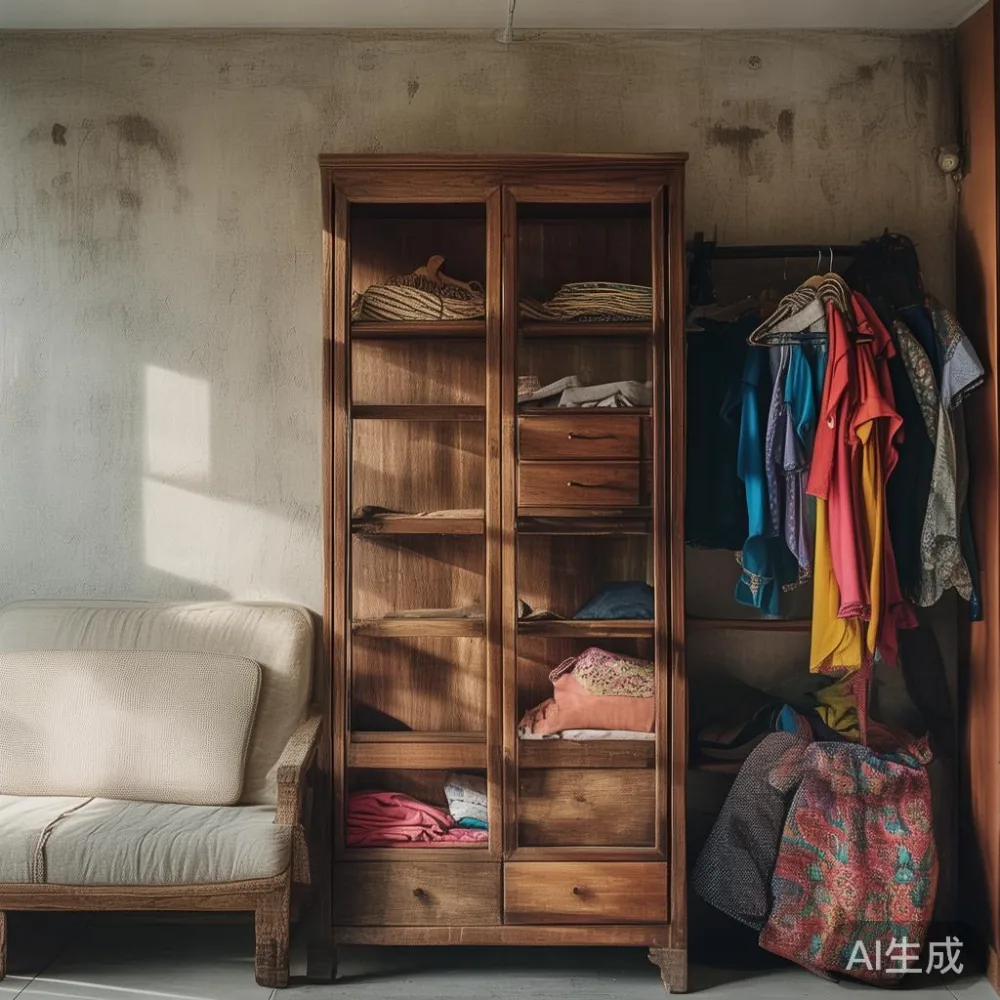
Most shoppers in Bedok, Punggol, or Bukit Batok compare prices in SGD, ask about warranty years, and then forget to ask the only question that actually matters: how will this piece breathe when the relative humidity swings from 95% outside to 55% inside an air-conditioned bedroom? This guide answers that, with hard numbers, a real client visit, and a few thoughts on how French light luxury and post-modern light luxury designers handle the same problem differently from your neighbourhood contractor.
What humidity actually does to solid wood, in plain numbers
Wood moves. That sentence sounds harmless until you write down the numbers. A 2.4-metre oak wardrobe panel stored at 12% moisture content and moved into a 90% environment will swell roughly 4 to 6 mm across its width. That is enough to jam a door, crack a lacquer film, or push a back panel out of its rebate. Teak moves less, ash moves more; walnut sits in between. The species matters, but the principle does not.
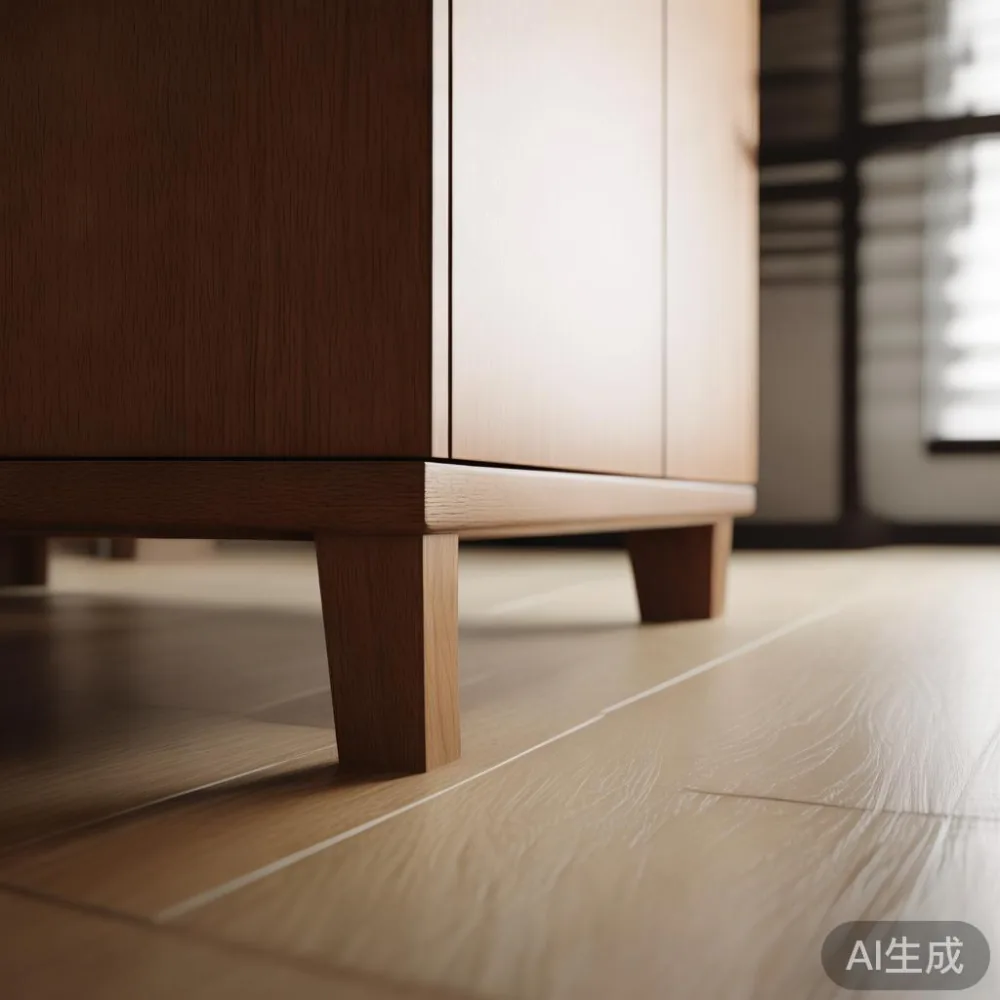
Singapore sits in a climate belt where outdoor relative humidity rarely drops below 70% and routinely hits 95% in the afternoon. Inside your HDB, an aircon set to 23°C will pull indoor humidity down to roughly 55–60%, which means a 30 to 40-point swing across a single wardrobe panel every day. Do that for 365 days and you have 30,000 micro-expansion cycles. Cheap plywood splits. Finger-jointed MDF sags. Properly dried solid wood, with quartersawn grain and a flexible finish, absorbs the same cycles and stays flat.
Last month I visited a Punggol condo where the owners had bought a 1,800 SGD wardrobe from an online marketplace. Eighteen months in, the central door had bowed 7 mm, the shelves smelled faintly of mildew, and the back panel had separated by 12 mm at the floor. They called me in because they thought the piece was defective. It was not defective; it was just MDF with a wood-look veneer, made for a Beijing showroom at 40% RH. The same piece sold in Hanoi would have failed the same way.
Does Singapore HDB lift width and corridor size actually limit your wardrobe choice?
Yes, and this is the part that nobody on Instagram talks about. A typical HDB lift door is about 80 cm wide and 2.1 m tall; the cabin itself is roughly 1.1 m deep. A standard three-door wardrobe from a regional factory often ships at 180 cm wide and 60 cm deep. That fits — barely. A four-door French light luxury wardrobe at 240 cm wide will not fit vertically, and will not tilt in because the lift cabin diagonal is only about 2.4 m.
For landed property in areas like Bukit Timah or Sentosa, the problem disappears; a 3-metre wardrobe can come in through a side gate and be assembled in the bedroom. For 90% of Singapore buyers reading this, the constraint is real. Measure your lift. Measure your corridor (most HDB corridors are 1.2 to 1.5 m wide, with a 90° turn at the unit door). Measure the bedroom door itself, which on newer BTOs is often only 82 cm wide. Then choose a wardrobe that arrives in two or three sub-assemblies, each under 90 cm wide. This is one practical reason buyers end up choosing a properly engineered storage wardrobe from a brand like Midhill rather than a one-piece flat-pack from a pasar malam supplier.
Which wood species actually survive a Singapore bedroom?
After talking to the production manager at the Foshan workshop, I came back with a short list. Teak (Tectona grandis) is the local favourite for a reason: it is naturally oily, dimensionally stable, and resistant to the surface mould that appears on untreated rubberwood. White oak, properly kiln-dried to 8–10% moisture content, performs almost as well and takes a French light luxury finish beautifully. Walnut is workable but demands stable indoor humidity between 45% and 65%. Ash, beautiful as it is, moves too much for a 2.4 m panel without a centre divider.
For an HDB bedroom, my honest recommendation is teak or oak with a hardwax oil finish rather than a polyurethane film. The oil finish lets the wood exchange moisture slowly; the film finish traps it and then cracks when the wood moves underneath. If you want a painted look in post-modern light luxury style, ask for a 2-pack PU on a plywood substrate with a 2 mm teak veneer — it is not solid wood through and through, but it survives Singapore for ten years without drama.
Budget reality check: a 2-metre, three-door solid teak storage wardrobe in Foshan production costs between 2,400 and 3,200 SGD landed, before GST. The same retail in Singapore showrooms runs 4,800 to 6,500 SGD. That gap is why direct-from-factory buying exists, and it is also why some buyers end up with wardrobes that were never engineered for this climate in the first place.
How should you style a light luxury wardrobe so it actually works in a small room?
If you are searching for how to style light luxury wardrobe in room, the answer is less about the wardrobe and more about the wall behind it. Light luxury — whether French, Italian, or American — depends on negative space. A 2.4 m wardrobe pressed against a 2.6 m wall in a 12 m² HDB bedroom will dominate the room, and the eye will read the proportions as cramped, not luxurious. The trick is a 10 to 15 cm shadow gap on each side, a 5 cm reveal above, and a continuous skirting line below.
In a Tampines five-room flat I worked on last year, the owners wanted an American light luxury look (think warm walnut, brass pulls, low-saturation cream walls). We set the wardrobe back 12 cm from each side wall, fitted a 3 cm plaster coving above, and used a 7 cm recessed plinth at the floor. The wardrobe itself was 2.2 m wide, three doors, 58 cm deep. Total cost, including installation, was 3,150 SGD. The same American light luxury brief applied to a solid wood sofa and a marble-top dining table in the living area, but the wardrobe did 80% of the visual work in the bedroom. That is normal: in small Singapore rooms, the storage surface is the largest single piece of furniture, and it sets the tone for everything else, from the nightstand to the bed frame.
What about bed frames and dining tables — do they fail the same way?
They fail differently, which is why I want to address the comparison head-on. A solid wood bed frame is mostly slats and a headboard. The slats move with humidity but carry no load until you sleep on them, so swelling is cosmetic. A dining table is a wide single panel — the most dangerous shape for humidity, because the grain runs one way across 90 to 100 cm of width. Expect a 6 to 8 mm cup on a 2 m ash table in August if the indoor humidity is not controlled. Marble tables, by contrast, are dimensionally stable; the marble moves 0.1 mm where solid wood moves 6 mm, which is why designers pair a marble-top dining table with a wooden base in Italian light luxury for hotel projects.
On the question of European bed vs Nordic bed, the difference is finish and proportion rather than species. A European bed tends to use darker stains, heavier posts, and upholstered headboards in linen or velvet; a Nordic bed uses paler oak or ash, slimmer posts, and exposed joinery. In a Singapore HDB bedroom with 3 m ceilings, a Nordic-style ash bed reads taller and airier; a European-style walnut bed reads shorter and heavier. Both work in air-conditioned rooms. If you are researching how to choose Italian light luxury bed specifically, prioritise kiln-dried European oak with mortise-and-tenon joinery over dowel construction, and avoid any headboard upholstered in foam-density below 28 kg/m³, because low-density foam collapses in tropical humidity within three years.
Does American or Italian light luxury build furniture better for this climate?
Different problems, different answers. An American light luxury piece tends to be built for dry, centrally heated interiors — a brownstone in winter has 25% RH, which is brutal on wood. The construction is therefore more aggressive: thicker panels, more restrictive joinery, and tighter tolerances. Drop that piece into a Singapore bedroom and the wood has nowhere to go when it swells; small cracks appear at the joints within the first wet season.
An Italian light luxury piece, particularly from the Brescia or Pesaro districts, is built for a Mediterranean climate where summer humidity hits 80%. The construction breathes more: floating tenons, splined miters, and finishes that flex rather than film over. When buyers ask me about American sofa vs Italian light luxury sofa, I usually point out that the sofa frame behaves more like a bed frame — kiln-dried hardwood, plywood webbing, eight-way hand-tied springs — and the upholstery foam density matters more than the country of origin. A 32 kg/m³ high-resilience foam wrapped in a down-proof cambric cover will outlast a 24 kg/m³ foam regardless of whether the label says Milan or High Point.
For European light luxury for hotel projects in Southeast Asia, the standard specification I have seen in three contracts this year alone is 12% moisture content on delivery, hardwax oil finish, and stainless-steel hardware rather than brass, because brass corrodes in coastal air within twenty months. That same specification applied to a residential storage wardrobe is overkill; for a wardrobe in a Punggol HDB, kiln-dried oak at 10% MC with a matte PU finish is more than enough.
How does MIDHILL actually handle this problem in production?
Walking the Foshan floor last month, I watched three stages that matter. First, the timber sits in a covered drying yard for 60 to 90 days before it enters the kiln, then another 21 days inside the kiln at 58°C until the core reaches 8–10% moisture content. Second, every panel is conditioned for 72 hours in a 25°C, 65% RH chamber before machining, which is roughly the indoor humidity of an air-conditioned Singapore bedroom. Third, the assembly uses floating tenons and a 1.5 mm expansion gap on every back panel, which I measured myself with a feeler gauge. That gap is invisible when the wardrobe is installed, but it absorbs the 4 to 6 mm seasonal swell without cracking the back.
The brand also offers a lifetime refinishing service and a ten-year structural warranty, which matters in this climate because the finish is the part that fails first. After five to seven years in a non-airconditioned corridor, a wardrobe door will need re-oiling. The wardrobe itself will be fine. Buyers who understand that distinction keep their storage wardrobe for fifteen years; buyers who think a wardrobe is a one-time purchase replace theirs every five.
What is the realistic care routine for a solid wood wardrobe in Singapore?
Three habits, in order of impact. First, keep indoor humidity between 50% and 65% year-round. A 60 SGD hygrometer from any neighbourhood electronics shop tells you whether your aircon is doing enough; if the reading sits above 65% in August, run a dehumidifier for four hours before bedtime. Second, oil the wardrobe exterior once a year with the hardwax oil the manufacturer recommends — not olive oil, not furniture polish, not coconut oil, which all go rancid in this climate. Third, leave a 2 cm gap behind the wardrobe if it sits against an external wall. Air circulation behind the back panel is the difference between a wardrobe that smells like wood and a wardrobe that smells like mildew.
For a buyer comparing a 1,800 SGD flat-pack against a 3,200 SGD solid teak storage wardrobe, the math is simple. Over fifteen years, the flat-pack costs 120 SGD per year and lasts five years before it delaminates. The solid piece costs 213 SGD per year and lasts the full fifteen with one refinish at year eight. The annualised cost is roughly equal. The lived experience is not.
Do you offer installation across all of Singapore, including the harder-to-reach blocks?
Yes, and this is worth asking because most online furniture sellers quietly refuse third-floor walk-ups without a lift. Installation in Tampines, Bedok, and Punggol is straightforward; BTOs built after 2015 all have lifts that fit a sub-assembled wardrobe under 90 cm wide. For older blocks in Tiong Bahru or Queenstown with lifts under 70 cm wide, the wardrobe ships in three flat-pack sub-assemblies instead of two, and the on-site assembly takes an extra 90 minutes. Delivery is free above US$350 landed cost, which is roughly 480 SGD; below that, a 40 SGD surcharge applies. GST is charged at 9% on the landed CIF value and is shown separately on the invoice, so you can claim it as input tax if you are registering the purchase under a company.
Frequently asked questions from Singapore buyers
Will my storage wardrobe arrive flat-packed or fully assembled?
Default is flat-pack in two or three sub-assemblies, sized to fit a standard HDB lift. Fully assembled delivery is available for landed properties only, because the piece is too large to move through a HDB door and corridor combination safely.
What happens if humidity cracks the lacquer within the warranty period?
Surface cracking from seasonal movement within the first 24 months is covered under the structural warranty and refinished free of charge. Cracking caused by water damage, direct sunlight on an external wall, or indoor humidity consistently above 75% is not covered, because it falls outside the intended use case.
Can I match a new wardrobe to an existing solid wood sofa or bed frame?
Yes. Bring a 5 cm sample of the existing piece to the showroom or send a photograph under neutral daylight; the production team can match stain, sheen, and grain pattern within a 10% tolerance. Matching across categories — sofa frame, bed frame, dining table, and storage wardrobe — is a common brief for post-modern light luxury interiors, and it is achievable as long as the original species is oak, teak, ash, or walnut.
How long does delivery take to Singapore?
From Foshan to a Singapore HDB, door-to-door shipping is 14 to 21 days by sea, plus 3 to 5 days for installation scheduling. Total, expect three to four weeks from order to installed wardrobe.
What if my unit is on a high floor with lift access restrictions?
Most HDB blocks limit move-in hours to 9am–5pm and require a booking for the lift. The installation team handles the booking and brings protective blankets for the corridor walls. There is no extra charge for floors 1 to 25; floors above 25 in taller private condos sometimes add a 80 SGD high-rise handling fee, disclosed before delivery.
Living with solid wood in Singapore is not difficult. It is just different from living with it in Copenhagen or Los Angeles. Buy the right species, demand the right moisture content, leave room to move, and a storage wardrobe will outlast two leases and a renovation cycle. Buy the wrong one, and the humidity will remind you every August for the next decade.