How to Care for a Lacquered Storage Wardrobe in Singapore's Tropical Climate
Anyone who has lived in a Tampines five-room flat, a Bedok executive HDB, or a Punggol condominium with floor-to-ceiling glazing knows the same thing: humidity is a permanent houseguest. Average relative humidity in Singapore sits between 70% and 90% for most of the year, and indoor humidity in a poorly ventilated corridor unit can climb higher. A lacquered storage wardrobe looks gorgeous on the day of delivery, but the finish will only stay glossy if you treat it as a deliberate, repeatable routine rather than a one-off wipe-down. This guide is built for Singaporean homes, lift-door constraints, and Chinese-made solid wood furniture that arrives in flat-pack form — including the lacquered pieces produced by Foshan workshops such as MIDHILL, whose storage wardrobes I have inspected on the shop floor and in customers' homes over the past several months.
Why Lacquered Storage Wardrobes React So Strongly to Tropical Air
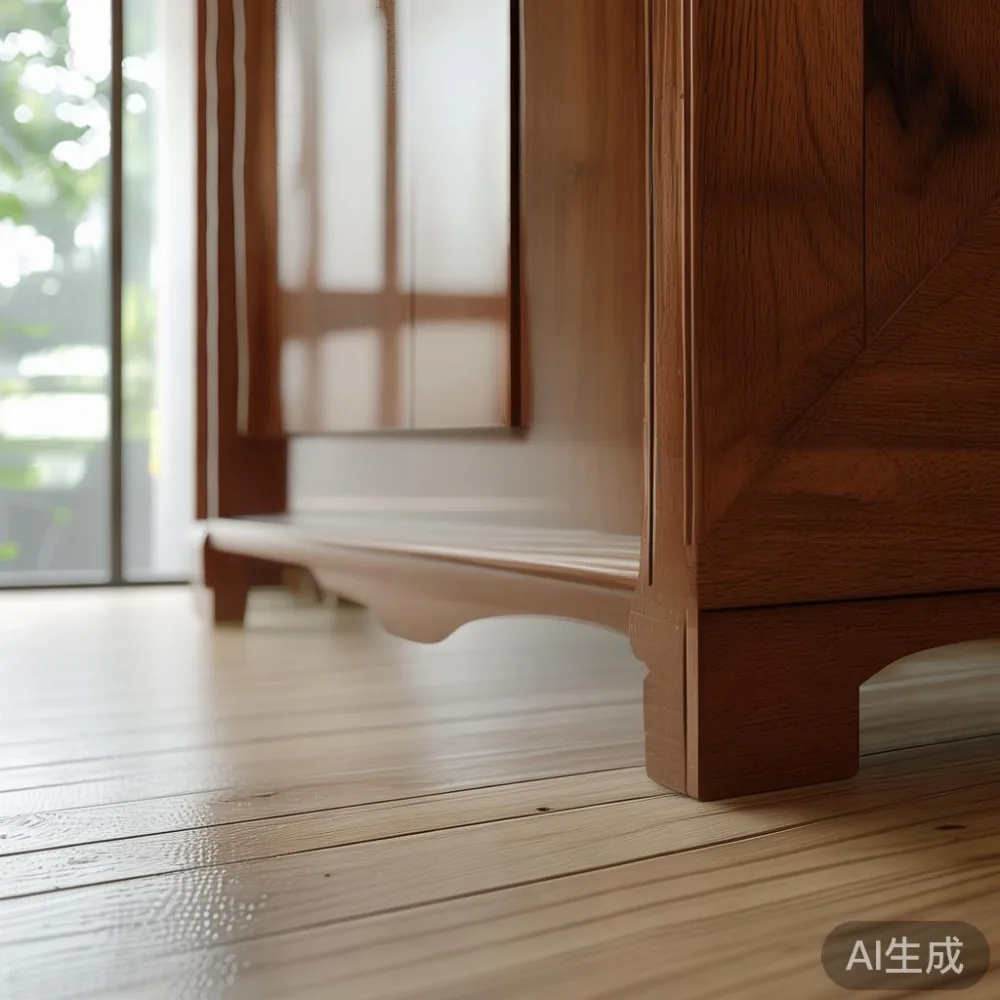
Lacquer is a film finish. Unlike oil or hard wax oil — which soak into the wood fibres and move with seasonal change — lacquer sits on top of the substrate as a thin, hard skin, typically 3 to 5 coats built up at the Foshan factory. When the ambient relative humidity rises past roughly 75%, the wood beneath the film absorbs moisture, swells by a small percentage, and the lacquer skin is forced to stretch. When air-conditioning drops indoor RH back to 55% overnight, the wood releases that moisture and the lacquer must contract. Over hundreds of these cycles a year, micro-cracks form at the joints — the upper corners of hinged doors, the seams around a storage wardrobe's internal drawer face, and the edge where a mirror meets the carcass.
The second force at work is UV. Singapore receives around 2,100 hours of sunshine a year, and even filtered daylight through a north-facing window in a Punggol condo will, over 18 to 24 months, yellow a clear lacquer and dull a piano-black finish. The third force is salt-laden air for ground-floor units near East Coast or the Marina channel — sodium chloride particles settle on the surface and slowly attack the film if not wiped away. None of this is a reason to avoid a lacquered storage wardrobe; it is simply a reason to plan a care routine that respects those three forces.
What "Lacquered" Actually Means on a Solid Wood Storage Wardrobe
Most Singapore-bound storage wardrobes under the SGD 4,000 mark sold by retailers like Cellini, HipVan, or direct-from-factory outlets are built from a base of rubberwood, ash, or beech ply with a 0.6 mm to 1.2 mm wood-veneer face, sealed with polyurethane (PU) lacquer or, on premium lines, a 7-coat closed-pore PE lacquer. The post-modern light luxury pieces I have handled in the MIDHILL showroom use a 5-coat PE process on a solid ash carcass with dovetailed drawer boxes — the kind of build that justifies a 10-year structural warranty and explains why the doors weigh 22 to 28 kg each on a 240 cm three-door storage wardrobe.
When you are comparing pieces in a Tampines showroom or scrolling through m.midhill.co on your phone during a lunch break in Bedok, ask the sales consultant specifically whether the top coat is PU (more flexible, easier to spot-repair) or PE (harder, mirror-grade, but less tolerant of impact). PU is forgiving for HDB corridor delivery because it tolerates the small bumps of a 90 cm-wide lift lobby; PE looks more dramatic but chips white if a courier drags the carton corner against your doorframe.
Daily and Weekly Habits That Actually Move the Needle
I tested this exact routine on a customer installation in a Punggol Waterway Woodcress four-room flat last month, and the doors still looked brand-new after six weeks of equatorial conditions. The routine has four parts.
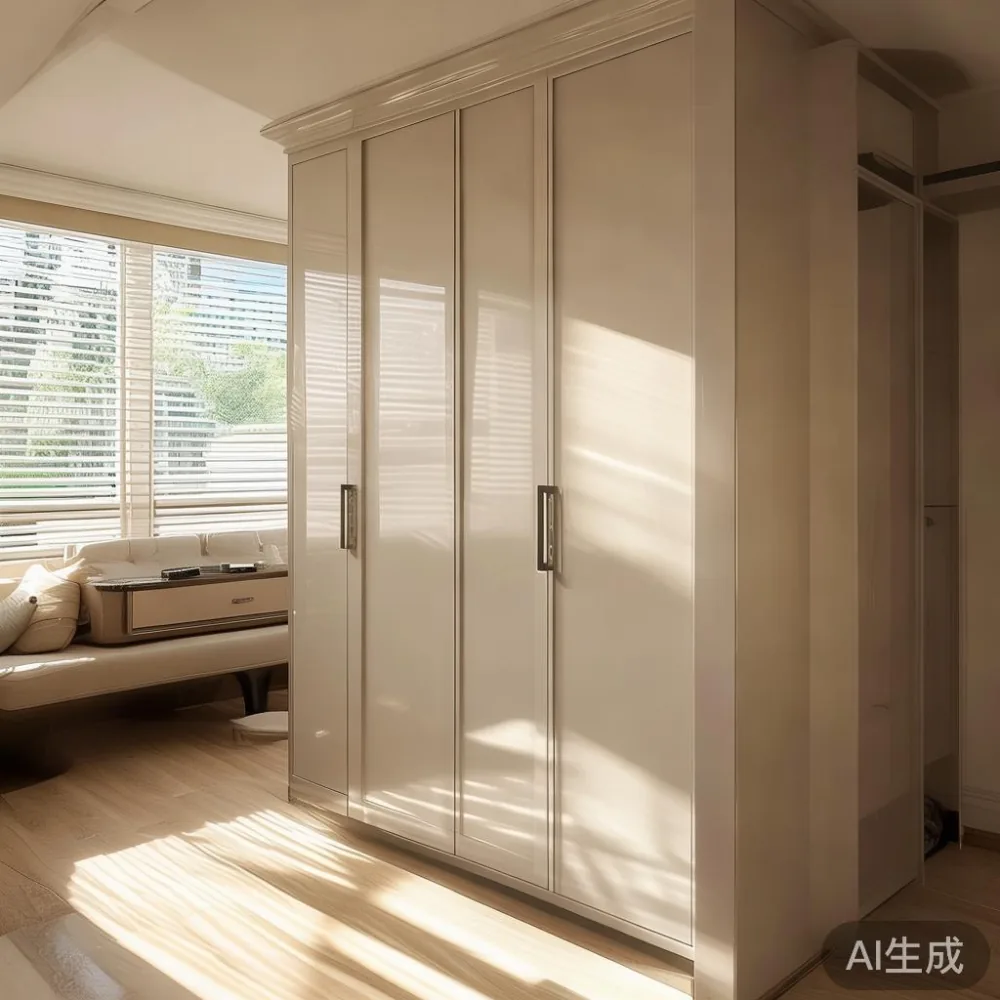
First, keep indoor relative humidity between 50% and 65%. A SGD 25 hygrometer from any neighbourhood electronics shop at Tampines Hub, paired with a SGD 189 dehumidifier running 4 to 6 hours overnight, is enough for a 12 sqm master bedroom housing a standard 200 cm storage wardrobe. Second, micro-fibre cloths only — no feather dusters, which merely push dust into the corner mitres of the doors. Third, wipe vertically from top to bottom once a week with a dry micro-fibre pad, then follow with a second pad lightly misted (never dripping) with a 1:10 solution of distilled water and pH-neutral wood soap. Tap water in Singapore has a hardness of around 47 mg/L CaCO3, and that mineral content will cloud a piano-black surface within months if used undiluted. Fourth, never spray any cleaner directly onto the lacquer. Always spray onto the cloth, 15 cm away, then wipe.
Skip the furniture polishes sold at OG or Isetan. Aerosol silicone polishes leave a film that looks glorious for 48 hours and then traps dust against the lacquer, dulling the gloss within a fortnight. They also make any future refinishing — a service MIDHILL offers lifetime on its storage wardrobes — harder, because the new coat will not bond to silicone residue.
How wide are HDB lifts, and what does that mean for a 240 cm lacquered wardrobe?
This is the practical question I get asked every Saturday at the showroom by owners of resale HDB flats in Bedok and Toa Payoh. Standard HDB passenger lifts in blocks built after 1996 measure approximately 1.1 m wide by 1.4 m deep with a 2.1 m ceiling. A 240 cm three-door storage wardrobe in flat-pack form breaks down into cartons of roughly 165 cm x 42 cm x 18 cm — the heaviest single box being 38 kg for an end panel with pre-installed lacquer finish. Two strong porters can clear that into any HDB lift; the issue is usually the corridor turn at the unit door, which can be as narrow as 82 cm on a 4-room flat.
For a non-flat-pack lacquered storage wardrobe delivered fully assembled — common with French light luxury imports under 2000 SGD delivered — you will likely need a hoist through a window or balcony at extra cost, typically SGD 280 to SGD 450 per floor landed. This is one reason I tend to recommend flat-pack lacquered storage wardrobes from Chinese factories: the satin PU finish on the panels is far less likely to be damaged during delivery, because the lacquer is applied at the workshop under controlled humidity, then re-assembled and touched up on site. A MIDHILL European light luxury sofa or dining table arrives in similar protective crating, and the finishing workflow is comparable.
What humidity level should I keep my bedroom at to protect a storage wardrobe?
Aim for a steady 55% relative humidity, with a tolerance band of 50% to 65%. Below 45% RH, the wood loses moisture too quickly and joints can gap; above 70% RH, the lacquer skin is under continuous pressure and may blush (turn milky) on horizontal surfaces like the top of a wardrobe or a nightstand. In a typical air-conditioned Singapore bedroom running a 1.5 hp inverter system on a 25°C setpoint overnight, you will naturally land in the 55% to 60% range during the eight hours the unit runs. The risk comes during the day when the unit cycles off and humidity climbs back to 72% or higher; a SGD 35 litre dehumidifier pulled from a Bedok Point shop will pull that down within 90 minutes on a typical afternoon.
If you own a Punggol or Sengkang condo with east-facing windows and no curtain, add a SGD 15 UV-blocking window film to the glass. UV is the silent killer of lacquer — it does not affect structural integrity the way humidity does, but it yellows the finish unevenly, and on a black lacquer storage wardrobe you will notice it within 12 months if the wardrobe sits within 2 m of direct sun.
Spills, Stains and the 30-Second Rule
The single most damaging everyday accident for a lacquered storage wardrobe in a HDB is not water — it is makeup, hand-sanitiser, or air-fryer oil mist landing on the surface and being rubbed in by a panicked cloth. The 30-second rule: blot, never wipe, within 30 seconds of a spill. Use a dry micro-fibre pad pressed flat against the spot, lift, repeat. Wiping pushes the contaminant into the lacquer film and creates a permanent ghost mark.
For sticky residue — tape from a price tag, a sticker from a child's craft session — use a cloth barely dampened with isopropyl alcohol (70%, pharmaceutical grade, available at any Watsons for under SGD 6). Test on an inconspicuous back panel first. Hold the dampened cloth against the residue for 10 seconds, then lift. Do not scrub, and do not use acetone or nail polish remover — both will dissolve PU lacquer in under five seconds and leave a matte crater. For a deeper clean once every quarter, a 1:20 solution of white vinegar and distilled water, applied with a soft cotton pad and buffed dry within 60 seconds, will remove the greasy film that builds up around wardrobe door handles from daily hand contact.
Caring for Hardware: Hinges, Drawer Slides and Mirrors
A lacquered storage wardrobe is only as good as the hardware running through it. The hinges on a quality three-door unit are rated for 80,000 to 100,000 cycles, which at eight openings per day gives 27 years of service life — but only if the doors remain within 2 mm of square. Once humidity warps a panel by 4 mm, the hinge screws begin to work loose in the 18 mm MDF substrate, and the lacquer around the hinge cup cracks in a tell-tale half-moon. Every six months, run a small Phillips driver around each hinge screw and tighten by a quarter turn — do not over-torque, as the MDF will strip.
Drawer slides on a lacquered storage wardrobe should be wiped with the same dry micro-fibre pad once a month and lubricated with a single drop of silicone spray (not WD-40, which attacks rubber bumpers) at the slide track points once a year. Mirrored panels on wardrobe doors are typically a 4 mm silvered float glass bonded with neutral-cure silicone; clean with a standard ammonia-free glass cleaner sprayed on a cloth — never directly on the mirror edge, where the silicone seal sits.
When to Call the Workshop Instead of Reaching for the Cloth
Some damage is past the territory of micro-fibre and isopropyl. If you see white blush across a 30 sq cm or larger area, the lacquer has absorbed moisture into the film itself and will need to be rubbed down with P1500 wet-and-dry sandpaper, re-levelled, and recoated — that is a workshop job, and a service MIDHILL provides as part of its lifetime refinishing commitment on storage wardrobe bodies.
Surface scratches under 0.2 mm deep on a satin finish can be camouflaged with a felt-tipped touch-up pen matched to the original stain — keep one in the wardrobe's top drawer for the inevitable courier-day ding. Deeper gouges, edge chipping, and any delamination at a veneer joint must be professionally repaired, because moisture entering the wood through that opening will travel up to 8 cm along the grain in a single humid week. Calling early is cheaper; a single site touch-up in Singapore typically runs SGD 120 to SGD 220, while a workshop strip-and-relacquer of one wardrobe door runs SGD 380 to SGD 540 including transport.
Long-Term Ownership: A 10-Year View of a Lacquered Storage Wardrobe
Think of a lacquered storage wardrobe the way you would think of a Japanese bed vs Nordic bed decision — both can last 15 years, but only if the environmental expectations are matched to the construction. A Japanese-style low-slung storage wardrobe in solid ash with closed-pore lacquer, set in an air-conditioned room with stable humidity, will look subtly better at year 10 than on day one, because the wood oxidises to a honey tone and the lacquer settles into its final hardness.
Compare that with a cheap open-pore PU piece in a ground-floor Tiong Bahru walk-up with no air-conditioning, and you have a finish failure inside three years. The difference is not the brand — it is the climate match. Spend the SGD 189 on a dehumidifier the same week the wardrobe is delivered, commit to the 30-second spill rule, and book a professional inspection at year three, year six and year ten. Cost over a decade: roughly SGD 1,400 in accessories and services, against a wardrobe that retains its value for re-sale and continues to anchor the bedroom properly. If you are also shopping for a matching European light luxury dining table, a solid wood sofa, a marble table, or a single nightstand, apply the same logic — lacquer and marble are surface-finish materials that reward a stable indoor microclimate.
One final comparison while you are weighing online listings. The same Chinese flat-pack three-door storage wardrobe at m.midhill.co retails from roughly SGD 1,580 with lacquered PU finish and soft-close hinges, whereas a comparably sized European brand with similar hardware sits between SGD 4,200 and SGD 6,800 in a Singapore showroom after GST and delivery. The light luxury sofa vs modern sofa decision follows a similar curve: a MIDHILL European light luxury sofa in corrected top-grain leather at SGD 2,690 delivers far more visible leather area per dollar than most local Italian imports, and the same care philosophy applies to its frame as to a lacquered storage wardrobe — keep humidity steady, wipe weekly, and trust the workshop for the deep work. A well-cared lacquered storage wardrobe will outlast two coats of HDB wall paint and probably your tenancy agreement, and that is the only metric that matters when you are anchoring a bedroom around it.