Solid Wood vs Veneer Wardrobes: A 5-Year Cost Reality Check for Singapore Homes
Last month I visited a four-room HDB flat in Tampines with my colleague, a 28-year-old teacher who had just collected her keys. The previous owner had left behind a built-in veneer wardrobe that looked decent in the resale listing photos, but once we pulled open the sliding doors, the panels had warped along the top edge — a common sight in our humidity. That afternoon cost her nothing more than a coffee, but it pushed her firmly toward solid wood for her replacement storage wardrobe. Two weeks later she ordered from a Foshan maker that ships directly to Singapore, and we sat down to do the maths on what the next five years would actually look like for both choices. This is the breakdown.
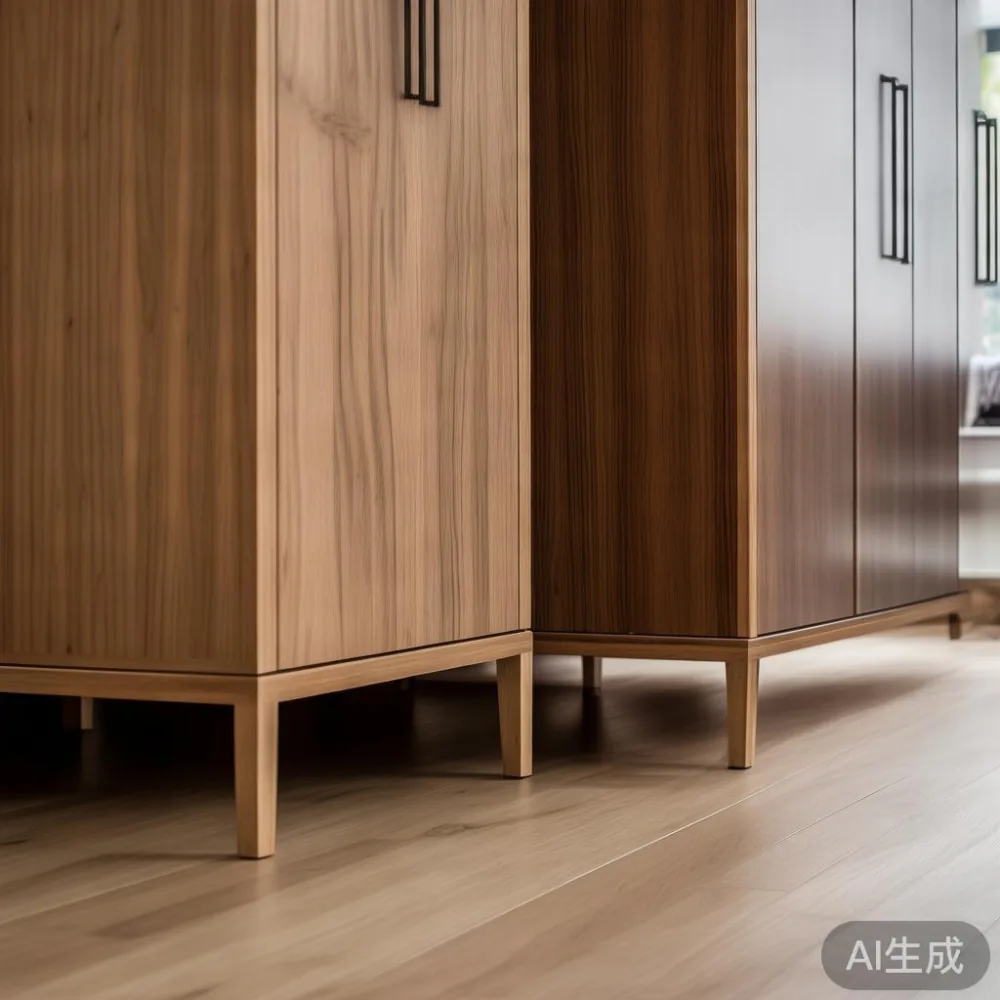
What exactly are you paying for when you buy a wardrobe in Singapore?
Two acronyms confuse almost every new homeowner I speak to: MDF and veneer. Medium-density fibreboard is pressed wood pulp, often 18mm thick, sometimes 25mm. A veneer is a thin slice — typically 0.6mm to 2mm — of real wood glued onto that MDF, plywood, or particleboard carcass. A "veneer wardrobe" therefore means a man-made core dressed in a real-wood skin. A "solid wood wardrobe" means the structural panels — sides, top, shelves, drawer boxes, sometimes even the back panel — are cut from single pieces of timber, usually rubberwood, ash, oak, or walnut, kiln-dried to 8–12% moisture content.
In Singapore dollars, a 180cm-wide three-door veneer wardrobe from a local custom carpenter sits around S$1,400 to S$1,900 before GST, including a melamine interior. The same footprint in solid rubberwood with a French light luxury profile (curved cornice, fluted pilasters, brushed brass handles) lands between S$2,600 and S$3,400. MIDHILL, a Foshan factory exporting since 2008, lists its three-door French light luxury solid wood wardrobes at roughly S$2,200 landed, because the container goes direct to Singapore without a showroom markup. The numbers feel close at the till, which is why the year-five moment matters.
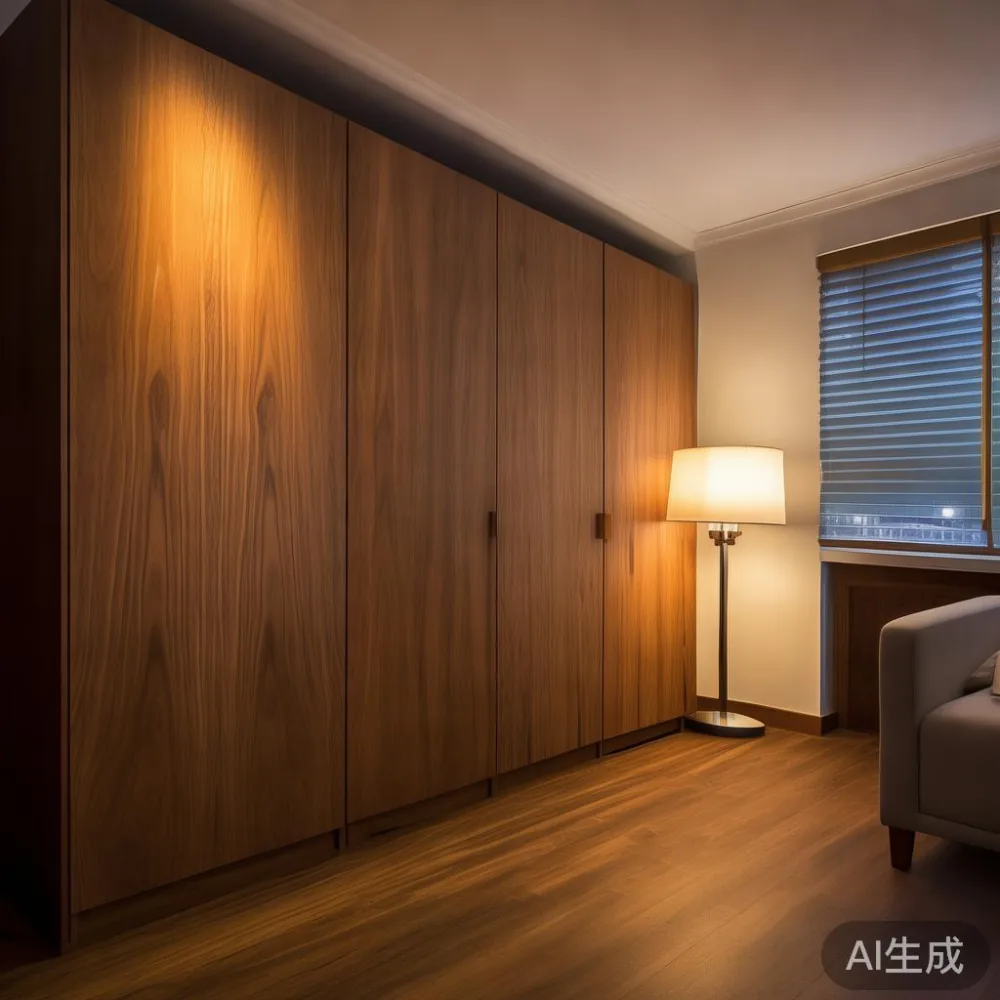
How does Singapore's climate treat each material over five years?
Our humidity averages 78–88% year-round, and corridor air-conditioning pushes temperatures down to 24°C while bedrooms climb to 28°C. That swing punishes any glued joint. In a Tampines condo I inspected in February, a 2021 veneer wardrobe had peeled at the top right corner where the air-con vent blows directly onto the panel. The repair quote was S$280 — strip the veneer, fill, repaint, two days of downtime with clothes piled on the bed.
A solid rubberwood storage wardrobe tolerates the same swing because the boards can expand along the grain without splitting the surface. Rubberwood movement is roughly 1.5% across 180cm at 10% moisture change; oak moves closer to 2.4%. Both numbers sound small, but on a 240cm side panel they translate to 3.6mm versus 5.8mm of seasonal travel. Furniture makers leave 1–2mm expansion gaps at the back and use wooden cleats, not staples, so the wardrobe breathes without visible damage.
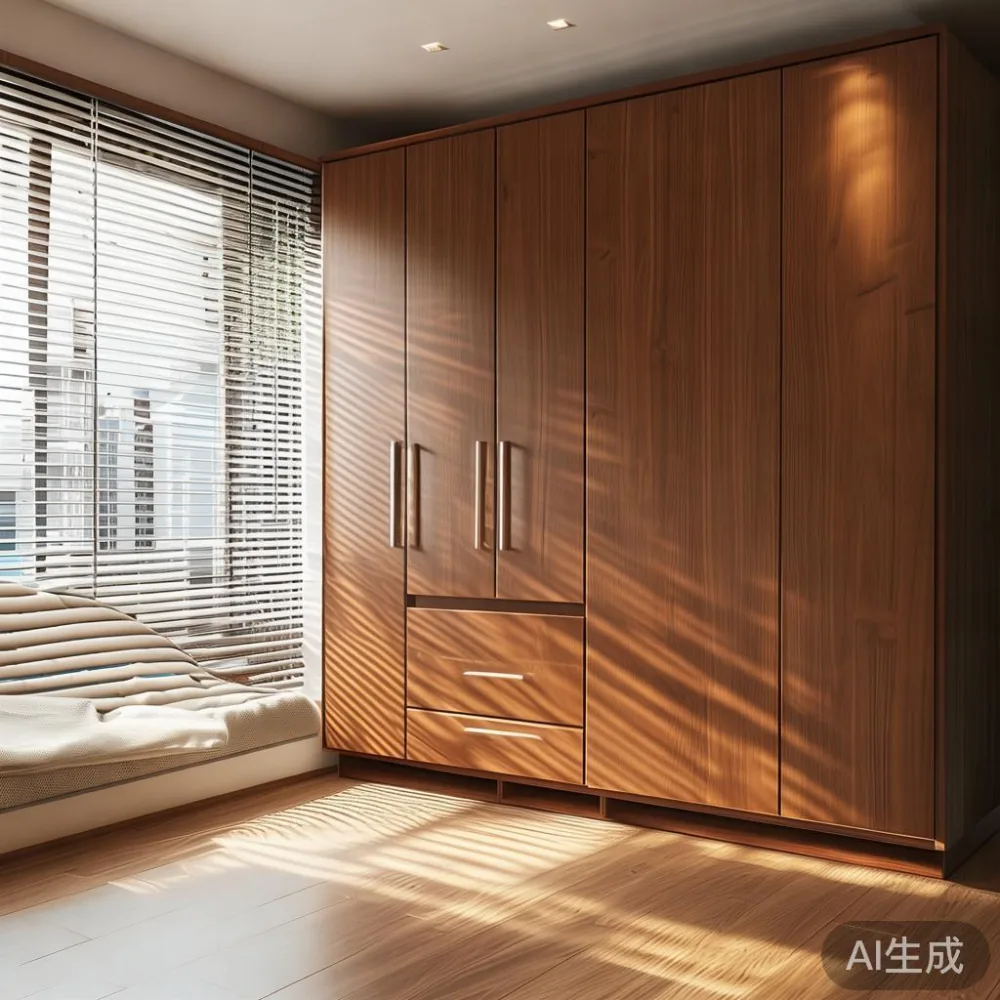
Termites are a separate cost line. Veneer doesn't deter them; solid rubberwood and teak do better because the heartwood is denser, and MIDHILL kiln-dries to below 12% moisture, which makes the timber less attractive to colonies. The company's 10-year structural warranty covers joint failure and warp above 5mm across any panel — a paper that beats anything you'll find stapled to a flat-pack box.
What does a real five-year cost spreadsheet look like?
Let's run the maths on a 200cm x 220cm x 60cm three-door storage wardrobe, the size that fits a standard HDB master bedroom in Punggol or Bedok. Both quotes include delivery to your doorstep above the lift, GST at 9%, and basic installation.
Veneer wardrobe, total spent over five years:
- Unit cost: S$1,600
- Year 2: hinge adjustment and one warped shelf replacement — S$220
- Year 3: corner re-veneer and repaint after peeling — S$340
- Year 4: full interior drawer-runner replacement — S$180
- Year 5: salvage value, around S$120 if you can find a buyer
Net five-year spend: S$2,220.
Solid rubberwood wardrobe, total spent over five years:
- Unit cost: S$2,650 landed, including a 14-day return window and free shipping above US$350 (about S$470)
- Year 2: hinge oiling and one runner tweak — S$40
- Year 4: lifetime refinishing service included by the maker (sanding, re-staining, fresh lacquer) — S$0 out of pocket
- Year 5: salvage value, around S$1,100 on Carousell because solid wood holds resale
Net five-year spend: S$1,590.
The gap widens once you factor in replacement wardrobe downtime. A veneer unit that fails at year three means a week of laundry baskets in the kitchen. A solid wood unit that survives means you can sell or move it to your next BTO. That flexibility is worth something — call it S$200 of avoided hassle.
For larger configurations, the spread grows. A walk-in wardrobe in a five-room Punggol EC built with solid ash, fitted with soft-close drawers, an LED lighting strip, and a centre island marble top would push S$7,800. The same footprint in engineered veneer with laminate drawers lands near S$4,200, but by year four you will have spent S$1,400 on repairs. The crossover happens between years three and four on nearly every comparison I have run.
Is the lift-access logistics in HDB blocks worth worrying about?
Yes. Standard HDB lifts are 1.1m wide x 1.4m deep x 2.1m tall. A 200cm wardrobe panel cannot stand upright; it must be tilted. Most solid wood wardrobes are delivered as flat-packed knock-down panels, each under 25kg, so two movers can carry them in one trip. MIDHILL's packing list for a three-door unit lists seven cartons between 18kg and 24kg, total 142kg, which clears the lift weight limit comfortably and fits through a 0.9m corridor door in older Tampines blocks.
Corridor turning radius matters for condos like Bedok Reservoir or Punggol Waterway where the lift opens opposite a 90-degree bend. Panels longer than 210cm will not clear the corner. Measure before ordering, or ask the supplier for a panel-split option, which adds roughly S$80 to the order but saves the painter a Saturday afternoon of drilling through a stuck wardrobe.
One customer in a Punggol corner unit told me the delivery team spent 40 minutes manoeuvring 18 cartons up the service lift because the passenger lift was out of service. Free shipping above US$350 normally covers one attempt; re-delivery after a failed attempt costs S$60 to S$120 depending on the logistics partner. Solid wood's heavier panels make a second attempt less likely because crews plan a longer slot.
Will a solid wood storage wardrobe match my American light luxury or post-modern light luxury theme?
Absolutely, and here is why designers prefer it. American light luxury leans on oak and walnut with brass hardware, matte finishes, and clean rectangular lines. Post-modern light luxury goes further with curved silhouettes, scalloped handles, and a soft taupe or muted sage palette. Both depend on a wood grain that reads as authentic, not printed. A printed melamine surface looks flat under raking light; a real wood veneer shows a pore pattern, but it chips; solid wood shows depth, takes a hand-rubbed oil finish, and ages into a richer tone over five years.
If your living room already carries a solid wood sofa and a solid wood bed frame in matching walnut, the wardrobe has to be the same species or the colour shift becomes obvious within a season. Pair the wardrobe with a marble table bedside lamp and a post-modern light luxury dining table to keep the grain story consistent across the apartment. For smaller rooms, the same logic applies to a nightstand — solid ash or rubberwood, not veneer over MDF, so a water ring from a glass does not leave a permanent mark.
What about the buyers who still want the cheap European light luxury furniture look on a tight budget?
You can have it, but build the storage wardrobe first and the matching pieces later. Many Singapore homeowners stretch a S$12,000 reno budget by choosing a flagship solid wood storage wardrobe (roughly S$2,800) and filling the rest of the flat with curated European light luxury pieces that ship direct. The wardrobe carries the long-term investment; the matching bedside tables, TV console, and dining chairs can be upgraded in eighteen months when the credit card statement looks friendlier.
If your reading list includes guides on how to style light luxury sofa in room, or you are comparing the best Scandinavian sofa for 2026 or best French provincial sofa for 2026 against a tight timeline, you will notice every styling photo assumes a solid wood backdrop. The grain behind the sofa does the heavy lifting; the cushions and brass lamps just polish the picture.
How do mid-century modern and Nordic pieces influence the wardrobe decision?
Mid-century modern TV console designs, with their low slung walnut frames and splayed legs, actually share construction logic with a solid wood wardrobe — through-tenons, exposed joinery, oil finishes. If the console in your living room is real walnut, the wardrobe should match. Buyers searching Japanese bed vs Nordic bed comparisons will know the same principle: low-platform tatami frames in solid hinoki or oak outlast engineered alternatives by a decade. A storage wardrobe made from the same species will read as a sibling piece rather than a separate purchase.
What warranty and after-sales should I actually expect?
Read the small print before you pay. A solid wood maker exporting from Foshan for fifteen-plus years should offer at minimum a 10-year structural warranty covering joint failure, panel warp beyond 5mm, and drawer-runner defects. Lifetime refinishing is rare and worth paying S$200 to S$400 extra for, because a sand-and-restain at year four resets the wardrobe to factory colour for the price of a buffet lunch.
Free shipping over a threshold (US$350 in MIDHILL's case, about S$470) removes the second-biggest variable cost, and a 14-day return window gives you time to check every panel under raking light once it is built. If the supplier refuses to put those three things in writing, walk away. The after-sales is where the cheap European light luxury furniture segment gets exposed: a S$1,200 veneer wardrobe with a six-month warranty costs more per year than a S$2,800 solid wood unit with a decade of cover and a refinishing clause.
What should I do this week if my current wardrobe is failing?
Photograph the damage, measure the wall, measure the lift, and request two written quotes — one in solid rubberwood or ash, one in engineered veneer with a five-year warranty. Compare the year-five cost using the spreadsheet above, not the price tag. If the spread is under S$300 over five years, choose on aesthetics alone. If the spread is over S$600, the solid wood wardrobe pays you to own it, and a MIDHILL wardrobe direct from the factory will arrive with the paperwork to prove it. Measure twice, order once, and your Tampines or Punggol bedroom will still look new when the next BTO keys arrive in your hand.