Price Factors in Solid Wood Furniture in Singapore
I spent the better part of last month walking through a few furniture warehouses in Foshan with a tape measure in one hand and a notepad in the other, and the single biggest eye-opener was this: two wardrobes that look almost identical in a showroom photo can sit S$1,200 to S$3,500 apart on the price tag, and the difference is rarely about branding. It is about wood species, board thickness, joinery, finish, hardware, and a handful of logistics costs that only matter once the piece lands in your lift lobby. If you live in a Tampines or Punggol HDB and you are sizing up a storage wardrobe, a dining table, or a bed frame, the mechanics below will help you read between the numbers before you swipe your PayNow or card.
MIDHILL has been making solid wood furniture since 2008 for buyers across more than 15 countries, so a lot of what I am about to share comes from how their pricing is structured — and from conversations with a colleague who used to work in procurement at one of the big local retailers. The goal here is not to sell you anything; the goal is to give you a working calculator for furniture price.
What is the most expensive part of a solid wood furniture piece?
The answer most people expect is labour, but the honest answer is the raw board. In solid wood construction — a solid wood sofa frame, a bed frame, or a storage wardrobe — the timber typically accounts for 38% to 55% of the factory cost, depending on species. A cubic metre of Chinese ash (ash-equivalent from northeast suppliers) might land at the Foshan workshop at around RMB 4,800 to RMB 6,200, while a cubic metre of imported North American white oak sits closer to RMB 9,500 to RMB 12,500. That is roughly a 1.9× to 2.4× spread before any cutting, sanding, or finishing happens.
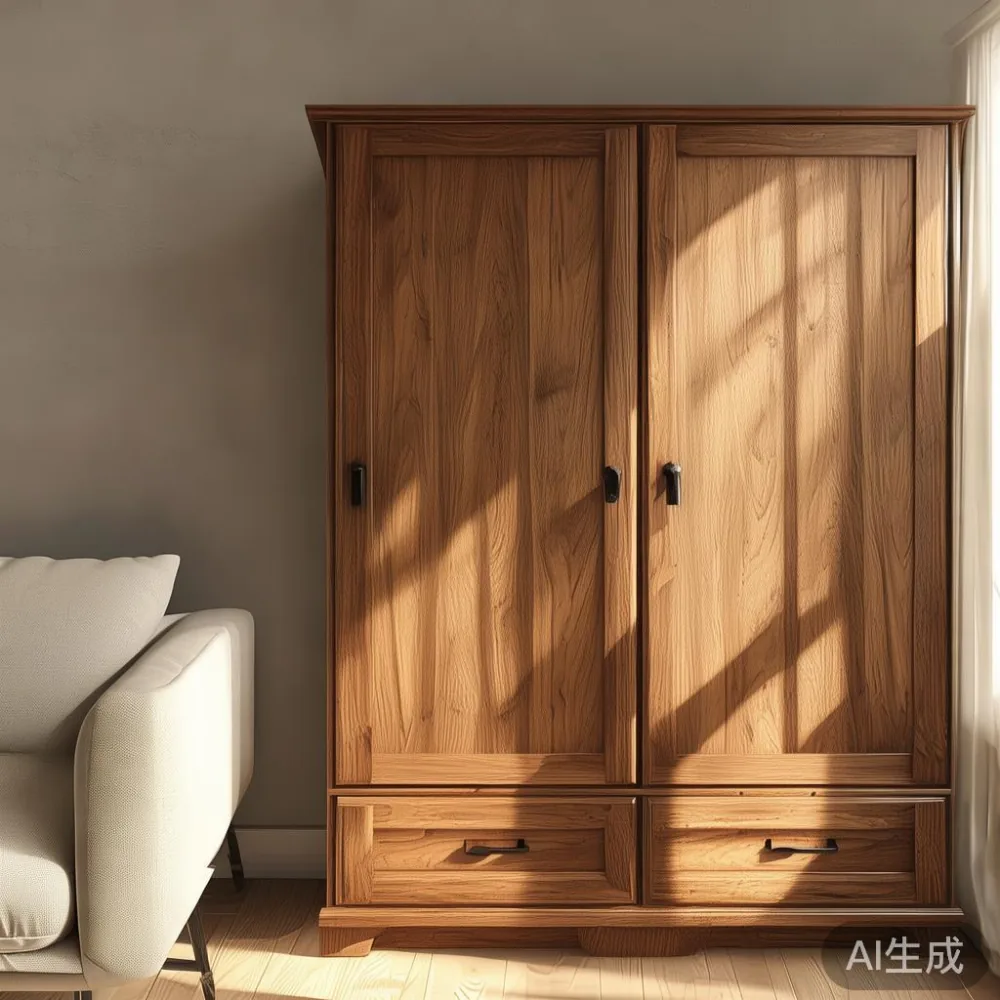
For a 200 cm wide × 220 cm tall × 60 cm deep storage wardrobe, the timber alone can run from S$420 to S$1,100 depending on whether the side panels are 18 mm plywood, 25 mm finger-jointed board, or full 35 mm solid planks. The thicker and more uniform the planks, the higher the price. If you have ever wondered why two storage wardrobe units in the same showroom finish at very different prices even though the photo looks the same, board grade is the first place to look.
Why does board thickness and grade matter so much for the final price?
Think of a board like a hollow chocolate egg versus a solid chocolate egg — same shape on the outside, totally different experience once you cut into it. Furniture makers grade boards by face grain, by the number of knots, by colour consistency, and by how much of the piece is heartwood versus sapwood. A&A-grade oak at 25 mm thickness can cost 60% to 80% more than B-grade oak at 18 mm. Factories that build French light luxury collections — softer palettes, brass-tipped legs, slim silhouettes — usually demand A-grade boards because visible surfaces are large and uninterrupted.
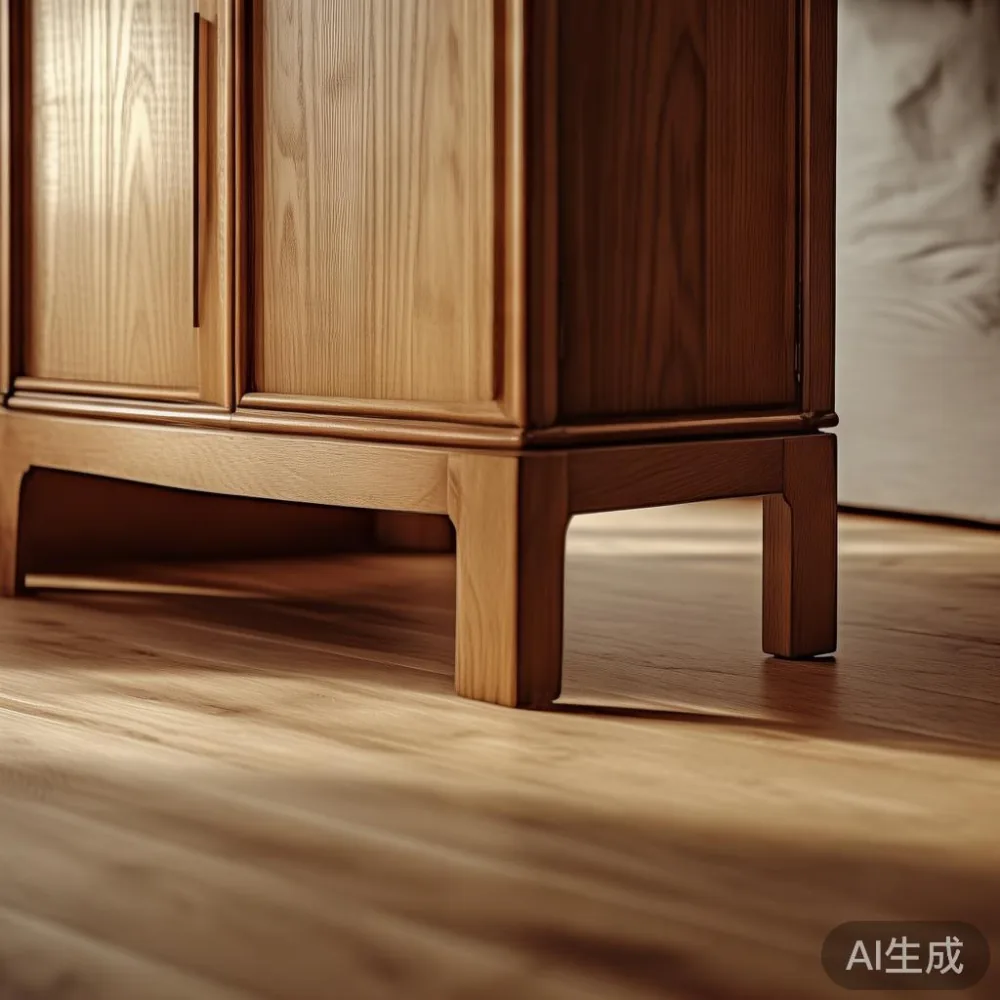
During my Foshan visit I asked a workshop owner to show me a 30 mm side panel versus a 16 mm one, both from the same log. The 30 mm panel felt like a door, the 16 mm one felt like a bookshelf back. That physical weight translates directly into shipping cost too: an extra 14 kg per wardrobe panel, multiplied by four panels, is roughly 56 kg of additional freight at sea rates that run around US$1.10 to US$1.40 per kg into Singapore right now. A heavier, thicker wardrobe in solid wood will lift your shipping bracket and your final landed price, even if the actual product number looks identical online.
How much of the price is hardware and joinery, really?
More than most people assume. On a typical storage wardrobe, drawer runners, hinges, handles, soft-close mechanisms, and metal brackets account for 8% to 18% of the build cost. A basic Korean or Chinese hinge set might add S$18 to the bill. A Blum soft-close hinge set with 100,000-cycle certification adds S$60 to S$90. Run that across six doors and a soft-close storage wardrobe quickly picks up S$360 to S$540 in hardware alone.
Joinery tells a similar story. Stapled particleboard joints cost almost nothing but fail within 5 to 7 years in Singapore humidity. Mortise-and-tenon joints cost more in skilled labour — a craftsman at a Foshan bench typically assembles 4 to 6 mortise-and-tenon frames per day, compared to 18 to 22 stapled frames — and they hold for 25 years or more. If you are weighing a dining table or a bed frame, ask the seller which joints are used where. If they cannot tell you, the price is probably being held down by stapled corners you cannot see.
Does the wood species actually change how long the piece lasts?
Yes, and this is where most Singapore buyers get the biggest return on price. Solid wood furniture reacts to humidity — and your HDB in Tampines or Bedok will sit at 70% to 85% relative humidity for at least four months a year. Teak, white oak, and walnut tolerate this well and stay dimensionally stable. Rubberwood and pine tolerate it less well and may cup, twist, or develop surface checks within 18 to 36 months if the kiln-drying was rushed. A pine storage wardrobe might look attractive at S$1,180 in a Bedok catalogue, but replacement drawers and warped doors within two years will burn through any savings.
My colleague's rule of thumb after twelve years buying furniture for hotels: if the piece will sit in a non-aircon corridor, balcony-adjacent bedroom, or a Punggol condo unit that faces afternoon sun, pay for white oak or teak. The same logic applies to nightstands, marble tables, and dining tables. For any piece where the tabletop sits 2 cm or closer to a sun-facing window, the species choice matters more than the brand.
Is Italian light luxury bed worth it compared to a standard solid wood bed?
This is one of the questions I hear most often from buyers in Singapore who are looking at Italian light luxury bed ranges versus more straightforward solid wood bed frames. The honest answer is that Italian light luxury bed designs tend to push three things harder than mainstream ranges: headboard upholstery (usually a 2 cm to 4 cm foam-and-fibre wrap over solid wood slats), curved or fluted detailing that requires hand-sanding (each headboard can take 90 to 140 minutes of hand work), and metallic accents in brass or brushed bronze. Those three elements together add roughly 22% to 32% to the build cost of a king-size bed frame. Whether that surcharge is worth it depends on how long you plan to keep the piece and whether you redecorate around it. If you redecorate every 5 to 7 years — average for HDB owners between BTO phases — you may not recoup the premium. If you keep a bed frame for 15 years, the per-year cost often comes out lower than a cheaper frame you replace twice.
How does shipping and Singapore access change the final price?
Singapore presents two specific cost layers that buyers in larger-land markets never see. First, the lift. Most HDB lifts hold furniture pieces up to about 200 cm tall, 80 cm wide, and 150 cm deep. A storage wardrobe that arrives in one 230 cm tall crate will not fit, and the delivery team has to flat-pack it. Flat-packing adds S$80 to S$160 in extra assembly time on site, but it also means the warehouse can pack more efficiently and the freight per cubic metre drops. Factories that pre-engineer their storage wardrobe, nightstand, and bed frame ranges for HDB lifts can offer 12% to 18% lower shipping than competitors who ship assembled.
Second, GST. Anything landed in Singapore at more than S$400 in declared value for personal import attracts 9% GST on the total. Larger pieces — a full six-door wardrobe, a 240 cm dining table, a marble table weighing 85 kg to 110 kg — easily cross that threshold. A factory that lists CIF Singapore prices in SGD and includes the 9% GST line item, plus delivery up the lift, removes that surprise. Some Foshan workshops offer free shipping above US$350, which at current rates is around S$475, and that is the threshold that often absorbs the GST bill on a single wardrobe order.
How do finishes, paints, and waxes add to the price?
Finishing is the hidden multiplier. A basic NC (nitrocellulose) lacquer spray on a storage wardrobe adds about 3% to the build cost. A water-based matte finish that requires three coats, sanding between each, adds 6% to 9%. A hand-applied oil-and-wax finish — popular in American light luxury ranges and post-modern light luxury designs — adds 11% to 16% because each coat is wiped, set, and buffed by hand over 18 to 30 hours of cure time.
The trade-off is repairability. Lacquered surfaces chip and cannot be re-blended on site. Oiled surfaces can be re-oiled at home every 18 to 24 months. If your supplier offers lifetime refinishing — MIDHILL does, for example, on most solid wood ranges — an oiled finish pays for itself the first time you move and scratch a door edge. That kind of warranty is not a marketing line; it is a real cost baked into the price, and it is one of the few line items worth paying extra for.
American bed vs Modern bed — which gives more value in a Singapore home?
Buyers weighing an American bed vs Modern bed for a Singapore condo usually see three real differences. American-style bed frames tend to be deeper (around 210 cm to 220 cm long to fit taller mattresses, with thicker side rails of 5 cm to 7 cm) and built for heavier box-springs, giving them a chunkier silhouette that reads as American light luxury or post-modern light luxury. Modern bed frames favour slim 3 cm to 4 cm side rails, platform-style slats, and lower profiles of 28 cm to 35 cm from the floor. The Modern frame typically uses 18% to 24% less timber, which is why the price can be S$300 to S$700 lower for the same mattress size. The American frame, in return, hides storage drawers more easily under the rail and tends to feel heavier under hand. In a 90 sqm Punggol three-bedroom, the Modern frame leaves more visible floor space and pairs well with a slim storage wardrobe on the opposite wall.
Best American bed for 2026 — what features actually matter?
If you are scoping out the best American bed for 2026, the features that actually move longevity in Singapore are: solid wood slats at no more than 7 cm spacing (anything wider lets an innerspring mattress sag within 4 years), a centre support leg under any slat run longer than 150 cm, and a headboard height of 110 cm to 130 cm — enough to lean against with two pillows without the headboard tipping on the wall mount. American bed ranges with these three basics, even at mid-tier pricing, generally outlast the flagship ranges of competitors who skip the centre leg. Watch for storage drawers on metal runners rated to 45 kg or more; under-bed storage is one of the most space-efficient ways to free up a wardrobe in a compact HDB bedroom.
How do bedroom suites and wardrobes interact in a small Singapore room?
In a typical 12 sqm to 14 sqm HDB bedroom in Bedok or Tampines, the storage wardrobe, nightstand, and bed frame together can eat 4.5 sqm to 6 sqm of floor space. A solid wood storage wardrobe at 180 cm wide × 200 cm tall × 55 cm deep gives you roughly 1.9 cubic metres of enclosed space, which is enough for two seasons of clothing, two sets of bedding, and luggage for a family of four. Pair that with two 45 cm wide nightstands at 55 cm deep and a 180 cm × 200 cm bed frame, and you still have 5.5 sqm to 7 sqm of walkable floor. Going wider on the wardrobe (200 cm or 220 cm) without going shallower (under 50 cm) is the most common mistake — a 60 cm deep wardrobe blocks the air-con return and crowds the bed. Always measure the swing or sliding clearance before choosing the depth.
For sale Modern light luxury furniture — how do you read the listings?
When you see a listing marked for sale Modern light luxury furniture in a Singapore marketplace, three phrases are worth parsing carefully. "Solid wood frame" usually means the structural frame only — the side rails, the legs, the headboard uprights — while the panels and drawer boxes may be engineered wood. "FAS-grade timber" refers to the highest grade of North American hardwood, where sapwood is limited and knots are minimal. "Mortise-and-tenon" or "dovetail" joints are the gold standard. If a listing leads with "French for guest room" styling cues — slim tapered legs, soft cream or muted green finishes, brass hardware under 2 cm — those are French light luxury cues and the price will reflect the A-grade timber and hand-finishing those designs demand. The same logic applies when you see dining tables with fluted edges or marble tables with veining matched across two halves of the tabletop.
Mid-century modern for office spaces — does that trend change the price?
Mid-century modern for office setups has quietly become one of the strongest pricing drivers in the last 18 months, because the style demands specific construction details: tapered solid wood legs at 3 cm to 4 cm at the foot tapering down to 1.5 cm, exposed joinery on desks, and slim 2 cm tabletops that test the limits of warp resistance. A 180 cm × 80 cm mid-century modern desk in solid white oak typically costs S$1,400 to S$2,200 in Singapore, against S$900 to S$1,300 for a similar-sized engineered-wood piece. The price gap is justified by the leg joinery (hidden wedged mortise-and-tenon) and the surface finish (usually hand-oiled). If you are running a small Punggol or Tampines home office and want the look, an office desk in this style will pay back every workday in use — but a dining table in the same range will not necessarily outperform a more substantial piece in a heavier style.
What about sofas, marble tables, and other pieces in the same collection?
Buyers often ask whether the same pricing logic applies to a solid wood sofa, a marble table, or a dining table within the same collection. Mostly yes, with a few shifts. A solid wood sofa frame is only one part of the cost — foam density, fabric or leather grade, and stitch type carry 55% to 65% of the final price. A marble table demands a plywood or steel sub-base, because a 90 kg marble top on a pure solid wood base is a warp risk in Singapore humidity. A dining table in the same French light luxury collection as the storage wardrobe will share the same finish, hardware, and timber grade, so the price-per-piece usually scales predictably. If a quote feels off, ask whether the marble, the fabric, or the wood grade has changed.
What does a fair warranty actually cover?
A fair warranty on solid wood furniture covers structural joints and wood failure for at least 10 years, soft-close hardware for 2 to 5 years, and surface finishes for 1 to 3 years. Anything shorter is a red flag. Lifetime refinishing — offered by MIDHILL across most of their solid wood ranges — is rarer and indicates the factory is confident the timber, joints, and finishes will outlast two or three moves. Free shipping above a published threshold (US$350 / around S$475), 14-day returns on stocked pieces, and clear replacement timelines for hardware are the operational markers of a workshop that has priced its products to absorb those costs without cutting corners on the build.
A short checklist before you pay
Before you tap "buy" on a storage wardrobe, bed frame, or dining table from any supplier, run through this list. Ask for the timber species, the board thickness on the side panels and the top, the joint type on the load-bearing corners, the hardware brand and cycle rating, the finish type (lacquer, oil, or wax), the warranty years on structure and hardware, the shipping threshold and what it includes, and the GST treatment. If the seller answers all eight without hedging, you are probably looking at a piece that is priced for what it is — and not a piece whose price has been subsidised by hidden shortcuts in the timber, the joinery, or the hardware.
Price is rarely an accident in solid wood furniture. It is a sum of decisions, each of which you can now read for yourself.