What Actually Drives the Price of Solid Wood Furniture — And Why a Storage Wardrobe Is Worth the Investment
I live in a Tampines HDB, and the first time I priced a real solid wood storage wardrobe, I nearly choked on my kopi. A particle-board wardrobe from a neighbourhood shop was S$899. The solid oak version I wanted was S$3,400. Same doors, same hinges, same look in the showroom photos — so why the gap? That question sent me down a six-month rabbit hole of timber yards, factory visits in Foshan, and awkward conversations with carpenters. Here is what I actually learned about what drives the price of solid wood furniture in Singapore, and why a thoughtfully built storage wardrobe is one of the smarter purchases you can make for a flat in Bedok, Punggol, or any HDB corridor on this island.
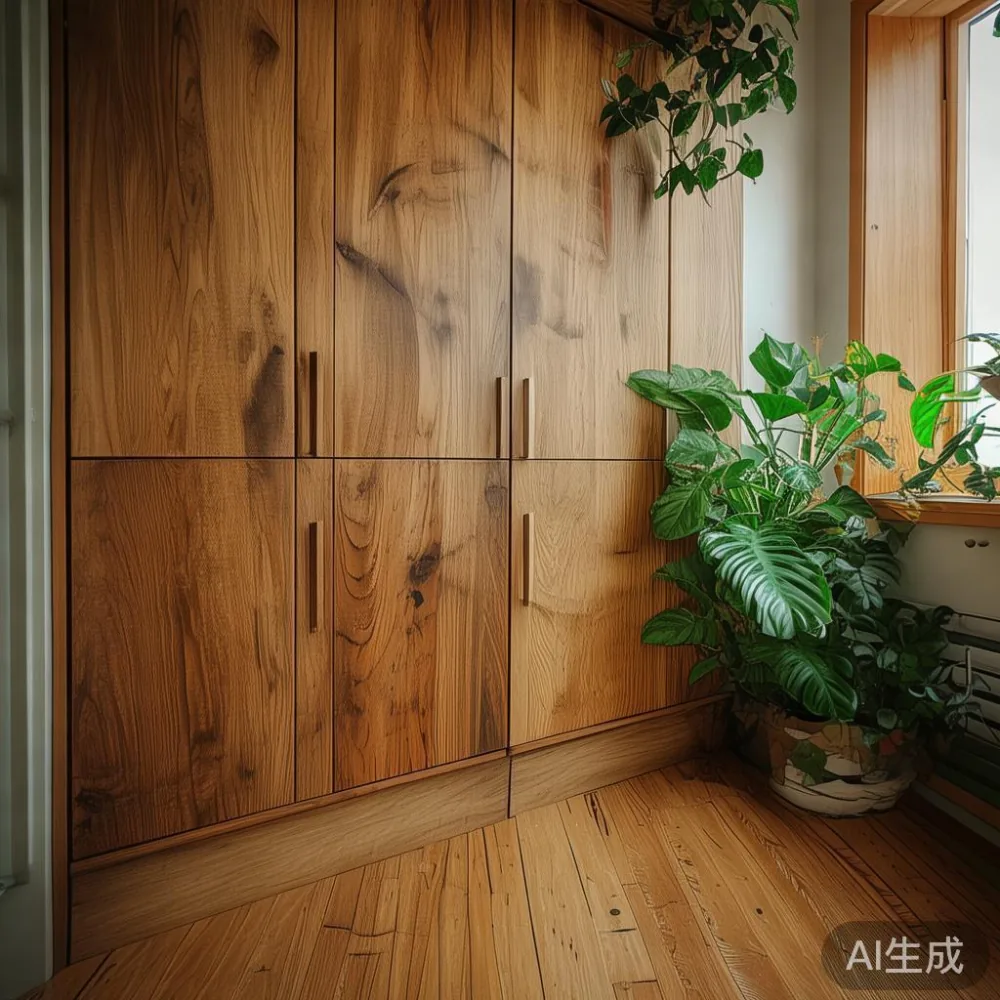
The Wood Itself: Species, Grade, and Origin
Wood is not one thing. White oak from the northeastern United States runs at a different price point than rubberwood from Malaysian plantations, which runs at a different point again from North American walnut or European ash. In a Singapore context, you will mostly see three categories on price tags:
• Rubberwood (Hevea brasiliensis) — technically a hardwood, often used in entry-level pieces. It is dense, takes finish well, and is sustainable because it comes from trees that have already given their latex. Expect a 180 cm storage wardrobe in rubberwood to sit around S$1,200–S$1,800.
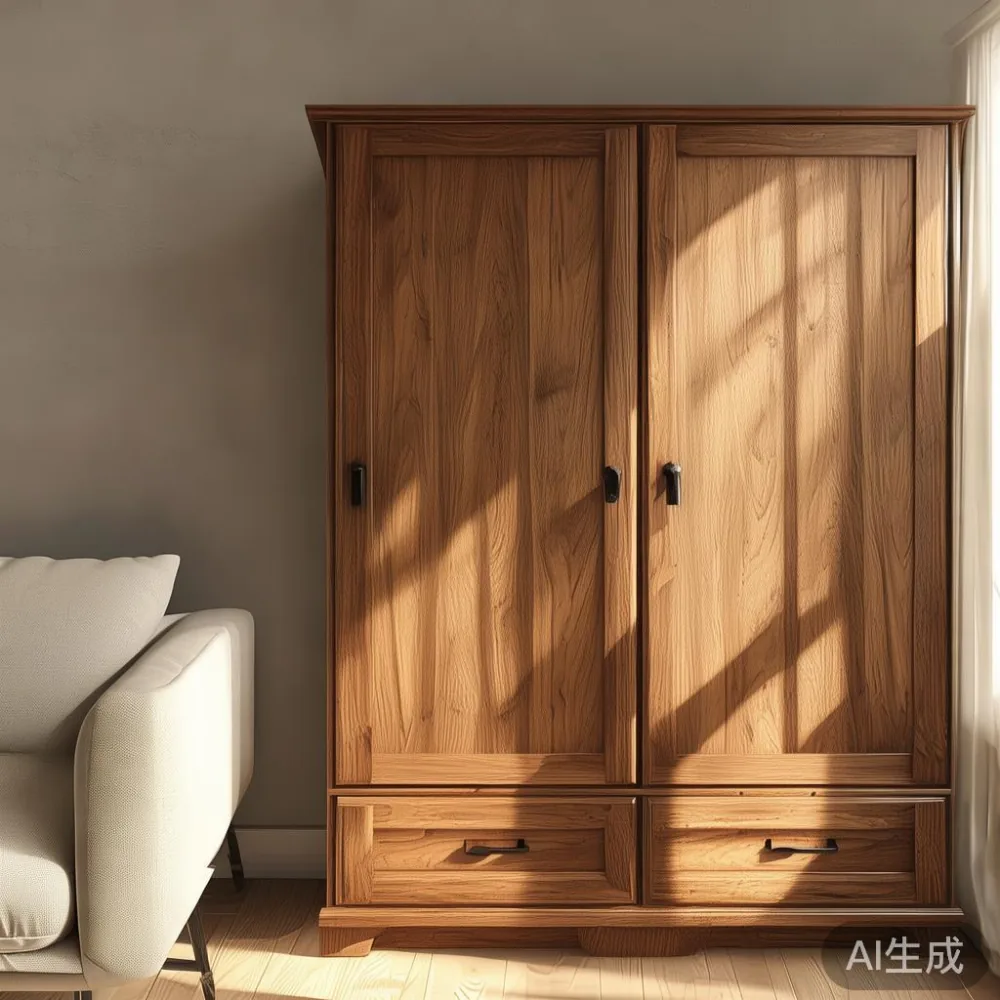
• Ash and oak (often European or American white oak) — the middle tier. Tight grain, takes a Danish-oil finish beautifully, and is stable enough for Singapore's 27–34°C range and 70–90% humidity. A 200 cm ash storage wardrobe with four doors will usually land between S$2,600 and S$3,800.
• Walnut and teak — premium tier. Walnut is the colour most people mean when they say "modern luxury Italian light luxury furniture" tone; teak is what your grandfather's kampong furniture was built from. Both move less than other timbers in humidity, which matters when your HDB bedroom faces the afternoon sun. A 220 cm walnut storage wardrobe starts around S$4,500 and climbs fast.
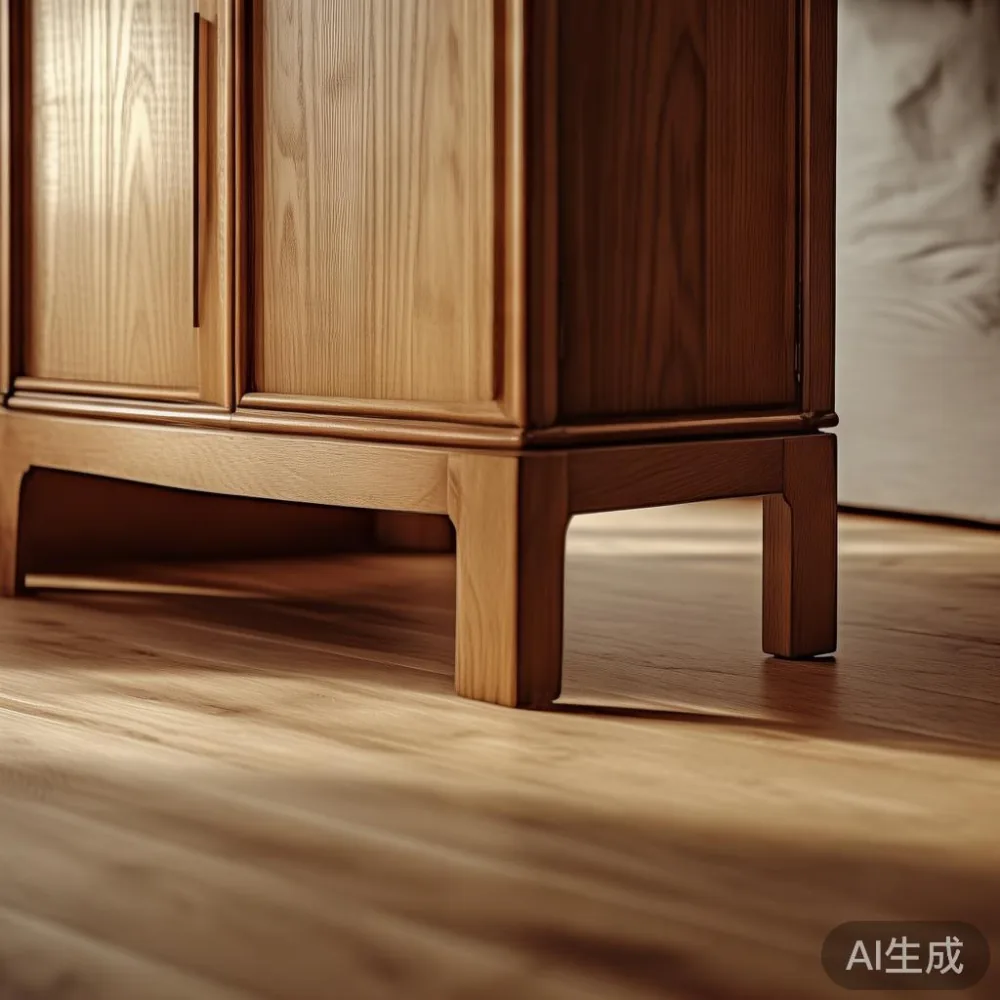
When my colleague Mei Ling specced out her new condo in Punggol, the difference between an oak-veneer storage wardrobe and a solid oak storage wardrobe was almost S$1,600 for the same external dimensions. The veneer version had a 2 mm oak layer over an MDF core; the solid version was oak through and through. That 2 mm matters because Singapore's humidity finds every shortcut.
Joinery vs. Screws: Where the Craft Actually Lives
You can have the most beautiful walnut in the world and still build a poor storage wardrobe out of it. The joinery is what carries the price once the species is fixed. A budget storage wardrobe will use dowels, cam locks, and particle-board panels that ship flat-packed from a container. A mid-range one will use mortise-and-tenon, dovetail drawers, and 18 mm plywood backs. A premium one will use mortise-and-tenon, full-width solid back panels, and soft-close runners rated for 80,000 cycles.
Last month I visited a Foshan factory where the master carpenter showed me two identical-looking 210 cm storage wardrobes. One was S$1,400 in raw cost to build. The other was S$2,200. The difference? Slower-dried timber (60 days instead of 14), hand-fitted drawer slides, and a hand-rubbed French light luxury style finish that takes three coats. The timber was the same species. The labour was not.
This is also where the lift-and-corridor reality of HDB living becomes a real cost. A flat-packed storage wardrobe can squeeze into a B1 service lift in a Punggol EC. A fully assembled 240 cm wardrobe will not. If the brand you are buying from offers installation crews who carry pieces up nine floors in narrow HDB corridors — and disassemble-and-reassemble in your bedroom — that labour is baked into the price too. MIDHILL, for instance, sends two-person teams for exactly this reason; the service is part of what you are paying for, not a freebie.
What "European Light Luxury for Apartment" Actually Means in 2025
The phrase European light luxury for apartment gets thrown around on Instagram and Shopee listings alike, usually as a synonym for "looks expensive." In practice, the style borrows from French light luxury and American light luxury, and combines them with post-modern light luxury silhouettes: tapered legs, soft-close joinery, muted linen-coloured upholstered headboards on solid wood bed frames, and wardrobes with quiet shaker-style grooves instead of heavy mouldings. For a 90 sqm HDB or a 60 sqm condo, that visual language reads calm rather than crowded.
Is French wardrobe worth it as a specific question, though? A French-style storage wardrobe — tall cornices, slightly recessed panels, antique-brass cup pulls — will run roughly 25–40% more than a Scandinavian flat-front equivalent of the same timber and dimensions. You are paying for more machining, more finishing steps, and often brass hardware from Spain or Italy that costs S$18–S$40 per pull on its own. For a three-door storage wardrobe, that is S$162–S$360 in hardware alone. Whether that is worth it depends on whether you want the look to last 20 years (it will) or 5 (it will also).
I will say this: in a Tampines 4-room flat, a tall French-style storage wardrobe makes the bedroom feel like a hotel. A flat Scandinavian one makes it feel like a Muji catalogue. Both are legitimate. Neither is wrong. But the price difference is real and traceable.
Is a French Provincial Sofa Worth Combining With Your Storage Wardrobe?
How to choose French provincial sofa without overpaying is its own topic, but it pairs naturally with a solid wood storage wardrobe because the timber species and finish tend to match. If your wardrobe is in a warm honey ash, look for a sofa frame in the same ash or in beech — French provincial sofas are usually built on beech or birch frames because those timbers hold the carved curves without splitting.
How to style French provincial sofa in bedroom is a question I get from readers almost every week. The honest answer: keep the room under 70% solid wood by visual weight. If your storage wardrobe is a full 220 cm wall unit in walnut, do not add a heavy walnut bed frame and a walnut dining table on the other side. Mix in linen, boucle, a single marble table surface on a nightstand, and one or two painted pieces. The contrast is what makes the wardrobe feel expensive instead of heavy.
For budget buyers, the phrase under 2000 Mid-century modern furniture describes a real and growing category in Singapore — tapered-leg walnut-veneered beds under S$2,000, often paired with a smaller 160 cm storage wardrobe. It is a legitimate style, and it photographs beautifully. Just know that "under S$2,000" in that category almost always means veneer-over-plywood, not solid timber. The look is real; the wood is not.
Hardware, Finish, and the Hidden 20%
Walk into any furniture showroom and the wood is what you touch. Hardware is what you touch every day. A soft-close hinge rated for 100,000 cycles costs about S$4 per pair in bulk. A no-name hinge costs about S$1.20. Multiply that across 14 hinges on a four-door storage wardrobe and you have a S$40 difference that does not sound like much. Now multiply that logic across drawer runners, clothes rails, corner braces, and felt-lined drawers — and you are looking at S$220–S$380 in hardware on a mid-tier wardrobe. Premium Blum or Hettich hardware will push that to S$600.
Finish matters too. A sprayed NC lacquer finish in three coats takes about 90 minutes per piece and costs S$80–S$120 in labour and materials for a 200 cm storage wardrobe. A hand-rubbed oil-and-wax finish takes closer to four hours and costs S$200–S$280. The oil finish will patina, can be refinished every 8–12 years with a S$60 tin of wax, and hides small scratches. The sprayed finish is harder to repair but more spill-resistant — relevant if your wardrobe stores anything from humid Punggol air.
What About Dining Tables, Bed Frames, and Nightstands?
Same rules apply, different scale. A solid wood dining table in oak for a four-seater HDB kitchen starts around S$1,800 for rubberwood and S$2,800 for oak. A queen-size solid wood bed frame in ash runs S$1,400–S$2,200. A pair of solid wood nightstands in walnut will run S$900–S$1,400 for the pair. A marble table on a solid wood base — the kind of piece that anchors a small condo living room — starts around S$2,200 for a 120 cm round top.
MIDHILL ships container-load quantities out of Foshan and offers a 10-year structural warranty plus lifetime refinishing on its core solid wood ranges, which is why a storage wardrobe from them lands slightly above the cheapest Shopee option but below the boutique Italian importers. The math works out when you factor in that a particle-board wardrobe has a realistic service life of 6–9 years in HDB humidity before the doors warp and the shelves sag, while a solid wood storage wardrobe from a serious maker will outlast two lease cycles and still look correct.
How Do Singapore-Specific Costs Sneak Into the Final Price?
GST at 9% is the obvious one — a S$3,000 storage wardrobe becomes S$3,270 at the till. Less obvious:
• Delivery surcharges for HDB blocks without loading bays — typically S$40–S$80 extra, depending on whether the team has to carry pieces across a void deck or up a service lift.
• Installation labour at S$60–S$120 per hour for two men, with a four-door wardrobe taking 2.5–4 hours to assemble in-room.
• Removal of your old wardrobe, if the supplier offers it — usually S$80–S$150.
• 14-day return windows are now standard among serious online retailers, and the freight cost of a returned 220 cm wardrobe is non-trivial. Suppliers bake that risk into the price too, usually as 3–5% of the unit cost.
Free shipping over a threshold (often S$350–S$500) is common, but it is not actually free — it is amortised into the unit price, and you should treat it as a marketing line rather than a saving.
What Should a Singapore Buyer Actually Look For?
Three concrete checks, in order:
1. Ask what the back panel is made of. If the answer is "3 mm MDF" or "cardboard honeycomb," walk away. A solid 9 mm plywood back is the minimum acceptable on a real storage wardrobe.
2. Ask about the moisture content of the timber at the time of assembly. Anything above 12% will move in Singapore. Reputable makers kiln-dry to 8–10% and let pieces acclimatise for 7–14 days before final assembly.
3. Ask about the warranty in writing. A 10-year structural warranty is meaningful because it implies the maker has been around long enough to honour it. MIDHILL, founded in 2008 and shipping to 15+ countries, is one of the suppliers that publishes this in plain language rather than as a footnote.
Beyond that, look for solid wood sofa frames in the same timber as your wardrobe if you want the room to feel intentional. A bed frame in ash with an ash storage wardrobe, a dining table in oak with oak dining chairs — that repetition is what makes a small HDB bedroom look designed rather than assembled.
Frequently Asked Questions From Singapore Homeowners
How long should a solid wood storage wardrobe last in HDB humidity? With reasonable care (no direct rain exposure, a dehumidifier in the bedroom during monsoon season), 18–25 years is realistic for oak or ash. Walnut and teak can go longer.
Is a solid wood storage wardrobe worth S$3,000+ when a laminate one is S$900? Per year of service life, the solid piece usually wins. S$900 spread over 7 years is S$128/year. S$3,200 spread over 22 years is S$145/year — and you get a far nicer object, refinishing options, and higher resale value for your flat.
Can a storage wardrobe be delivered fully assembled to a HDB in Tampines or Bedok? Only if the lift and corridor dimensions allow it. Most B1 lifts in newer ECs handle 240 cm upright pieces; many older HDB blocks in Bedok require flat-pack delivery and on-site assembly.
What is a fair price for a 200 cm oak storage wardrobe with three doors in Singapore? S$2,600–S$3,800 for a mid-range maker with soft-close hardware and a plywood back. Below S$2,200, suspect the timber or the joinery. Above S$4,500, you are paying for brand and finishing time.
Is French wardrobe worth it versus a Scandinavian flat-front design? If you want quiet detailing, recessed panels, and brass hardware that patinas, yes. If you want clean lines and minimal visual noise, a Scandinavian flat-front storage wardrobe in the same timber is the better value.
The Real Answer to "What Drives the Price?"
Wood species sets the floor. Joinery, hardware, and finish set the ceiling. After that, you are paying for the things that are easy to forget: kiln-drying time, hand-fitting, installation crews who know how to work through a 1.2 m-wide HDB corridor with a 2.4 m wardrobe panel, warranties that mean something, and refinishing services that keep the piece alive for 20 years instead of 7.
A solid wood storage wardrobe is not a small purchase. In a Singapore HDB or condo, it is one of the larger pieces of furniture you will ever buy, and it will be in your bedroom every single day. Choose the species you actually like, the joinery you can verify, and the warranty you trust in writing. The price will follow — and you will stop second-guessing it the moment you close the soft-close doors on a wardrobe that fits your corridor, your climate, and the next 20 years of your flat.