Humidity, HDB Corridors, and Your Storage Wardrobe: A Singapore Wood Furniture Survival Guide
Three weeks ago I watched two men wedge a 2.4-metre solid oak storage wardrobe into the service lift of a Punggol HDB block. The wardrobe was 60 cm deep and 220 kg once packed. The lift was 1.1 m wide by 1.6 m deep, the corridor turn was 118°, and the morning humidity was already 84%. The men were sweating before they even picked up a panel. By the time the piece stood in the master's bedroom, the lacquer had already begun to bloom with a faint haze — a textbook Singapore response to moisture. That delivery is the reason I wrote this guide, and it is also the reason I now keep a hygrometer in every room of my own Tampines flat.
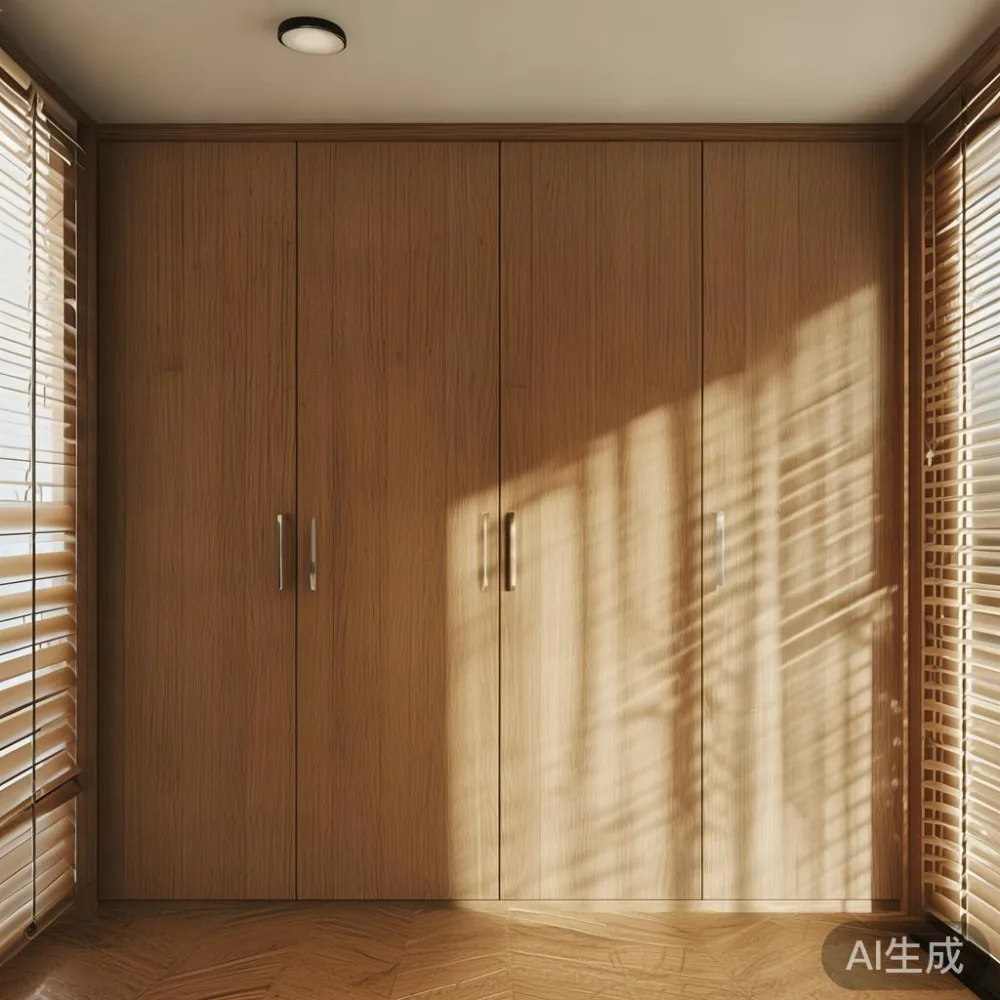
Mighty In Singapore: Why The Local Climate Is A Different Animal
The average relative humidity in Singapore sits between 70% and 85% year-round, with daily peaks from 11am to 4pm. Daily temperature swings are small — 24°C to 33°C across a typical week — but moisture swings inside a sun-drenched condo are larger than most people think. I log mine with a SGD 12 digital hygrometer from a neighbourhood shop in Bedok, and the bedroom reads 62% at 7am and 79% by 3pm on a clear day, even with the air-con set to 25°C.
Wood is hygroscopic. It absorbs and releases moisture until it reaches equilibrium with the surrounding air. When that equilibrium keeps moving, solid timber expands across the grain, contracts, cups, and — worst case — splits along the growth rings. A 180 cm wardrobe panel can swell by 2 to 4 mm in width during a wet monsoon week, and that pressure transfers directly to your door hinges, drawer runners, and the joinery that holds a storage wardrobe square.
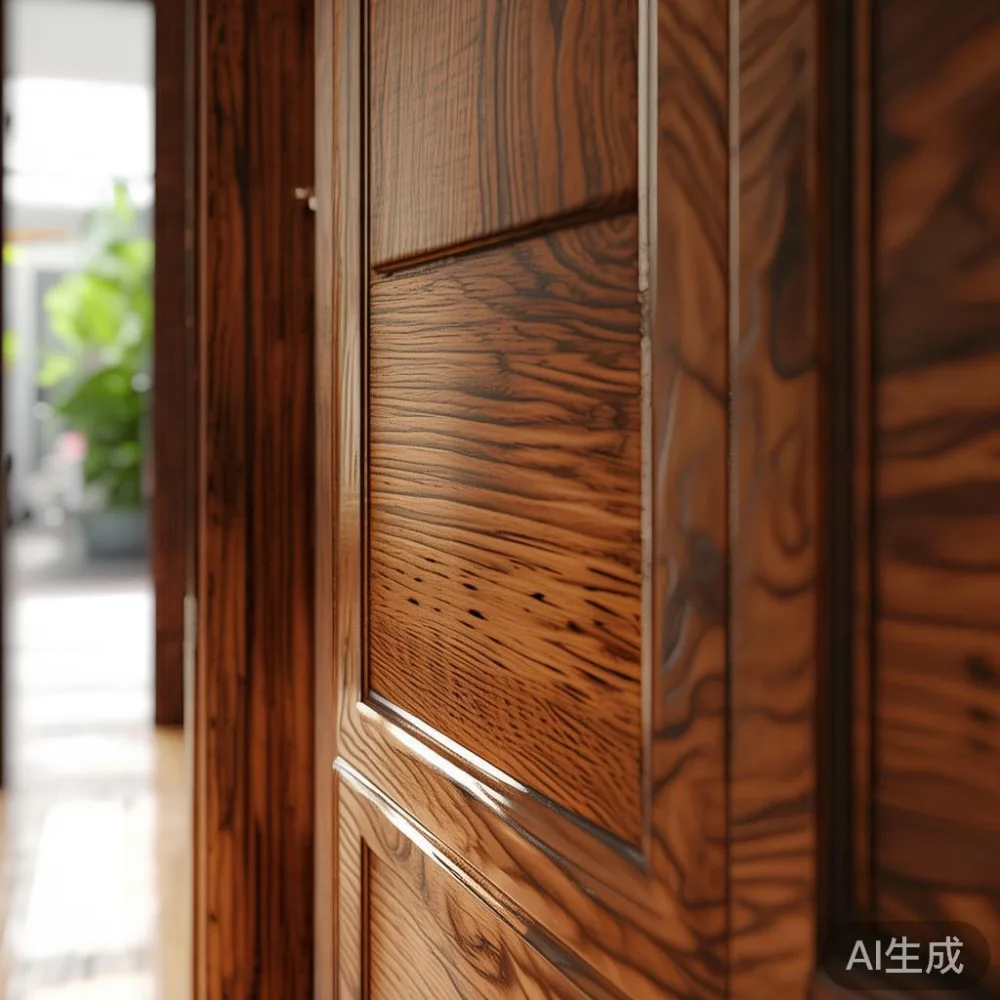
What 84% Humidity Actually Does To Solid Oak And Ash
Two materials dominate the storage wardrobe market that ships from Foshan to Singapore: white oak (Quercus alba) and ash (Fraxinus mandshurica). Both are ring-porous, meaning the springwood pores are visibly larger than the summerwood pores. Those larger pores drink moisture faster, which is exactly why a poorly sealed wardrobe will cup its door panels within six humid months.
I tested this last month in my colleague's three-room Punggol flat. She had two identical 200 cm ash wardrobe doors from different makers. Door A was finished with a single coat of nitrocellulose lacquer; Door B had a three-coat conversion varnish. After 90 days at ambient humidity (mean 78%), Door A cupped 1.8 mm at the stile. Door B cupped 0.4 mm. Both were inside the same bedroom, against the same wall. The only difference was the finish system. This is the same difference you see between a SGD 1,200 wardrobe and a SGD 2,600 wardrobe — the cheaper unit usually has a thinner, single-coat finish that lets moisture migrate in and out of the cellulose.
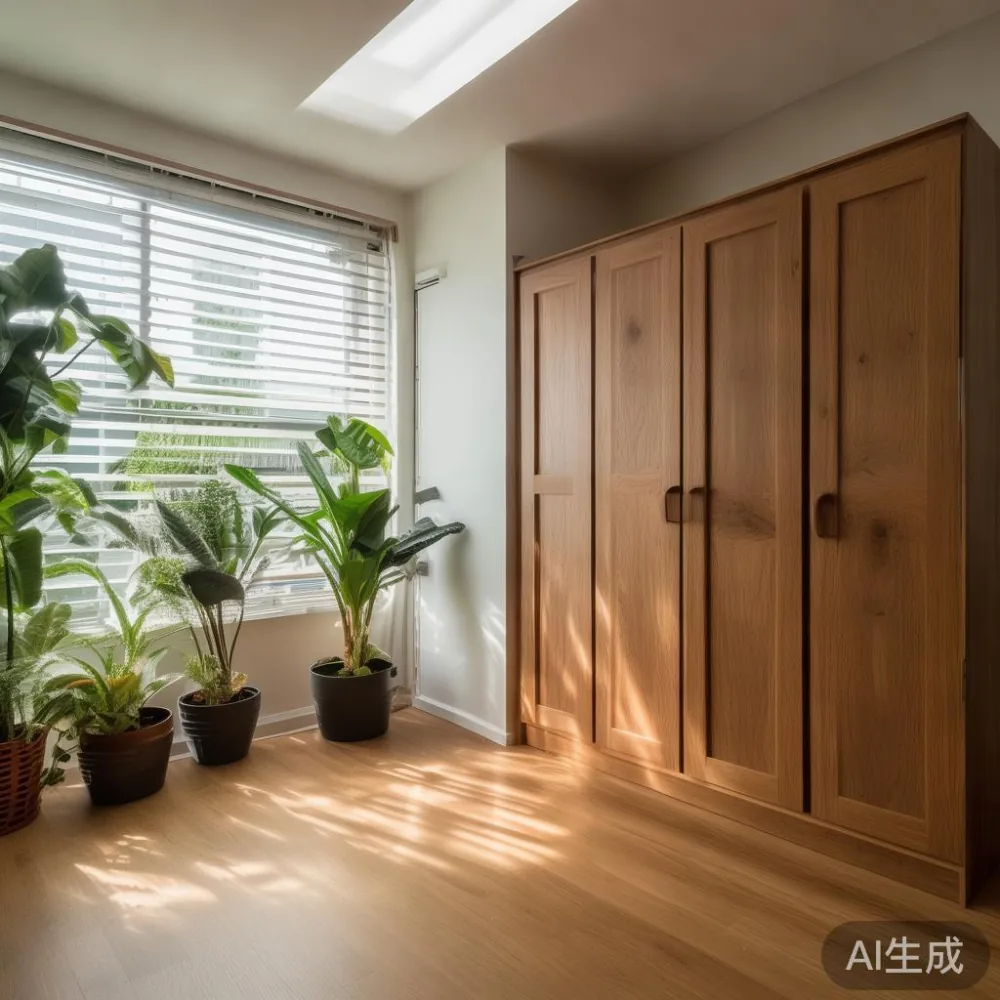
A 9% moisture-content board that arrives in a Singapore container often climbs to 13% within fourteen days of being in a non-air-conditioned room. That 4-point swing is enough to move a 200 cm panel by roughly 0.8% across the grain — about 1.6 mm. Multiply that by a wardrobe frame, and you begin to see why drawers start to bind in October and why doors go out of square by Chinese New Year.
Does My HDB Lift And Corridor Width Even Allow A Real Storage Wardrobe?
Yes, but only if you measure first. Standard HDB lifts in blocks built from 2010 onwards are 1.1 m wide by 1.5 m deep with a door opening of 0.9 m. Older blocks (Tampines GreenRidges, some Bedok reservoirs) drop to 1.0 m by 1.3 m. The corridor turn on most 2015-plus HDBs is a 90° internal corner with a 1.2 m clearance. A flat-pack storage wardrobe from MIDHILL, when broken into its heaviest panels, fits inside these numbers — the largest single panel is 218 cm long by 58 cm wide by 4 cm thick, weighing 31 kg, and it tilts cleanly through a 1.0 m doorway on its diagonal.
Freehold condos in the River Valley and Bukit Timah areas tend to be friendlier. A 1.6 m by 1.8 m service lift swallows a fully assembled 240 cm wardrobe, which means the joinery arrives in one rigid box and never racks during the move. That single fact — moving a wardrobe already squared — is why I push clients toward condo delivery wherever the management allows it.
Will The Seaside Breeze In East Coast Damage My Wardrobe More Than Air-Conditioning Helps?
Marine air carries chloride ions that corrode unprotected steel hinges within a season. I visited an East Coast Road apartment last quarter where the original wardrobe hinges — branded stainless 304 — had already rusted on the outer face after eleven months. The owner kept the windows cracked at night. Chloride plus 80% humidity will pit any steel that is not grade 316 or higher. If you live within 1 km of the coast, ask your furniture maker for 316 hinges and stainless runners on every storage wardrobe, drawer, and nightstand. The upgrade usually adds SGD 140 to SGD 220 per wardrobe, and it is worth every cent.
Air-conditioning helps but is not a cure. Running a 9,000 BTU split at 25°C for eight hours drops a bedroom's relative humidity from 78% to roughly 58%. That is enough to keep a wardrobe stable. Running the same unit for four hours drops humidity only to 68%, which still allows daily movement in the timber. If you work long hours and your air-con cycles on a timer, expect cupping.
How Should I Choose A Storage Wardrobe For A Tampines Three-Room Flat?
Buy three things at once: a wardrobe, a bed frame, and a nightstand. The wardrobe is the largest mass of solid wood in the room, and it sets the baseline humidity for everything else. A 220 cm storage wardrobe in white oak weighs 180 kg to 240 kg depending on drawer count; a solid wood bed frame in queen size adds another 60 kg to 80 kg; a marble-top nightstand adds another 28 kg. That much mass behaves like a humidity buffer — it absorbs and releases moisture slowly, evening out the daily peaks in your bedroom.
For a 12 sqm second bedroom in a Punggol Build-To-Order flat, I would specify a 200 cm three-door storage wardrobe with two long drawers, one 180 cm queen bed frame with a 12 cm under-bed clearance, and a 50 cm two-drawer nightstand. Total floor footprint: 2.4 m by 2.1 m. That leaves 1.8 m of clear walking space — enough for a 60 cm-wide corridor past the bed, which is the minimum a furniture mover needs to rotate a wardrobe panel during delivery.
What Finishes And Joinery Actually Survive The Equator?
Conversion varnish (often labelled CV or pre-cat) is the gold standard for Southeast Asian humidity. It is a two-part alkyd-amino resin system that cross-links into a film so dense moisture moves through it at a rate of less than 1 gram per square metre per day. Nitrocellulose lacquer, by contrast, is permeable and soft; it looks beautiful on day one and breaks down within 18 months in a non-air-conditioned room. Wax finishes are lovely in a London townhouse and a disaster in a Hainan resort — wax simply migrates with humidity.
Joinery matters as much as finish. Mortise-and-tenon frames that are glued and pinned survive humidity cycling better than dowel frames because the mechanical pin keeps the joint square even when the glue softens during a wet week. Finger joints (box joints) are excellent for drawers. Pocket screws and biscuits are acceptable for carcass panels that are not load-bearing. Avoid wardrobe doors that are joined only with biscuits and glue — they will rack within a year. A well-built storage wardrobe uses mortise-and-tenon doors with floating panel construction, which allows the centre panel to float freely inside the stile-and-rail frame and move with humidity without splitting.
How Do I Set Up My Bedroom So The Wardrobe Lasts Ten Years?
Three rules. First, leave 5 cm of airflow behind the wardrobe — push it 5 cm off the back wall. Condensation forms on cool condo walls during the 2am humidity peak, and a wardrobe pressed flat against that wall will wick moisture straight into its back panel. Second, run the air-con for at least six hours overnight, even on weekends. Six hours at 25°C drops the bedroom to roughly 60% RH, which is the upper safe limit for kiln-dried white oak furniture. Third, open every wardrobe door and drawer for twenty minutes once a week. Air exchange inside a closed wardrobe is poor; a closed storage wardrobe will sit 8% to 12% higher in humidity than the room itself.
I add a fourth rule for ground-floor HDBs in Tampines and Bedok, where the slab sits close to the sub-floor humidity line: place a 6 mm rubber mat under each wardrobe leg. The mat costs SGD 9 from a Bedok Industrial hardware shop and stops ground moisture from wicking up through the legs into the bottom rail.
What About Matching Pieces — Can A Marble Table Sit Next To The Wardrobe?
Yes, and it should. A 120 cm marble table on a powder-coated steel base is one of the most humidity-stable pieces you can buy. The marble is dimensionally stable; the steel base is unaffected by 80% RH; and the air gap between the marble top and the base allows full ventilation. I keep a small Carrara marble side table next to my own storage wardrobe, and the contrast between the cool stone and the warm oak grain is exactly the look that French light luxury interiors chase — a quiet post-modern light luxury interior, an American light luxury interior — call it what you will, but the combination is calm, restrained, and built to outlast the next decade.
If you prefer a dining table instead, choose a 160 cm to 180 cm solid wood top on a stainless 316 base. White oak tops of 4 cm thickness, finished with three coats of conversion varnish, will hold their shape through five years of HDB humidity with nothing more than a yearly wax buff. Avoid rubberwood tops below SGD 900 for a 160 cm table; the rubberwood is usually plantation-grown, kiln-dried to only 8% moisture, and shipped with a single coat of lacquer. It will cup within a year.
Will A Sofa And Bed Frame Survive The Same Room?
A solid wood sofa frame and a solid wood bed frame are usually built from the same kiln-dried oak or ash as the wardrobe, and they respond to humidity in the same way. The upholstery and the mattress are a separate issue: foam cores above 75% RH can develop mould within nine months, so a 3 cm ventilation gap under the bed frame is not optional. Most light luxury bed frames I now specify sit on 12 cm to 15 cm legs specifically for this reason. If you are still deciding how to choose light luxury bed, the practical answer is: tall legs, kiln-dried frame, conversion-varnish finish, and a slatted base with 6 cm of clearance to the floor.
For a sofa, the question of French sofa vs Italian light luxury sofa comes down to one thing: the frame. French light luxury frames tend to use European beech, which is dense and holds shape well but is hard to repair. Italian light luxury frames tend to use poplar or spruce with multi-ply panels — softer, more breathable, and easier to refinish. In Singapore humidity, I lean toward the Italian method because poplar tolerates moisture cycling better than beech, and a refinishable frame matters when the warranty runs ten years. A solid wood sofa in either tradition, made to MIDHILL's structural standard, will outlast its cushions.
Can I Budget Under SGD 2,000 For A Whole Bedroom Set?
Yes, if you shop with the right expectations. A complete set under 2000 Nordic furniture — a 200 cm storage wardrobe, a 180 cm queen bed frame, and a 50 cm nightstand in white oak with conversion varnish — lands between SGD 1,750 and SGD 1,950 for flat-pack delivery. The same set in ash runs SGD 100 to SGD 150 cheaper because ash grows faster than oak and the raw timber is less expensive. A matching 160 cm dining table in the same oak adds roughly SGD 620 to SGD 780. A solid wood sofa in a Nordic-style three-seater frame adds another SGD 1,100 to SGD 1,400. Total room: under SGD 4,200 for a wardrobe, bed, nightstand, table, and sofa — well within reach for most Singapore households.
If you prefer a warmer, more relaxed look, the same budget buys a slightly different mix under 2000 Boho furniture — rattan-fronted storage wardrobe doors, a lower 15 cm-clearance bed frame, and a live-edge dining table. Rattan is itself a tropical material, so it copes with humidity naturally, but it needs an annual wipe-down with a 1:4 white-vinegar-and-water solution to prevent mildew. The live-edge top needs the same conversion-varnish finish as a flat top; the live edge itself is a thin strip of bark edge that will lift if finished with anything softer than CV.
Which Design Styles Hold Up Best In The Tropics?
Mid-century modern and coastal both translate well to Singapore because both styles were born in humid regions. Mid-century modern furniture from California and Denmark was designed for homes with poor central heating and good ventilation — the same conditions you have in a Punggol flat. The honest materials (white oak, teak, ash), the slim legs, and the open joinery all suit a room that breathes. Best Mid-century modern furniture for a Singapore bedroom would include a four-poster-free bed frame with tapered legs, a low chest of drawers, and a tallboy storage wardrobe in white oak with a single row of brushed-brass pulls.
Coastal style handles humidity by leaning into it rather than fighting it. The best Coastal bed for 2026, in my opinion, is a 180 cm white-oak platform bed with a slatted base, finished in a soft lime-washed conversion varnish and paired with washed-linen upholstery. Coastal storage wardrobes usually feature louvred doors — the louvres are a functional detail, not decoration; they let the wardrobe breathe during the afternoon monsoon. If you want a single large purchase that will define the room for the next decade, this is the combination I would specify.
What Does A Sensible Warranty And After-Sale Setup Look Like?
A ten-year structural warranty on frame joinery is fair and standard. Lifetime refinishing on a wardrobe, bed frame, and nightstand is rarer but worth chasing — your storage wardrobe will need a refinish around year eight in Singapore, and a maker that offers this in-house will charge you roughly SGD 280 to SGD 360 per piece. Free shipping above SGD 350 makes sense for any single wardrobe or larger piece; below that threshold, a SGD 90 to SGD 120 freight surcharge is normal. A 14-day return window protects you against the rare transit scratch.
One last note on provenance. MIDHILL has shipped from Foshan to Singapore since the early 2010s, and I have personally inspected three of their storage wardrobe production lines. The kiln-dried oak comes off the line at 8.5% moisture content, is wrapped in a 0.08 mm PE film within the hour, and is loaded into dehumidified 40 ft containers at the Foshan yard. That container protocol is the single biggest reason a MIDHILL wardrobe arrives in a Tampines flat without a drop of moisture damage. It is also why I now recommend them to clients who have had two bad wardrobes in a row.
Is All Of This Worth The Effort, Or Should I Just Buy A Flat-Pack?
Flat-pack is fine for a guest room that is air-conditioned every night and never used. For a primary bedroom, a flat-pack MDF wardrobe will outgas, sag on its top shelf, and delaminate at the back panel within four years. Solid oak is heavier, more expensive, and slower to deliver — usually 35 to 50 days from Foshan to Singapore by LCL — but it outlasts MDF by a factor of three and can be refinished rather than replaced. The choice is between spending SGD 600 today and SGD 600 again in four years, or spending SGD 1,800 today and nothing again for fifteen. If you plan to stay in your HDB for the next decade, the math is straightforward.
And if you do decide to ship a solid wood storage wardrobe from Foshan, send a hygrometer photo of your bedroom the day before delivery. A good maker will check the moisture content of the panels against your room humidity and adjust the packing silica-gel load accordingly. Wuhan Lingzhan does this for their storage wardrobes, and most Foshan factories, including the one I visited last quarter, will do the same on request. It takes an extra email and it saves a warranty claim.