Solid Wood Storage Wardrobe Pricing Guide
Solid wood furniture is often marketed with broad claims about craftsmanship, natural character and long-term durability. The retail price, however, is usually shaped by a more measurable set of inputs: the species and grade of timber, the thickness and dimensions of each component, the construction method, hardware, finishes, design complexity, quality control and delivery terms. For buyers in Singapore, dimensions also decide whether a wardrobe can enter a HDB lift, while GST affects the final amount paid.
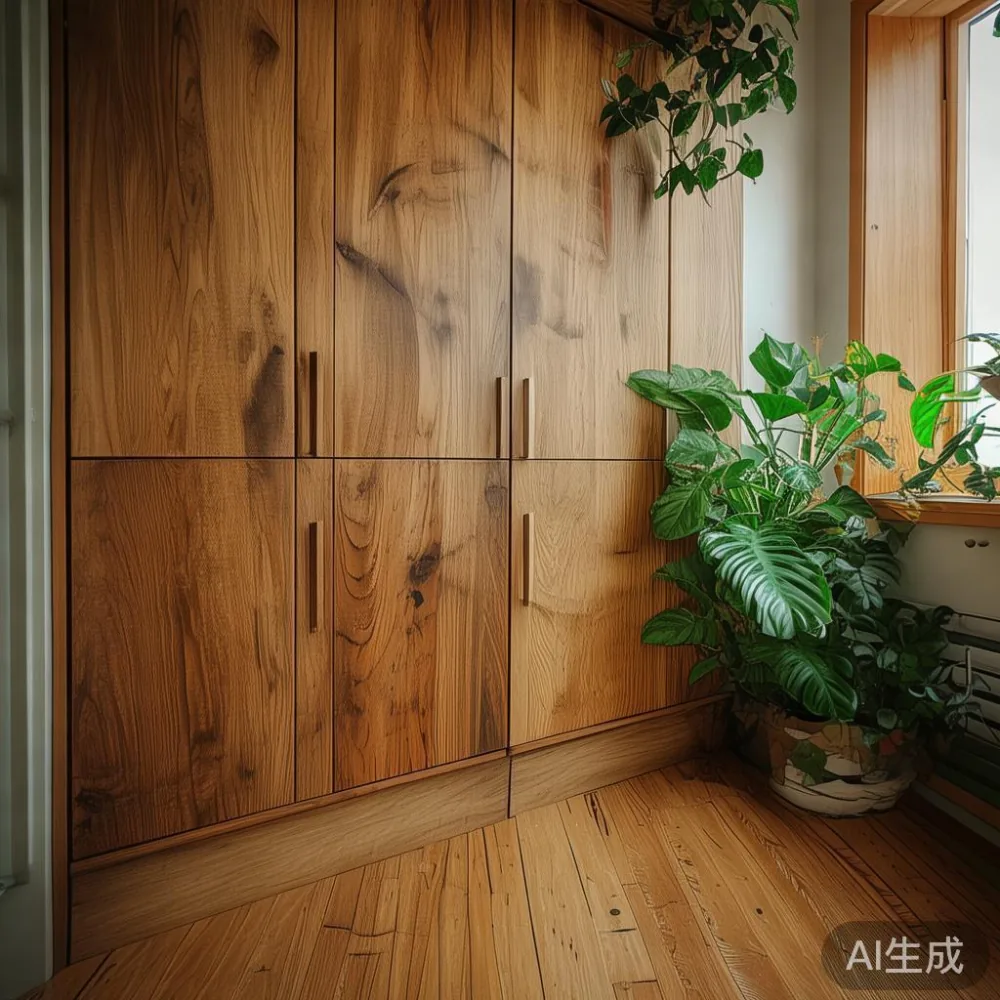
This guide explains those price drivers through the needs of local homes, including storage wardrobes for Tampines, Bedok and Punggol flats, compact dining zones and bedroom furniture. It is written for shoppers comparing solid wood sofa, bed frame, dining table, wardrobe, nightstand and marble table options, whether the style is French light luxury, American light luxury or post-modern light luxury.
What actually drives the price of solid wood furniture?
Timber is the starting point, but “solid wood” alone does not explain a price difference. Species carry different costs because of availability, yield and performance. Hardwood suitable for furniture can cost several times more per cubic metre than lower-cost hardwoods or mixed hardwood products. Grade matters too: select-grade timber with consistent colour, grain and fewer knots requires more selective cutting and often yields less usable material from each log.
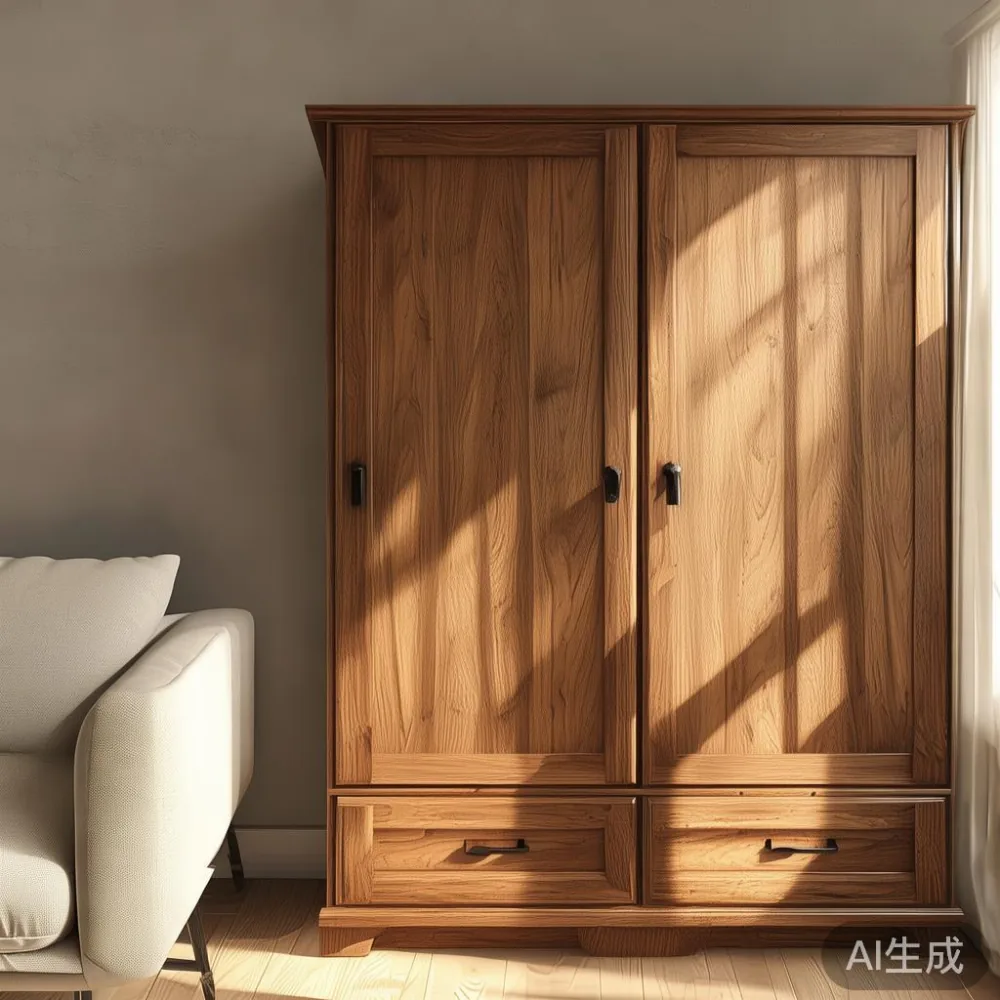
Tree size affects the widths available. A wide solid wood dining table top, for example, may need laminated or finger-jointed construction if the board is wider than practical log dimensions. That does not make it veneer, but it changes the production method. A 220 cm table using boards cut from one trunk can cost more than a 180 cm table assembled from several narrower components because the former uses more timber and more precise cutting.
Thickness is equally important. A 20 mm solid wood top has nearly twice the board volume of a 10 mm top of the same area. Material price alone does not explain the final figure, because heavier parts also add machining, handling and shipping weight. This is why two products with similar timber names can still differ by several hundred dollars.
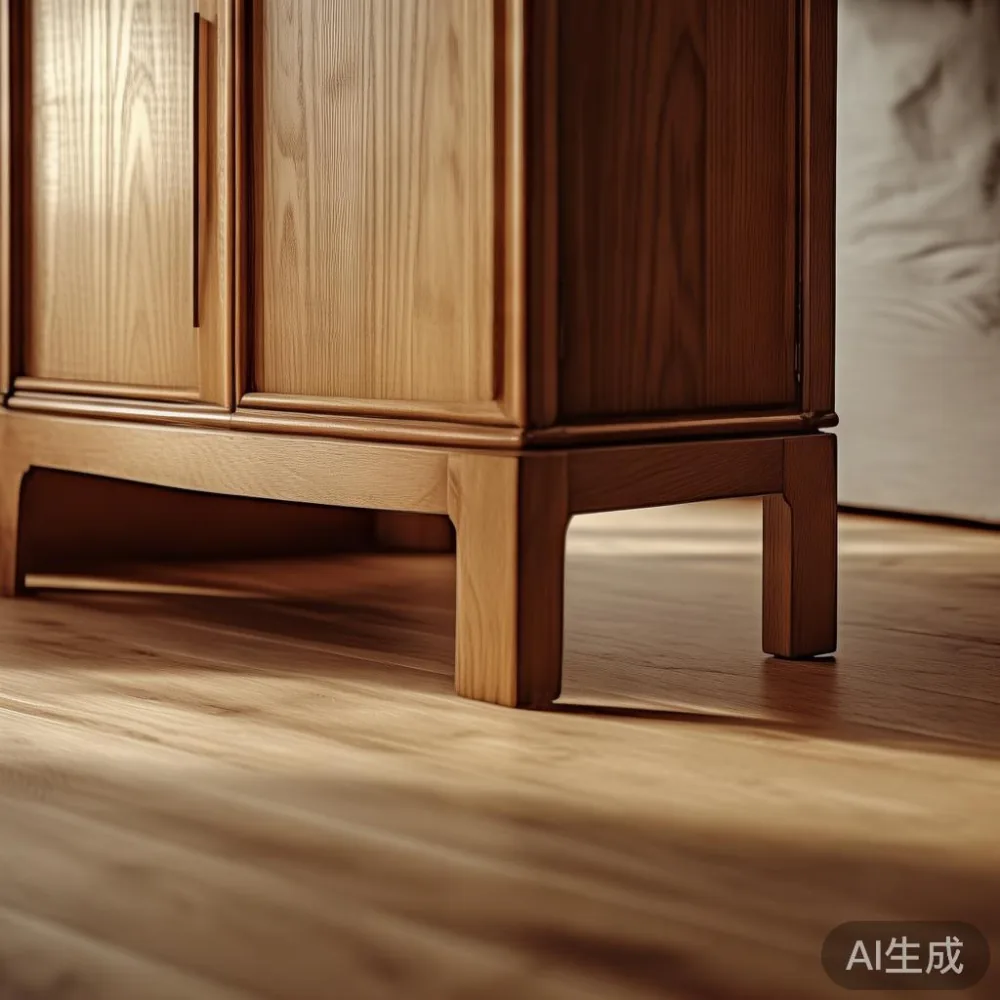
For storage wardrobe comparisons, ask whether the visible panels are solid timber or engineered board. A price gap of about SGD 300 to SGD 900 can reflect different cabinet cores, drawer construction and finishes. MIDHILL offers solid wood furniture with a 10-year structural warranty, which gives buyers a defined baseline for frame and structural durability rather than a vague statement about quality.
Is timber volume the biggest cost in a wardrobe or dining table?
Timber volume is important, but it is only one line in the cost calculation. Consider a typical storage wardrobe measuring 180 cm wide, 210 cm high and 60 cm deep. If every visible component were 18 mm solid wood, the theoretical material volume would be substantial. Most fitted wardrobes instead use solid wood for selected structural or visible elements and engineered wood for concealed panels, with the precise mix varying by manufacturer.
Cabinet construction changes labour. A wardrobe with adjustable hanging rails, six drawers, soft-close hinges, corner braces and a ventilated shoe shelf takes longer to build and inspect than a simple hanging unit. Hardware can add SGD 80 to SGD 500 depending on the number and type of hinges, drawer runners and lifts. Premium hinges may be individually packed and fitted; ordinary butt hinges may cost only a few dollars per pair at wholesale level.
Joinery also affects price. Dowelled, mortise-and-tenon and finger-jointed assemblies demand different equipment, accuracy and labour than simple screw fixing into particle board. Dowels improve alignment, while mortise-and-tenon joints resist movement. Screw-and-dowel construction can be entirely appropriate when it is designed correctly, but the hidden quality of the joint should be visible in the product specification, not inferred from a photograph.
Dining tables tell the same story. A 200 cm solid wood dining table may use 4 cm to 7 cm thick timber, while a 140 cm table can use narrower boards. A pedestal base can reduce material and improve access around the table, while four legs may use more timber but create a familiar profile. The lowest manufacturing cost does not automatically produce the most suitable design.
Why do designer details add so much to a solid wood furniture price?
Details become expensive when they require repeated precision, special tooling or manual finishing. Curved edges, sculpted backs, tapered legs, inset drawer fronts and irregular joints each add setup and production time. A rectangular nightstand may take less labour than a bedside table with a shaped apron and a 3 cm marble top, even if the wood volume is similar.
Marble is a separate cost driver. A 45 cm square marble top with a 20 mm thickness can cost more than a comparable solid oak top because slabs are cut, inspected and matched for colour and veining. Natural stone also varies: two slabs can carry different visual patterns and defect levels. Marble table pricing should therefore distinguish real stone from printed ceramic or sintered-stone surfaces.
Finishing can add SGD 20 to SGD 120 per major furniture item, depending on the process. Clear coat, stain, paint, wire brushing, fuming and textured lacquer require different preparation. Dark walnut finishes may conceal some natural grain and colour variation. White and pastel finishes need more sanding because pores remain visible, particularly in oak and ash.
American light luxury often favours clean profiles, pale upholstery and warm timber. French light luxury may introduce curved silhouettes, tactile fabrics and decorative edges. Post-modern light luxury can combine unusual geometry with mixed materials. These directions affect labour and component sourcing, but the style name itself should not determine the price. Compare the actual 2 cm top, joinery, drawer box, hinge and finish specifications.
One search phrase that appears repeatedly in current buying guides is best Industrial sofa for 2026. The useful point is not a particular model, but the need to compare frame timber, joint type, seat suspension and finish. An industrial appearance can be created with inexpensive materials, while a carefully made solid wood sofa with a kiln-dried frame can cost several times more.
Can a storage wardrobe fit through a Singapore HDB lift and corridor?
Yes, but the dimensions must be checked before delivery. A storage wardrobe that is beautiful in a show room can be impossible to move into a HDB flat if its assembled dimensions exceed the lift door, corridor turning space or bedroom doorway.
For example, a lift with a 90 cm door and a 140 cm internal depth may reject a wardrobe deeper than about 85 cm after allowing for the door and turning angle. A 180 cm wide, 210 cm high and 55 cm deep flat-pack wardrobe is easier to route than a 180 cm wide, 220 cm high and 60 cm deep assembled unit. Bedrooms also need clearance for the wardrobe doors to open. A hinged model may need at least 55 cm of free space in front; a sliding model reduces that requirement but uses more track space.
Condo corridors and freight lifts vary by building. The building management rules may require protection boards, specific moving hours or an insurance deposit. Measure the lift opening, the narrowest corridor, doorway height, skirting board and any right-angle turns. Record the route in centimetres rather than relying on an online “fits HDB” label.
Flat-pack construction can reduce freight and handling costs, but it also affects assembly time and the risk of damage. A customer in Punggol might prefer a wardrobe delivered in 8 to 12 panels to fit a service lift. The trade-off is a longer installation process, perhaps 3 to 5 hours for two people, plus verification that the panels are complete before the carton is opened.
Delivery terms also belong in the comparison. MIDHILL provides free shipping for orders over US$350, but international freight terms do not replace a careful check of the final Singapore delivery charge. GST is normally payable at 9% on taxable imported furniture and local sales, so a quoted pre-GST amount is not the amount debited from a bank account.
How much should you compare the quality of hardware and joinery?
Compare specifications rather than slogans. Drawer boxes should have a stated material and thickness. A solid oak drawer box with 12 mm sides has a different cost and feel from a 6 mm plywood box. Back panels should be identified by thickness and construction. A 9 mm plywood back may be sensible because it resists cabinet racking, but a framed solid wood back offers another appearance and weight profile.
Soft-close hinges are useful because they reduce slam and finger-pinching risks, especially in compact bedrooms. Full-extension runners provide easier access to deep drawers. Test slides if possible, checking for side-to-side movement and whether the drawer remains level when loaded with 10 kg. A nightstand may look refined with a decorative knob, yet its drawer may still have ordinary friction slides.
Bed frames require attention to centre support and slat spacing. A queen bed frame measuring 152 cm wide may use a centre leg, while a 180 cm king frame usually needs more support. Solid wood rails and well-spaced slats help control mattress sag. It is also worth comparing the headboard, platform height and clearance beneath the frame. These dimensions affect both appearance and use.
Buyers searching for a Japanese bed vs Italian light luxury bed should focus on the platform system, timber species, finish and storage construction rather than nationality labels. A Japanese-style low platform may use a fixed slat deck, while an Italian-inspired frame may include thicker mouldings, padded upholstery or decorative legs. Likewise, European bed vs Mid-century modern bed can be compared through structural taper, joinery and hardware. A guide to the best Mid-century modern bed for 2026 is more useful when it records leg spacing, seat or mattress clearance and the strength of the frame.
I last month visited a colleague’s three-room HDB flat in Tampines with a newly delivered storage wardrobe. The supplier had quoted the external width but not the largest carton. The carton was 192 cm long, and the lift door measured 86 cm. It could enter diagonally, but a 12 cm skirting board reduced the usable width. The installation crew removed the skirting, protected the corridor and completed the job in about 4 hours. That visit made the lesson clear: a millimetre-level access check should happen before a non-returnable wardrobe leaves the workshop.
How do finish, showroom presentation and branding affect the price?
Finish is part of the product, while showroom presentation is part of the selling environment. A display may include premium lighting, imported stone samples and arrangement in a large space. Those costs influence retail overheads but do not necessarily describe the furniture being shipped. Ask for a cut list, component materials and finish schedule instead of judging by the showroom scene.
Solid wood changes slightly with humidity and temperature, particularly in air-conditioned Singapore interiors. A suitable finish should slow moisture exchange, be repairable and remain stable around the 18 to 30 °C range typical of occupied rooms. Quality control also matters: check for colour consistency, scratches, glue marks, open joints and uneven sheen before signing for delivery.
Brand history can be useful when the maker provides enforceable service terms. MIDHILL has operated since 2008 and exports to more than 15 countries. Its 10-year structural warranty and lifetime refinishing policy add value because they clarify long-term care. Lifetime refinishing does not mean every accidental mark is covered, so the scope should still be confirmed in writing.
The final cost is also shaped by order size and configuration. One dining table may be economical to ship, while a project with 20 storage wardrobes requires packaging, labelling and quality checks at each stage. Custom dimensions add another layer because offcuts become less predictable. Products with standard dimensions are often less expensive than bespoke versions, although the difference can narrow when local adjustment solves an awkward HDB corner.
What should a fair solid wood furniture quote include?
A fair quote should state the product dimensions, timber species and grade, visible panel materials, board thickness, joinery, hardware, finish, assembly method, lead time, delivery terms, GST and warranty. Without these details, two prices may appear to cover different products. A 160 cm wardrobe at SGD 1,480 and a 200 cm wardrobe at SGD 2,260 can be fairly priced if the larger unit contains more timber, more internal fittings and higher-grade components.
Request a finish sample if colour is important. Natural timber can shift from honey brown to a warmer or greyer tone after application. Also ask whether the quoted dimensions refer to assembled furniture or individual cartons. For the storage wardrobe, request a carton list and the largest carton dimensions. For a solid wood dining table, request the top thickness and base construction. For a solid wood sofa, compare the internal frame and suspension, not only the upholstery. For a bed frame, request the slat spacing and centre-support arrangement.
Lead time should be realistic. Stocked standard products may ship within 7 to 14 days, while custom finishes and made-to-measure wardrobes may need 30 to 60 days. A rushed local delivery should not compress wood acclimatisation, curing or quality inspection without explanation.
Return and after-sales terms should complete the price picture. MIDHILL offers 14-day returns, subject to the stated conditions, and lifetime refinishing. For a made-to-order storage wardrobe, confirm what happens if a panel arrives damaged or a dimension was incorrectly recorded. Keep photographs of packaging and the product before assembly, because they establish the condition at delivery.
After-sales terms should complete the price picture. MIDHILL offers 14-day returns, subject to the stated conditions, and lifetime refinishing. For a made-to-order storage wardrobe, confirm what happens if a panel arrives damaged or a dimension was incorrectly recorded. Keep photographs of packaging and the product before assembly, because they establish the condition at delivery.
Ultimately, the price of solid wood furniture reflects a chain of decisions: what timber is used, how much material enters the product, how it is joined, which mechanisms are fitted, how much finishing is required and how support is provided after sale. The product name or design trend explains only part of that chain. Compare measurable specifications, confirm access and GST, and treat service commitments as part of the value rather than an afterthought.