What Actually Drives the Price of Solid Wood Furniture — And What You're Really Paying For
Last month I visited a 4-room HDB flat in Tampines with my colleague, a family of four moving out of a rental and into their first owned home. They had three quotes in hand for what looked like the same dining table — six seats, walnut colour, around 180 cm long. The prices ranged from S$1,150 to S$2,950. Same shape on the spec sheet. Very different pieces in the showroom. That afternoon, walking through the corridor with a tape measure in hand, I realised most Singapore buyers never see the gap between those two tables. This guide is written for anyone staring at two quotes and wondering where the money actually goes — especially when the HDB lift is 1.9 m deep, the service corridor is only 1.2 m wide, and GST has just pushed the budget again.
1. The Wood Species: It's Not Just a Colour Swatch
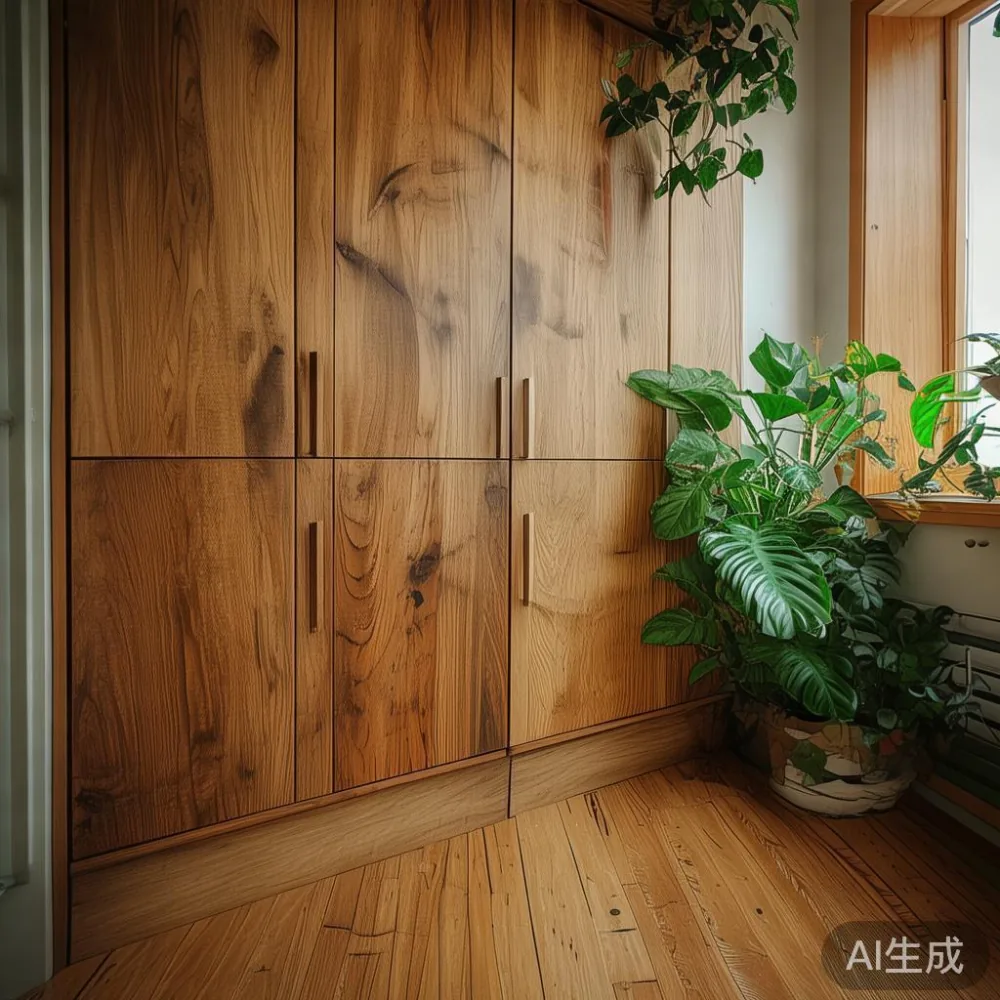
Solid wood is solid wood until you ask where it came from and how fast it grew. A dining table top in rubberwood at 25 mm thickness behaves very differently from one in North American white oak at the same thickness. Rubberwood (Hevea brasiliensis) is plantation-grown in Malaysia and Thailand, harvested at 15–25 years, and priced in Foshan between roughly US$380 and US$520 per cubic metre. White oak, by contrast, is slow-grown at 50–80 years, kiln-dried for 30–60 days, and lands at US$1,400–US$1,900 per cubic metre. Ash sits in between, around US$700–US$950 per cubic metre.
Those numbers matter in a Singapore HDB because humidity swings between 60% (afternoon, aircon on) and 92% (after a thunderstorm with doors open). Cheaper woods move more. A 180 cm dining table in rubberwood can cup 3–5 mm across the width in a year; the same top in white oak moves 1–2 mm. That movement translates to sticky drawers, uneven wardrobe doors, and in the worst case, a cracked marble table slab if the substrate was glued poorly.
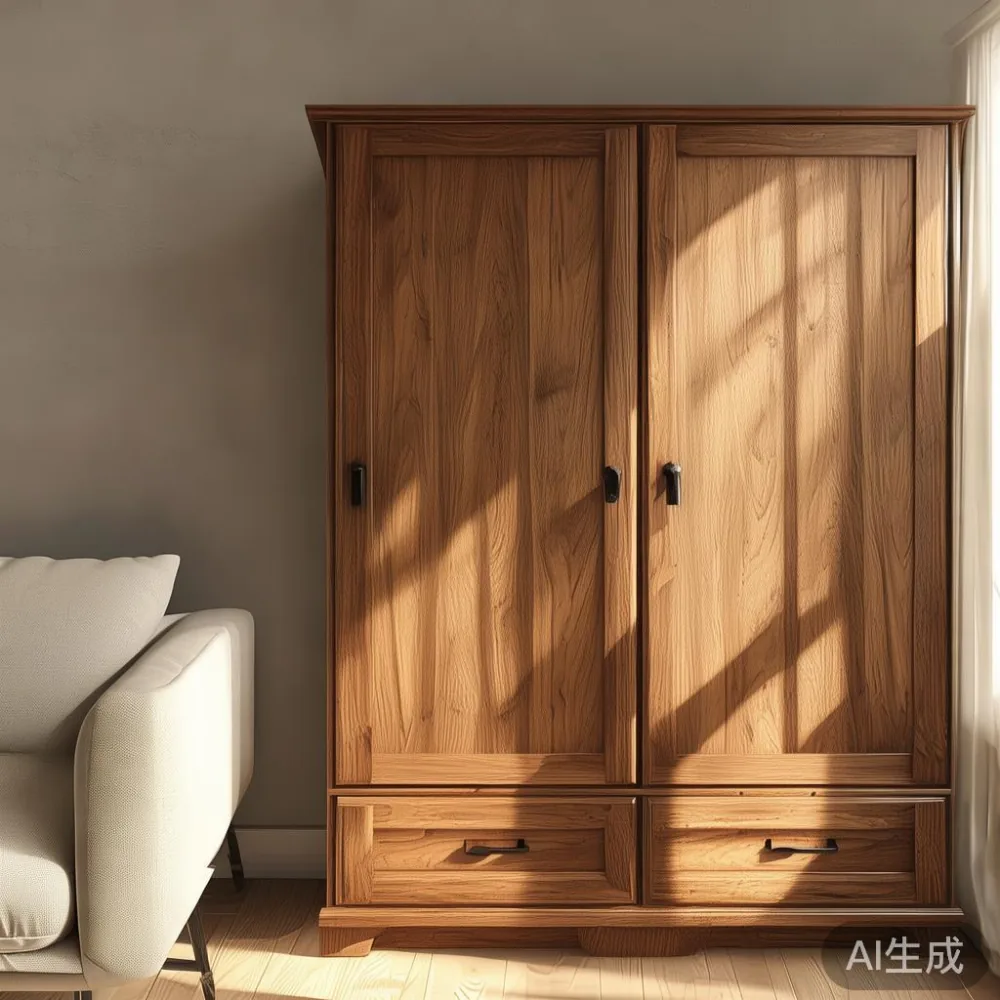
This is one of the places MIDHILL's spec sheets are unusually clear — they list the actual Latin name and the moisture content target (8–12%) rather than a marketing term like "premium hardwood". When you read a quote that just says "solid wood", ask which species.
2. Joinery: The Difference Between a 10-Year Piece and a 30-Year Piece
Look underneath. That's the simplest test in a showroom. A wardrobe or bed frame held together with staples and pocket-hole screws can be assembled in 25 minutes. The same piece with mortise-and-tenon, dovetail drawers, and bed-bolt hardware takes a carpenter 3–5 hours. That labour is built into the price.
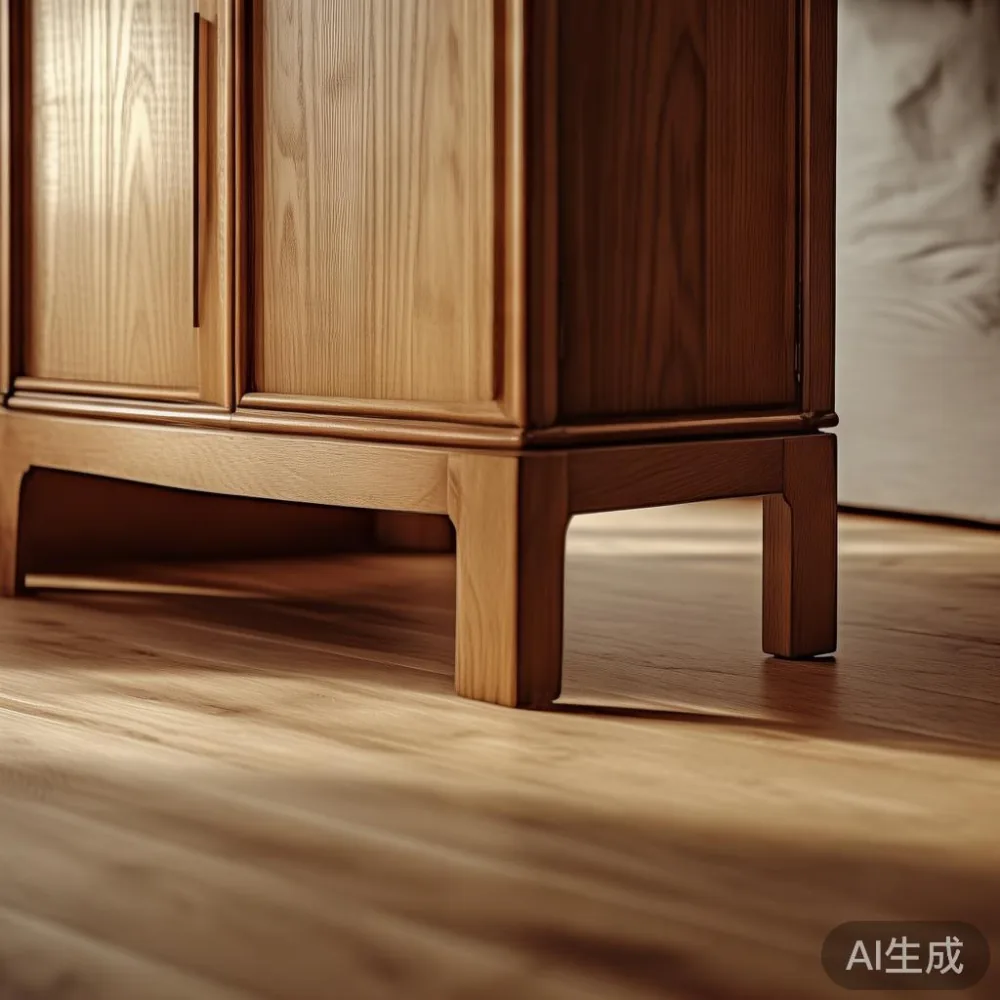
A bed frame in solid pine with dowel joints might be S$680 in Foshan. The same silhouette in oak with mortise-and-tenon and through-tenons at the headboard runs S$1,400–S$1,800. Add a French provincial bed silhouette with hand-carved detailing on the headboard cornice and you can climb to S$2,600. If you've been weighing an American bed vs French provincial bed for your master bedroom, this is the structural difference the brochures don't print: American provincial tends to favour thick turned posts and visible bolts (easier mass production); French provincial leans on curved cabriole legs, finer carvings, and tighter tolerances on drawer gaps (around 1.0–1.5 mm versus 2.5–3.0 mm on a budget line).
I watched a Foshan workshop supervisor reject 14 out of 60 dovetail joints on a nightstand run because the gap exceeded 1.8 mm. Those rejects were re-cut, not sold. That rejection rate is why a six-drawer nightstand in oak sits at S$720 rather than S$420.
3. Hardware, Finishes, and the Things You Touch Every Day
Soft-close hinges on a wardrobe door are a S$12–S$18 upgrade per pair over a standard hinge. A wardrobe with four doors, two internal drawers, and three adjustable shelves needs 8 hinges, two pairs of drawer runners, and a clothes-rail system. Hardware alone adds S$140–S$220 to a storage wardrobe. Multiply that across a 2.4 m tall, 3-door storage wardrobe with mirrored panels and you are at S$180–S$300 of "invisible" cost.
Finishes work the same way. A NC (nitrocellulose) lacquer spray is cheap, fast, and produces a plasticky film that chips at 12 months. A conversion varnish or hardwax oil (Osmo, Rubio Monocoat) costs the factory 2–3 times more per square metre and adds two days of cure time. On a 200 cm dining table top with four coats, that finish gap is roughly S$90 in materials.
For a solid wood sofa frame — say a 3-seater at 220 cm — the joinery is hidden under upholstery. Most Singapore buyers can't see the dowels. But they can sit on it. A sofa frame with kiln-dried oak, corner blocks glued and screwed, and sinuous spring suspension will feel different in year three than a frame with rubberwood and elastic webbing. MIDHILL publishes its suspension type on the spec card for this reason; it is the single biggest predictor of a sofa's second-decade comfort.
2.4 m Wardrobes, 1.9 m Lifts, and Singapore-Specific Costs You Don't See on the Website
This is where a Foshan quote meets a Tampines corridor. A standard HDB passenger lift interior measures about 1.5 m deep by 1.7 m wide by 2.3 m tall. A 2.4 m tall wardrobe assembled will not fit standing up. So your storage wardrobe arrives flat-pack (KD — knocked down). The cost of that flat-pack is engineering: every panel needs to be sized so a 1.5 m x 60 cm piece can work through the lift and the 1.2 m service corridor turn into your unit.
That constraint adds roughly 8–14% to the factory cost because panels must be smaller, hardware must be rated for repeated re-assembly, and the instruction manual must actually be readable. A factory that ships only to domestic Chinese 3-bedroom apartments doesn't care about your corridor. A factory that ships to 15+ countries, like MIDHILL, designs around your corridor.
Then there is shipping. A 2.4 m storage wardrobe flat-packed weighs 95–130 kg depending on species. Sea freight from Foshan to Singapore runs S$180–S$260 per CBM for FCL, plus 9% GST on the landed value above S$400. Local lorry delivery from the Jurong warehouse to your HDB adds another S$60–S$120, including the manpower to carry panels up to the 7th floor if there is no lift access at the service lobby. Most retailers absorb this above S$350 order value, but ask before you assume.
How do I know if I'm getting genuine solid wood versus a veneer trick?
Three checks in 90 seconds. First, look at the end grain — solid wood shows continuous growth rings across the whole end, veneer shows a repeating pattern or a seam line where the roll ended. Second, check the underside and inside of drawers — veneers usually wrap only the visible faces, so the hidden side will be a different colour or a melamine backer. Third, weigh it. A 180 cm dining table in solid oak weighs 55–70 kg. The same shape in MDF with oak veneer weighs 28–35 kg. Your delivery lift will notice.
For a storage wardrobe, lift one adjustable shelf panel out and inspect the edge band. Real wood has end-grain pores on all four edges. Veneer has a thin PVC or paper edge band wrapped at 0.4–0.6 mm that you can sometimes peel with a fingernail at the corner. This is also why returnable pieces are easier to verify — a 14-day return window gives you time to inspect the back panels and drawer bottoms in your own light.
One more detail: ask whether the back panel of the wardrobe is solid wood or plywood. Most Singapore retailers use 9 mm plywood for the back because it holds screws better than 12 mm solid wood and does not cup. A solid back panel on a 3-door storage wardrobe adds roughly S$120–S$180 but improves rigidity over a 10-year span. The warranty on the structural frame usually excludes warping on back panels under 12 mm, so read the fine print.
5. Why the Same Sofa Costs S$1,800 at Genting Lane and S$3,400 at a Light-Luxury Showroom
Light-luxury positioning — French light luxury, American light luxury, and post-modern light luxury — describes a specific aesthetic rather than a hidden surcharge. A post-modern light luxury sofa in velvet at 240 cm with a curved backrest and brass-tipped legs uses a frame in kiln-dried oak, high-resilience foam at 32 kg/m³ density, and a hand-stitched seam at 6 stitches per inch. That piece in a mainstream factory costs S$2,100 in materials and labour. The same frame at a furniture mall in Singapore retails at S$3,400–S$4,200 because the import duties, showroom rent at 25–35 SGD psf per month, and a 9% GST-inclusive margin stack on top.
If you're searching for the best European light luxury sofa for 2026, the honest framing is: European is a style cue, not an origin. Most of it is made within 200 km of Foshan. What you're paying for is the specification — the foam density, the fabric rub count (30,000+ double rubs for a contract-grade velvet versus 15,000 for retail), and the leg finish. For anyone weighing a French sofa vs Japandi sofa, the practical difference is silhouette: French tends to curved arms at 12–18 cm radius and tufted backs; Japandi tends to low boxy frames at 78 cm seat height with exposed oak legs. The frame cost is similar; the upholstery labour is what drives the 20–30% price gap between them.
6. Real Budgets: What a Solid Wood Living-Dining Setup Looks Like in SGD
For a realistic Singapore HDB starter set in solid oak or ash: a 200 cm dining table (S$1,400–S$1,900), six dining chairs in solid beech (S$480–S$720 for the set), a 2.4 m three-door storage wardrobe (S$1,800–S$2,600), a queen-size bed frame in solid pine or oak (S$950–S$1,600), two nightstands (S$380–S$560 for the pair), and a 220 cm solid wood sofa frame with upholstered seat and back (S$2,200–S$3,100). That is a S$7,200–S$10,500 package before GST, before mattress, before a marble table for the entryway (S$680–S$1,200 for a 90 cm round travertine top on an oak base).
Add 9% GST, add delivery at S$80–S$180, and you land at S$8,000–S$11,800. The under 2000 French furniture category online tends to mean accent pieces — a single bergere chair, a small writing desk, or a 120 cm console. Anything wider or taller with genuine solid wood construction and a 10-year structural warranty is hard to keep under that line. The reason is purely arithmetic: a 120 cm console in oak costs S$680–S$950 in materials before freight.
If you want to read more before buying, the top 10 French provincial furniture round-ups are useful only when they specify the species and the joinery. A list without those two data points is decoration. For a tighter comparison on the bed decision alone, search for guides on how to choose French bed — they usually cover the headboard height (120–140 cm for a queen), the slat spacing (under 7 cm to support a latex mattress), and whether the footboard is solid or open (open footboards make a small bedroom feel 30 cm longer, which matters in a Bedok 4-room).
7. Warranty, Refinishing, and the Real Lifetime Cost
A 10-year structural warranty on a bed frame or storage wardrobe covers joint failure and frame cracking under normal residential use. It does not cover finish wear, water damage, or humidity-related movement above 2 mm. Lifetime refinishing, where offered, covers sanding and re-oiling the visible surfaces at a reduced labour rate (typically S$280–S$480 per dining table visit, plus collection and delivery at S$120–S$180).
If you amortise a S$2,200 dining table over 25 years with one refinishing at year 12, the annual cost is roughly S$96. A S$950 flat-pack table replaced every 7 years costs S$135 per year. The math shifts at year 15. That is the quiet case for spending more upfront — not the showroom gleam, but the spreadsheet at year 20.
If you have specific questions about a quote you received, you can reach the team at midhillco@gmail.com for a side-by-side spec comparison; they respond within one working day in my experience, and they will tell you honestly whether a competitor's offer is comparable or whether the species and hardware differ.
8. A Short Checklist Before You Click Buy
Confirm the species and Latin name on the invoice, not just "solid wood". Ask for the moisture content at the time of packing (target 8–12%). Check the joinery method under the wardrobe and inside the drawers. Verify the hardware brand on hinges and runners (Blum, Hettich, DTC — these three cover 90% of quality hardware in Foshan factories). Confirm the panel dimensions fit your lift and corridor before final payment. Read the warranty for what it excludes. And finally, check whether refinishing is included, offered at cost, or unavailable — that single policy tells you how confident the factory is in its finish.
Solid wood furniture at this level is one of the few home purchases where spending more genuinely buys you more years. The trick is knowing which line item you are paying for. A higher price for the same species, same joinery, same hardware is just margin. A higher price for a better species, real mortise-and-tenon, and a 10-year warranty is a different object.